
 E-Paper



2022 Punjab elections: Second coming or fractured mandate?
A fierce four-way fight for the seat of power in Chandigarh is wide open, with no discernible wave for or against any of the contestants thus far

 Prefer HTon Google


Amid a sweeping cold wave across the northern plains, Punjab has warmed up to a fierce four-way fight for the upcoming assembly elections in a marked shift in its political order for long dominated by arch-rivals Congress and Shiromani Akali Dal.
While the dates of the polls are yet to be set (in 2017, it was held on February 4), the contours of the high-stakes contest are growing clearer. With no discernible wave for or against any of the contestants yet, the race for the seat of power in Chandigarh is wide open.
Shifting political loyalties and partners has expanded the electoral space that first opened up to a third force in the 2014 Lok Sabha elections when the rookie Aam Aadmi Party, in a dramatic debut in the border state, garnered 25% vote share, a performance it repeated in the assembly elections three years later and emerged as the principal opposition party, pushing the Akalis to third.
An analysis of the vote share of the Congress and the SAD in the five assembly elections before this displays the extent of their dominance. The two parties and alliance partners got more than 75% of the votes polled in the 1997, 2002, 2007 and 2012 elections, going up to a whopping 86% in 2007. Their combined vote share slipped to 69% after the AAP hit the scene.
Two disruptions in a three-way contest
Ahead of the 2022 assembly polls, even the tri-polar landscape has since been irreversibly altered due to two disruptions in the span of a year: The break-up of the SAD-BJP alliance and Capt Amarinder Singh’s removal as CM and exit from the Congress.
Partners since 1996, the Akalis and the saffron party were a formidable force, owing to a symbiotic interplay of their vote banks in the Sikhs and Hindus that transcended communal and caste fault lines.
Left alone, the SAD has been quick to stitch up an alliance with the Bahujan Samaj Party – a gambit hinged on the Akalis’ sway among the Sikhs and Mayawati’s appeal among the state’s 32% Scheduled Caste vote bank that could well be a game-changer in at least 40 seats, chiefly in the Doaba belt sprawling between the Beas and Sutlej rivers.
The ruling Congress, looking to retain power, faces an array of challengers in the SAD-BSP combine, AAP and the Bharatiya Janata Party (BJP) which has entered into a pre-poll alliance with two-time former chief minister Capt Amarinder Singh’s fledgling Punjab Lok Congress (PLC) that he floated after his unceremonious ouster from power and the Congress three months ago. With his fading charisma, the 80-year-old erstwhile scion of the Patiala royal family is betting on disgruntled Congress leaders who if denied the party ticket may gravitate to his fold. He is also likely to get an ally in a breakaway Akali faction led by veteran Sukhdev Singh Dhindsa.
Congress struggling to get act together
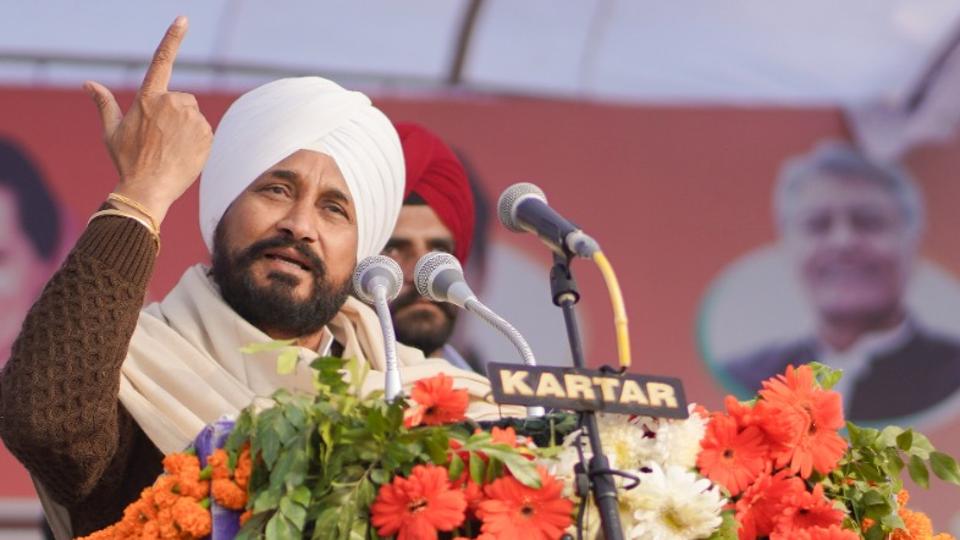
Having ousted Amarinder to ward off anti-incumbency and end the infighting in the Punjab unit, the Congress is banking on Charanjit Singh Channi, the state’s first Dalit chief minister, to turn around the party’s fortunes. With less than four months at his disposal, Channi has managed to reset the narrative by his common touch, a slew of populist announcements and Dalit consolidation.
But, the party is still hobbled by internal feuds. Mercurial and ambitious state Congress chief Navjot Singh Sidhu is missing no opportunity to take swipes at Channi. Though the Congress high command has tried to take everyone along, including disgruntled senior leaders by including them in poll-related panels, the party is still struggling to get its act together. The candidate selection, an ever-contentious affair in the Congress, is likely to sharpen the Channi-Sidhu animosity as both jockey for the lion’s share of tickets.
Make-or-break election for Akalis
For the SAD, it is a make-or-break election. At the helm of the party that turned 100 years this month is former deputy CM Sukhbir Singh Badal, successor to his father, Akali stalwart Parkash Singh Badal, who has taken a back seat. A tireless campaigner, Sukhbir was the first to be off the starting blocks and has already named the party’s candidates for 87 of the 97 assembly seats it is contesting, having left 20 seats to the BSP.
While the SAD’s calculus on the Dalit vote stands considerably negated after Channi’s surprise elevation, the party’s bigger worries stem from the blowback of the long-simmering sacrilege and drugs issues which had proved to be the party’s nemesis in the 2017 assembly elections and continue to roil the state’s politics. Sacrilege, the farmers’ ferment after a year-long, eventually successful struggle against the three farm laws on Delhi’s borders, and the rupture with the BJP have shaken Akalis’ key ideological planks: Panth, peasantry and Punjabiyat. Worse, the Congress government, in a well-crafted strategy to throw the Akalis off-balance booked senior Akali leader and Sukhbir’s brother-in-law Bikram Singh Majithia in the drug racket case on December 21 amid a feverish election campaign. “It is a stunning blow in the perception game,” admits a senior Akali functionary.
AAP resurgence banks on populism
On the third pole of the electoral sweepstakes is AAP, which despite being rocked by internal bickering and desertions has a sense of resurgence. Aggressive on the ground with its national convener Arvind Kejriwal promising a raft of freebies, the party is blending populism, which it has tried successfully in Delhi, with nationalism by taking out ‘Tiranga Yatras’ in Hindu-dominated urban areas. However, it is hampered by the lack of a vibrant grassroots-level organisational set-up and the delay in declaring its chief ministerial face.
BJP-PLC could upset electoral calculus
The fourth player, the BJP-PLC combine, is being seen as the X-factor. Banking on the saffron party’s traditional urban pockets as well as Capt Amarinder’s political experience and ability to attract discontented Congress leaders, the new alliance has the potential to upset the electoral calculus of other players. Of all, the Congress is the wariest of its breakaway stalwart’s gameplan.
Ashutosh Kumar, a professor of political science at Panjab University, says that the Congress seemed to have a slight advantage owing to the ‘Channi factor’, but the BJP-Capt Amarinder alliance, coupled with growing religiosity and regionalism in Punjab, were muddying the waters. “The new alliance (BJP-PLC) will dent both Congress and Akalis, but everything will depend on its vote share, not seats, and which of these two parties gets hit the hardest. The AAP, on the other hand, is repeating its 2017 blunder of overdependence on central leaders and needs to make quick amends,” he said.
In this decade, two markers stand out in Punjab’s electoral history since 1966: The second coming of an incumbent government (the SAD-BJP notched up this feat in 2012) and a shift from the bipolar contest. If the current prognosis for the 2022 slugfest is any indication, the border state may throw up another first: A fractured mandate.


