E-Paper



3 cops, 1 hunter killed in clashes between two groups over poaching of blackbucks in MP
Preliminary investigation revealed that one of the poachers, Naushad Mewati, who was killed in the cross-fire, along with six others had killed four male blackbucks, a female blackbuck and a peacock on Friday night to serve the meat at the marriage feast of his niece.

 Prefer HTon Google


Bhopal: Poaching of blackbuck led to a clash between police and a group of poachers in Guna and left three police personnel and a poacher dead early on Saturday morning. The presence of blackbucks near agricultural land in more than 12 districts is attracting poachers in Madhya Pradesh, a forest official said.
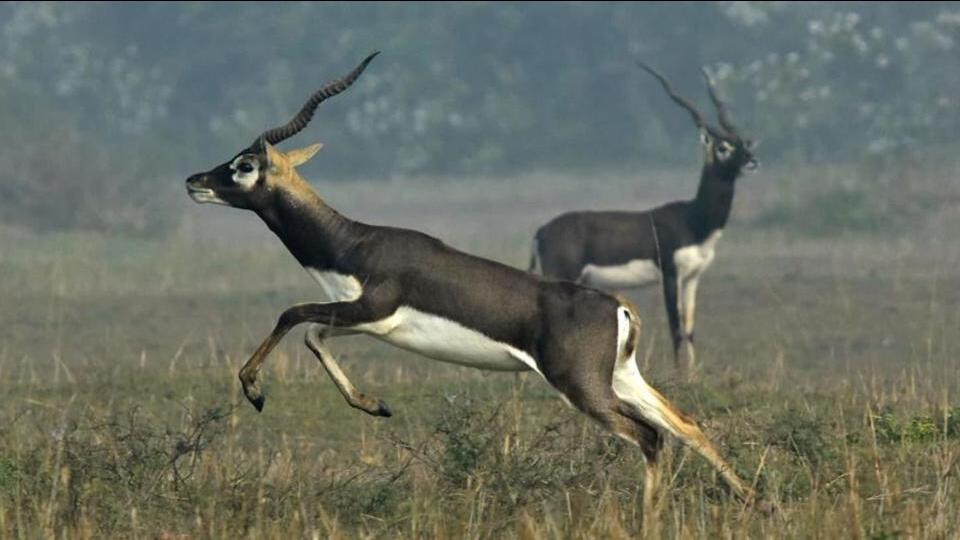
Preliminary investigation revealed that one of the poachers, Naushad Mewati, who was killed in the cross-fire, along with six others had killed four male blackbucks, a female blackbuck and a peacock on Friday night to serve the meat at the marriage feast of his niece, a senior police officer said.
The easy access to the animal and no protection plan in place for the scheduled 1 animal of the Wildlife Protection Act is responsible for several recent incidents of poaching.
According to data from the Wildlife Control Bureau in MP, where 31 poaching cases, the highest in India, were reported between 2008 to 2018, the presence of blackbuck is increasing near agricultural land of northern MP districts such as Guna, Ashok Nagar, Sehore, Raisen and Shivpuri due to summer crop especially moong.
The senior forest official said the poachers are taking advantage of the easy availability of blackbuck and killing them for meat.
“The poaching of blackbuck has not been done by any organized gang. As many as 38 poachers have been arrested between 2008 to 2018 and most of them are local villagers, who killed the animal for meat. This is the reason behind the low conviction rate as it is difficult to prove the purpose,” said a forest official of the forest task force.
Farmers also said that they are facing trouble as the herd of blackbucks and other varieties of deer regularly destroy moong dal crop.
“Poachers are active in the area because forest department officers are not doing anything to control the herd which is continuously destroying our crop. We can’t stop them by putting live electric wire because they are scheduled 1 animal of Wildlife Protection Act,” said Raghuraj Singh, a local farmer and member of the Rashtriya Kisan Sangathan
But the forest official said the blackbuck’s habitat is agricultural land, not forests, and it is turning out to be difficult controlling them.
Guna divisional forest officer Hemant Raikwar said, “The population estimation of blackbuck has not been done so I can’t comment about their population. Blackbucks live in the agricultural land not in forests so it is difficult to control them. But we are making an action plan.”
Panchayat and rural development minister and local MLA Mahendra Singh Sisodia said, “It is right that blackbuck and other varieties of deer are creating trouble for farmers but we are also shifting the blackbucks to wildlife forest area. It is a continuous process. We are definitely making an effort to resolve the problem but we won’t allow poaching in the area.”
(With inputs from Yogendra Lumba in Guna)