
 E-Paper



37 CSIR labs to partner with TataMD to expand CRISPR-based RT PCR
Thirteen CSIR labs already conduct RT-PCR tests and were involved in an effort to scale up the more accurate testing technique in India after the pandemic broke out last year


The Council for Industrial and Scientific Research (CSIR) labs will partner with TataMD, the healthcare venture of Tata Group, to expand Covid-19 testing to Tier II and III cities. The labs will conduct the CRISPR-based RT PCR test for detecting Covid-19 at 37 locations.
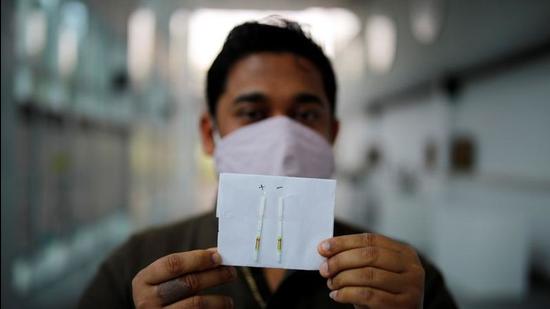
The CRISPR-based test, initially named Feluda after the fictional detective, was developed by the CSIR lab, Institute of Genomics and Integrative Biology-New Delhi (CSIR-IGIB), and was commercialised and named TataMD CHECK.
Thirteen CSIR labs already conduct RT-PCR tests and were involved in an effort to scale up the more accurate testing technique in India after the pandemic broke out last year.
Using the gene-editing technology CRISPR, the test simplifies the RT PCR machine, eliminating the need for high-tech q-RT PCR machines and uses readily available thermo-cyclers. It also reduces the time for conducting the test to around 45 minutes after RNA extraction. The traditional RT PCR tests take around five hours for RNA extraction and completing the test.
Also Read | Delhi records 165 new Covid-19 cases and 14 deaths; positivity rate at 0.22%
“Apart from vaccination, rapid testing and isolation of SARS-CoV-2 positive persons has emerged as the best strategy in combatting Covid-19. This initiative in partnership with Tata MD to deploy the RT-PCR CRISPR test at multiple CSIR labs spread across the country is an important step. This will augment the national capacity to test for COVID and detect it locally,” said Dr Shekhar C Mande, director general, CSIR.
The 37 labs that will start using the technology under the partnership with TataMD include Indian Institute Of Integrative Medicine in Jammu, National Institute for Interdisciplinary Science and Technology in Thiruvananthpuram, Central Salt and Marine Chemicals Research Institute in Bhavnagar, North East Institute of Science & Technology in Jorhat.
“By partnering with CSIR’s network of labs and deploying fully equipped mobile laboratories, we are confident that we can quickly augment testing capacity using faster and scalable methods. This will significantly enhance the ability of state and district administrations to ensure wider availability and easier access to testing on an on-going basis,” said Girish Krishnamurthy, CEO and MD of TataMD.
The first lab to start using the technology will be Indian Institute of Petroleum-Dehradun (IIP). “The current testing capacity will be 800 daily tests that can be scaled up using the TataMD CHECK automation solution if demand rises significantly,” said Dr Anjan Ray, director, IIP.
TataMD also offers automated readout of the test results that can used to be scale up testing. The paper strip test encodes the Cas-9 protein that can attach with specific parts of the genetic material of Sar-CoV-2 to form lines on the strip that can be read to be positive or negative, just like sophisticated form of the home-based pregnancy kits.
The scientists from CSIR-IGIB, who developed Feluda, have also developed a test named after the author of the detective series, Ray, that has been modified to identify the variants of concern using Cas-9 protein coded to detect specific mutations.


