
 E-Paper



40% sanctioned posts in hospitals vacant, Rajya Sabha told
At least 40% of the sanctioned posts in Central government-run hospitals across the country are lying vacant, according to data shared by the Union health ministry in the Rajya Sabha on Tuesday.


At least 40% of the sanctioned posts in Central government-run hospitals across the country are lying vacant, according to data shared by the Union health ministry in the Rajya Sabha on Tuesday. These vacancies span all departments, including academic and clinical care.
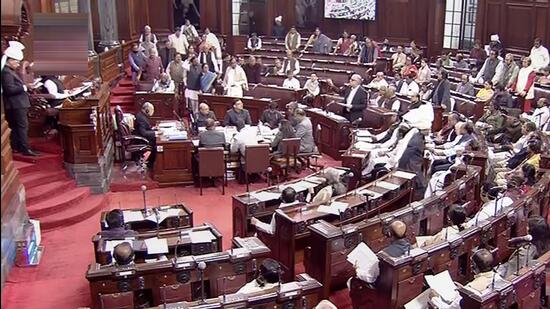
In a written reply in Rajya Sabha, minister of state for health, Bharati Pravin Pawar, shared data that showed 30,512 of the 74,813 total sanctioned posts across the country are lying vacant.
Pawar was replying to a question by Damodar Rao Divakonda of the Telangana Rashtra Samithi (now the Bharat Rashtra Samithi).
Divakonda’s question pertained to sanctioned posts, filled up posts, shortfall and backlog vacancies as on October 10 2022, in various hospitals and central institutes of medicine under the Central government, including the All India Institute of Medical Sciences (AIIMS).
The number of vacancies against sanctioned posts usually has remained the same in the past few years, according to people familiar with the matter, even as several ad-hoc appointments were made across the country to manage the Covid-19 disease burden temporarily by hospitals individually.
“The reasons for huge vacancies in the government sector could be manifold; for example, for faculty positions there is a reservation criteria also that needs to be considered when you are looking at filling up a post, and a hospital may not find the right candidate for it,” said former AIIMS-Delhi director Dr MC Misra.
“Also, you may find suitable candidates but they might not find the public sector lucrative anymore; several super-speciality seats in surgical disciplines, for example, are vacant in hospitals because there are not many takers. As a result short-term hirings happen, that we also saw during the Covid-19 pandemic,” he added.
In her reply, Pawar informed the parliament that the government was taking all the necessary measures to ensure vacancies are filled but it largely depended on vacancies arising in various health cadres.
“Every institute under the Government of India is required to designate an officer at least at the rank of Deputy Secretary as Liaison Officer to ensure due compliance of the orders and instructions pertaining to reservation admissible to SCs, STs and OBCs,” she said, adding that they are also required to set up a cell under direct control of the liaison officer to assist them in discharge of duties. Accordingly, a liaison officer along with a cell is functioning in the department of health and family welfare.
“Filling up of vacancies along with backlog reserved vacancies is a process depending on the vacancies arising in various cadres of Central Health Institutes/Hospitals. The vacant posts, including backlog vacancies, are filled up by following all relevant guidelines and instructions issued by the government,” she added.
Provisions have also been facilitated by the health ministry for augmenting faculty strength in newly set up AIIMS.
Standing Selection Committee has been constituted in each new AIIMS to facilitate expeditious filling up of vacancies; the upper age limit for direct recruitment against the posts of professor and additional professor has been raised from 50 years to 58 years; and permission has been granted for taking serving faculty from government medical colleges and institutes on deputation basis.
The centre also allowed engagement of retired faculty of government medical colleges and institutes up to 70 years of age and overseas citizen of India card holders to be appointed on faculty positions to make up for the insufficiency in staff recruitments.
Visiting faculty scheme has been formulated to allow national and international faculty to work in newly set up AIIMS for teaching and academic purposes; temporary diversion of faculty posts has been allowed on loan basis from one department to another, which can be filled up on contractual basis; advertisement for recruitment with one-year validity has been put in place to fast track the process of filling up vacancies; and implementation of centralized recruitment for nursing cadres.


