
 E-Paper



550 districts in India have Covid-19 cases; many in rural areas
As of Saturday, rural districts accounted for only 21% of total number of cases in India, according to health ministry reported — but the numbers are increasing.

 Prefer HTon Google


Even as India relaxed restrictions for the next phase of the lockdown, two separate, but related, data points point to a new challenge in India’s battle against the coronavirus pandemic.
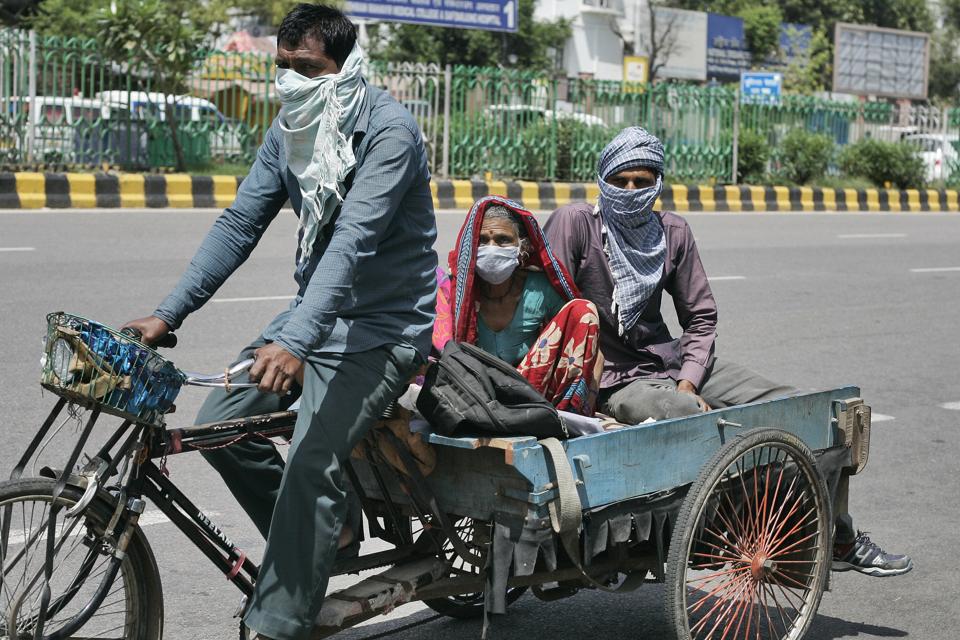
On May 17, 550 of India’s 736 districts had Covid-19 positives cases, an addition of around 180 districts in the last fortnight, according to data on the disease compiled from different states.
Among the states, Bihar, Jharkhand, West Bengal, Odisha, Madhya Pradesh, Rajasthan and Uttar Pradesh witnessed the maximum increase in number of districts affected by Covid -19 since May 1.
Click here for the complete coverage of the Covid-19 pandemic
What explains the spike, and what explains the spike in these states?
Government officials largely attribute the increase to the return of hundreds of thousands of migrant workers to rural areas in these states, with weak health infrastructure. Since May 1, when the Central government started special Shramik trains, migrant workers — facing an acute shortage of cash and food — have returned home, even as thousands of others continue to walk hundreds of kilometres to return to their villages.
As of Saturday, rural districts accounted for only 21% of total number of cases in India, according to health ministry reported — but the numbers are increasing. Officials said in many of the rural districts, Covid-19 cases are in single digits and the infected persons have been isolated in quarantine centers. The exceptions were districts such as Ganjam in Odisha, which has 292 cases, and Munger in Bihar, which reported 195 cases.
Also Read: NREGA outlay, cap on state borrowing hiked in fifth round
However, state government officials are worried that many of the migrants, who have returned, are asymptomatic and may infect many more persons. Also, so far, only a fraction of workers have returned.
“Only about 20% of the workers have returned and all the districts in my state are infected with Covid-19,” said a senior bureaucrat in Bihar, familiar with the thinking in the government. “Imagine the scene when even half of the workers come back. Keeping all of them in quarantine centers would be a daunting task,” he said.
A Jharkhand government official said about 80,000 of the 6.5 lakh registered with the state helpline have returned. In Odisha, 1,10,000 of the seven lakh migrant workers registered have returned, officials said.
All 36 districts in Bihar; two-third of 30 districts in Odisha; 80% of 55 districts in Madhya Pradesh; more than half of Jharkhand’s 24, Rajasthan’s 33 and one-third of Chhattisgarh’s 28 districts already have Covid-19 patients.
Also Read: AAP says Centre responsible for plight of migrants, BJP hits back
There have been several incidents of migrant workers jumping from quarantine centers in Bihar, Jharkhand, Odisha and West Bengal, though most of them were brought back. Workers in Bihar and Odisha have complained of poor quality food and facilities in the government run quarantine centers, a charge denied by the local authorities.
Most of the Covid-19 free districts in these states are the remote tribal and poorest districts of India, where not enough tests have been done.
“As ICMR has said that only symptomatic persons should be tested, we have not tested many people from some of the tribal districts from where no persons have reported Covid symptoms,” said a Jharkhand government official, who was not willing to be named.
Officials in Bihar, Jharkhand and Odisha said that there was no possibility of easing of lockdown norms from May 18 because a large number of migrant workers are expected to return in the next fortnight. “We are not going to ease the norms for the time-being,” said Sanjay Kumar, Bihar principal secretary (health).
Apart from states receiving large number of migrant workers, Covid-19 has also spread to new districts in Tamil Nadu, Haryana and Karnataka. In Tamil Nadu, all 38 districts and Haryana, all 22 districts have cases. In Tamil Nadu, the Koyambedu vegetable market in Chennai was said to have contributed to 30% of over 10,000 cases in the state. In Haryana, the return of locals from red zones in Delhi and nearby areas was said to be the reason for the spread of the infection. In Karnataka, 23 of the 30 districts have Covid-19 cases.
On Saturday, the Centre asked officials from 30 municipal areas spread across 12 states, which contribute 79% of India’s Covid-19 cases, to maintain high vigil and closely monitor areas of old cities, slums, migrant labourer camps and other high-density pockets.
These areas are in Andhra Pradesh, Delhi, Gujarat, Madhya Pradesh, Maharashtra, Odisha, Punjab, Rajasthan, Tamil Nadu, Telangana, West Bengal and Uttar Pradesh. Maharashtra. The selected municipal areas are Brihanmumbai or Greater Mumbai, Greater Chennai, Ahmedabad, Thane, Delhi, Indore, Pune, Kolkata, Jaipur, Nashik, Jodhpur, Agra, Tiruvallur, Aurangabad, Cuddalore, Greater Hyderabad, Surat, Chengalpattu, Ariyalur, Howrah, Kurnool, Bhopal, Amritsar, Villupuram, Vadodara, Udaipur, Palghar, Berhampur, Solapur and Meerut.
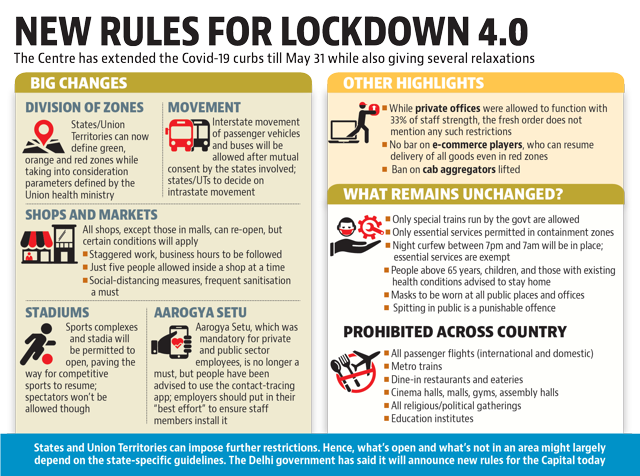
The health ministry said that these areas should have the maximum restrictions under the home ministry’s lockdown 4.0 ground rules, the health ministry has told the government.
(With inputs from state bureaus)


