
 E-Paper



90% population in six Karnataka districts given one dose: Data
The Karnataka government has reiterated its goal to inoculate at least 70% of its over 70 million population with two doses of Covid-19 vaccine and around 90% with the first by the year-end


Six districts in Karnataka have administered 90% of its population with the first dose of the Covid-19 vaccination, the Karnataka’s Department of health and family welfare said. According to their data, Bengaluru district (excluding BBMP), Kodagu, Udupi, Ramanagaram, Uttara Kannada and Hassan have achieved the landmark.
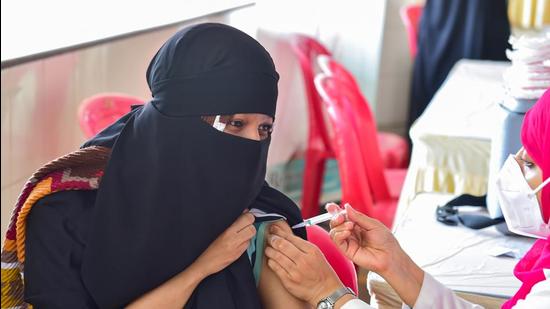
Special Commissioner (health) Trilok Chandra said that across the state, the first dose coverage stands around 86% and the second dose has been administered to 52% of the population, while 16 districts have achieved a higher first dose coverage than the state average.
Despite the good performance by the six districts, the state government’s target for vaccinating the state by the year end still remains a distant goal. The Karnataka government has reiterated its goal to inoculate at least 70% of its over 70 million population with two doses of Covid-19 vaccine and around 90% with the first by the year-end.
Experts had opinioned that at least 75% of the state’s population should be given the first dose to blunt the effects of a potential third wave. “There is no doubt that if we don’t vaccinate enough population, the third wave will be as bad, or even worse, than the second,” said CN Manjunath, Karnataka Covid-19 task force member and director of Sri Jayadeva Institute of Cardiovascular Sciences and Research. “Only if are able to build enough herd immunity can we blunt the impact of the third wave. But it is going to be a challenge,” he said.
According to Dr Vishal Rao, a member of the expert committee on Karnataka’s Covid task force, the state should vaccinate at least 70% of the population to control the third wave. “Quick vaccination is crucial. So far, we have been vaccinating those above 45 years of age. But in the state, the majority of the population falls in the 18-44 age category. With multiple variants that are being reported, this age group is one of the most vulnerable sections,” said Rao.
The second wave has shown an increase in the number of deaths in the 30-45 age group. A comparison of the numbers of the first and second wave shows that in the first wave, around 11 out of 100 deaths were reported in the 30-45 age group, while in the second wave, 16 out of 100 deaths were reported in this category. For the under 30 years age category, in the first wave, 2.2% of deaths belonged to those under 30, while in the second wave, it increased to 2.9%, according to state data.
Karnataka government has been receiving praises for the large vaccination campaigns it has conducted. Of the 1 billion doses that India achieved on Thursday, Karnataka has administered 62 million doses. However, data shows that Karnataka has seen sharp fluctuations in its vaccination drives, designed in a way that there are high on selective occasions and then a sudden dip as if doses are hoarded to make these events a success. According to experts, at the current rate, the target required to avoid a third wave may not be achieved.
According to data, Karnataka has seen a sharp fluctuation in its vaccine drives since September 17 when it administered a record 3.17 million doses in a single day as part of Prime Minister Narendra Modi’s birthday. Since then, the state has administered around one million doses just three times and sometimes as low as below 30,000.
One of the biggest hurdles for the government is the fact that 14 other districts have to catch up in vaccination drives. For example, Kalaburagi district has achieved the least coverage — only 69% of the eligible population has been jabbed with the first dose so far. The state health and family welfare department have begun a house-to-house survey to identify the unvaccinated.
A member of the Technical Advisory Committee (TAC), who didn’t want to be named, pointed out the disparity in the vaccination in the rural areas of north Karnataka. The districts with the lowest vaccination coverage are in the underdeveloped northern part of the state. “Bengaluru city (BBMP and Bengaluru urban) has the highest number. Naturally, the capital with the highest population will get preference, but the state of North Karnataka is concerning, especially many districts share the border with Maharashtra,” he added.
Chandra said that efforts are underway to increase vaccination coverage in rural areas by setting up more centers across the state. He added that to increase the vaccination drive in the city, block and lane-level vaccination has been taken up. “Whoever has not taken the vaccine will be identified and will be vaccinated through special vaccination drives throughout the city on Friday, and it is urged that citizens take complete benefit of this arrangement,” he added.


