
 E-Paper



Adani family secretly invested in own shares, reports Guardian citing offshore records
The Guardian cited new documents the Organised Crime and Corruption Reporting Project has obtained and said they showed the details of an undisclosed and complex offshore operation

 Prefer HTon Google


The Adani family may have spent years discreetly acquiring stock in the Adani Group’s companies during its meteoric rise to become one of India’s largest and most powerful businesses, the Guardian has reported citing offshore financial records the British daily has seen. The paper referred to newly disclosed documents and said they suggest the family secretly invested hundreds of millions of dollars into the Indian stock market buying its own shares.
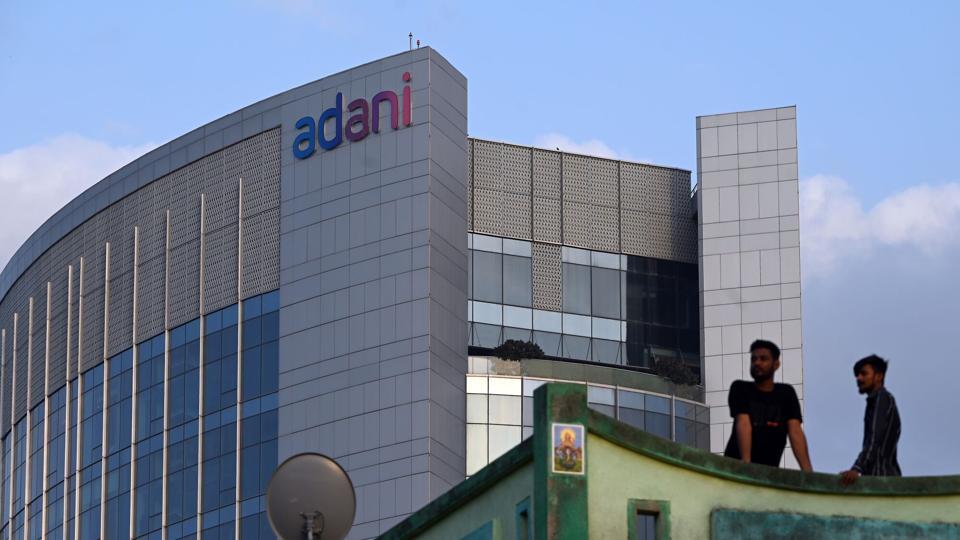
Adani Group founder Gautam Adani was India’s richest and the world’s third wealthiest person worth over $120bn before New York financial research firm Hindenburg’s report in January accused the conglomerate of pulling off the “largest con in corporate history”. The firm accused the Adani Group of “brazen stock manipulation and accounting fraud”. It said opaque offshore companies bought the conglomerate shares and contributed to the “sky high” market valuation hitting a peak of $288bn in 2022.
The Adani Group rejected the Hindenburg claims calling them a “calculated attack on India”. It said the firm’s report was an assault on “the independence, integrity, and quality of Indian institutions”.
The Hindenburg report initially wiped $100bn off the conglomerate’s market value. Gautam Adani also lost his spot on the world rich list.
The Guardian cited new documents the Organised Crime and Corruption Reporting Project (OCCRP) has obtained and said they showed the details of an undisclosed and complex offshore operation in Mauritius for the first time. The documents shared with the Guardian and the Financial Times showed Adani associates seemingly controlled the operation and supported the share prices of its group of companies from 2013 to 2018.
The Guardian noted that this offshore network remained impenetrable up until now. It added the records also appear to provide “compelling evidence” of the influential role Adani’s brother, Vinod, allegedly played in the secretive offshore operations. The Adani Group has maintained Vinod Adani has “no role in the day-to-day affairs” of the company.
The documents showed two of Vinod Adani’s close associates are named as sole beneficiaries of offshore companies through which the money appeared to flow. The Guardian reported that financial records and interviews also suggest investments into Adani stock from two Mauritius-based funds were overseen by a Dubai-based company, run by a known employee of Vinod Adani.
The Guardian cited a letter the OCCRP has uncovered and said the Securities and Exchange Board of India (SEBI) handed evidence in early 2014 of Adani Group’s alleged suspicious stock market activity but the government regulator’s interest seemed to lapse after Prime Minister Narendra Modi was voted to power months later.
The Guardian noted that the fresh disclosure could have significant political implications for Modi, whose relationship with Gautam Adani goes back 20 years. It added Modi has faced difficult questions about the nature of his partnership with Adani and allegations of preferential treatment of the Adani Group since the Hindenburg report was published. Adani Group’s market value rose from about $8bn in 2013 to $288bn by September 2022.
The Adani Group rejected the fresh disclosure calling it nothing but a rehash of unsubstantiated allegations levelled in the Hindenburg report. “Our response to the Hindenburg report is available on our website. Suffice it to state that there is neither any truth to nor any basis for making any of the said allegations against the Adani Group and its promoters and we expressly reject all of them,” the Guardian quoted the group as saying
The Guardian said that the trove of documents lays out a complex web of companies dating back to 2010 when Adani family associates Chang Chung-Ling and Nasser Ali Shaban Ahli began setting up offshore shell companies in Mauritius, the British Virgin Islands, and the UAE.
It added these financial records appear to show that four of the offshore companies Chang and Ahli, who have both been directors of Adani-linked companies, established sent hundreds of millions of dollars into a large investment fund in Bermuda called Global Opportunities Fund (GOF) with those monies invested in the Indian stock market from 2013 onwards.
The investment was made by introducing another layer of opacity. The Guardian said financial records paint a picture of money from the pair’s offshore companies flowing from GOF into two funds to which GOF subscribed: Emerging India Focus Funds (EIFF) and EM Resurgent Fund (EMRF).
“These funds then appear to have spent years acquiring shares in four Adani-listed companies: Adani Enterprises, Adani Ports and Special Economic Zone, Adani Power and, later, Adani Transmission.”
The Guardian noted the records shine a light on how money in opaque offshore structures can flow secretly into the shares of publicly listed companies in India.
“The investment decisions of these two funds appeared to be made under the guidance of an investment advisory company controlled by a known employee and associate of Vinod Adani, based in Dubai.”
The Guardian said in May 2014, EIFF appears to have held more than $190m of shares in three Adani entities, while EMRF looks to have invested around two-thirds of its portfolio in about $70m of Adani stock. Both funds appear to have used money that came solely from the companies controlled by Chang and Ahli.
“In September 2014, a separate set of financial records set out how the four Chang and Ahli offshore companies had invested about $260m in Adani shares via this structure.”
The paper said documents show that this investment appeared to grow over the next three years: by March 2017, the Chang and Ahli offshore companies had invested $430m – 100% of their total portfolio – into Adani company stock.
Chang declined to discuss the documents setting out his company’s investments in Adani shares. The Guardian said Chang did not answer questions about his links to Vinod Adani, who along with Ahli did not respond to the paper’s efforts to contact them.
The Guardian noted the alleged offshore enterprise of the Adani associates raises questions about the possible breaching of Indian market rules that prevent stock manipulation and regulate public shareholdings of companies.
According to the rules, 25% of a company’s shares must be kept “free float”, which means they are available for public trade on the stock exchange, while 75% can be held by promoters, who have declared their direct involvement or connection with the company.
The Guardian noted Vinod Adani has recently been acknowledged by the conglomerate as a promoter. But it cited records and said they show that at the peak of their investment, Ahli and Chang held between 8% and 13.5% of the free-floating shares of four Adani companies through EIFF and EMRF. “If their holdings were classified as being controlled by Vinod Adani proxies, the Adani Group’s promoter holdings would have seemingly breached the 75% limit.”
The Guardian noted Adani and the Indian government have repeatedly denied that his longstanding connection with Modi has led to preferential treatment.
“Yet a document unearthed by the OCCRP and seen by the Guardian suggests the SEBI, the government regulator now in charge of investigating the Adani Group, was made aware of stock market activity using Adani offshore funds as far back as early 2014,” it added. “In a letter dated January 2014, Najib Shah, the then head of the Directorate of Revenue Intelligence (DRI), India’s financial law enforcement agency, wrote to Upendra Kumar Sinha, the then head of the SEBI.”
Shah said in the letter: “There are indications that [Adani-linked] money may have found its way to stock markets in India as investment and disinvestment in the Adani Group.” He noted that he had sent this material to Sinha because the SEBI was “understood to be investigating into the dealings of the Adani Group of companies in the stock market”.
The Guardian noted the SEBI has never publicly disclosed the warning given by the DRI, nor any investigation it might have conducted into the Adani Group in 2014. “The letter appears to misalign with statements made by the SEBI in recent court filings in which it denied there were investigations into the Adani Group before 2020, as well as saying suggestions it had investigated the Adani Group dating back to 2016 were ‘factually baseless’.”
The Guardian noted critics, lawyers, and the political opposition have questioned the ability of the SEBI, a regulator under the purview of the Modi government, to independently investigate the Adani Group.
The Supreme Court set up an expert committee to investigate the Adani Group after the publication of the Hindenburg report. According to a report given to the court in May, the SEBI had been investigating 13 offshore investors in the conglomerate since 2020 but had “hit a wall” in trying to establish if they were linked to the Adani Group. Two of the entities under investigation are EIFF and EMRF.
On Friday last, the SEBI submitted a report to the Supreme Court saying its investigations were in the final stages.


