
 E-Paper



Pocso cases against husbands, relatives: Supreme Court lays down rules, flags ‘false accusations’
The safeguards apply when allegations involve a parent or family member living with the child and a matrimonial dispute exists between the parents.

 Prefer HTon Google


The Supreme Court on Thursday directed police and courts to ensure complaints filed under the Pocso Act against husbands or their family members in matrimonial disputes are carefully vetted and in cases where no “palpable” material exists, the decision to arrest is made after the victim interacts with a child psychiatrist.
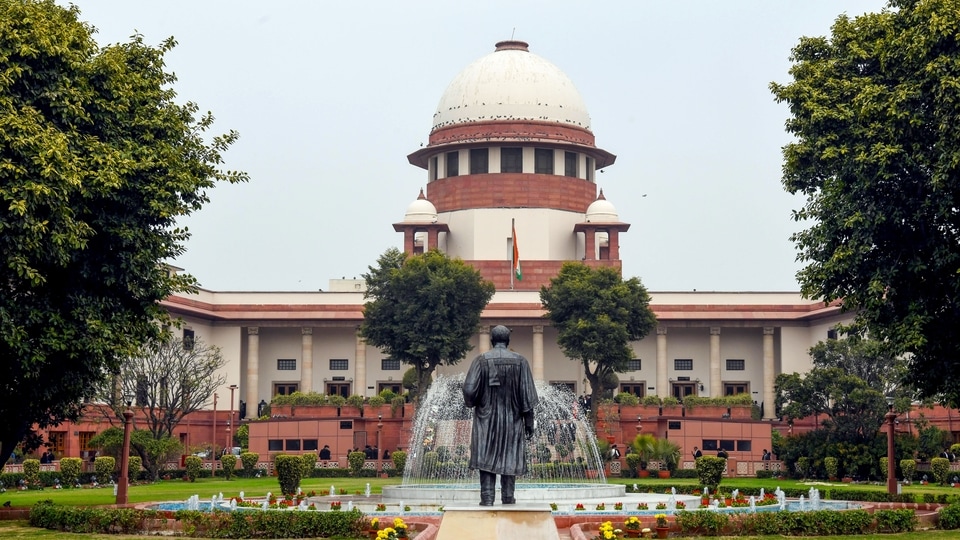
SC flags misuse of POCSO in family disputes
The court introduced this safeguard after it quashed criminal proceedings against a husband after the mother filed a case under Protection of Children against Sexual Offences Act (Pocso) against him in Bengaluru, following her loss in a bitter custody battle.
A bench of justices JB Pardiwala and KV Viswanathan said, “We are observing an alarming trend that is on the rise where one parent misuses the legal provisions to gain strategic legal advantage.”
Besides the incalculable harm caused to the child victim, the court said, “The only objective is to tie up the accused spouse and their family members in knots with the foisted criminal case and ensure that they are kept busy with the court process for a considerable period.”
This serves two ends - the accused suffers prolonged incarceration and such an accusation adversely affects guardianship or custody proceedings, the court said as it went on to quash the criminal proceedings under Pocso registered in 2024 against the husband. To arrive at this conclusion, the court ordered the Central Bureau of Investigation (CBI) to conduct an enquiry into the victim child’s allegations. An expert team of child psychologists interacted with the victim and what came out was an “eye opener” for the court as the allegations were found to be false and the evidence non-supportive of the charges levelled by the child’s mother.
Also read: Compelling rape survivor to continue pregnancy impairs right to live with dignity: Delhi HC
Experts to assess child in cases lacking clear evidence
Laying down the safeguards for all cases investigated by police or where summons are yet to be issued by courts on private complaints, the bench directed the investigating officer or the Special Juvenile Police Unit (SJPU) to engage the services of an expert in child and adolescent psychiatry or clinical psychology from the District Child Protection Unit (DCPU) or the District Legal Services Authority (DLSA) to interact with the victim.
The court said that such a measure shall be resorted to in cases where there is no “palpable” material against the accused and the police is in a dilemma if there is “reason to believe” to arrest the husband or his family members under Pocso offences.
Further, the court said, “Safeguards would apply only when an offence under the Pocso Act is alleged to have been committed by a parent, or any other family member who is living under the same roof as the child victim and a matrimonial dispute of some form, exists between the parents of the child victim, indicating the possibility of a strained relationship.”
Upon interaction with the victim, a report shall be filed by the experts with the police or SJPU, which will then consider how to proceed with the matter, the court said.
Also read: SC commutes death sentence of man who raped, murdered 6-yr-old stepdaughte
Special courts told to apply judicial mind
Under Pocso, the court noted that a complainant can approach the Special Pocso court under Section 33 of the Act. Directing the Special Court to apply its judicial mind to the contents of the complaint, the bench said, “The court has to prima facie be satisfied that there are sufficient grounds to look further into the allegations. However, in exceptional cases, where the material is palpable, the Special Court may, for reasons to be recorded in writing, dispense with the involvement of the services of an expert in child and adolescent psychiatry/psychology.”
The bench clarified that its directions will apply to police complaints where investigation is in progress or in cases under Section 33 of the Pocso Act where the Special Court is yet to issue summons (as on the date of judgment), indicating clearly that the judgment will not disturb pending trials or decided cases.
Also read: POCSO court acquits seven persons after woman denies she was 17 at time of marriage
Further, the court clarified that the present directions will not disturb the procedure under Pocso Rules, which require assessment by the Child Welfare Committee (CWC) on whether the child needs to be taken out of the custody of the father or shared household.
It also clarified that the report by the child experts will not bind the police in arriving at any decision and will not be the sole basis for filing the chargesheet or closure report, as the case may be.
Justice Viswanathan, writing for the bench, said, “What is alarming is that this tendency of making false accusations is on the rise. Instances are not infrequent where gullible parties are misguided by their advisors, including in some cases by recalcitrant legal professionals, who in their pursuit of the motto of ‘win at any cost’, end up fuelling the fire.”
Terming it as a “growing menace”, the court said it has been seen in some cases that such provisions are invoked as a “pressure tactic” or used simply to settle scores or seek revenge.
Also read: SC seeks steps taken by Centre to curb child sexual abuse material online
CBI probe precedes quashing of case
In the case before the court, the child was born in 2015 and after the marriage between the spouses was dissolved in 2023, the father initiated a case for the child’s custody in which he was successful in June 2023. In March 2024, the child’s mother filed the Pocso case naming the husband. In April this year, the court handed over the probe to CBI which, along with two experts from NIMHANS Bengaluru, concluded, “The testimony of the victim does not appear reliable or trustworthy.”
Based on their report, the court quashed the criminal case. Before handing over the physical custody of the child to the father, the court sent the matter back to the Family Court to smoothly ensure the process of re-integration in the best interest of the child.


