
 E-Paper



After 70 years, Anglo-Indians may not have reserved seats. They are disappointed
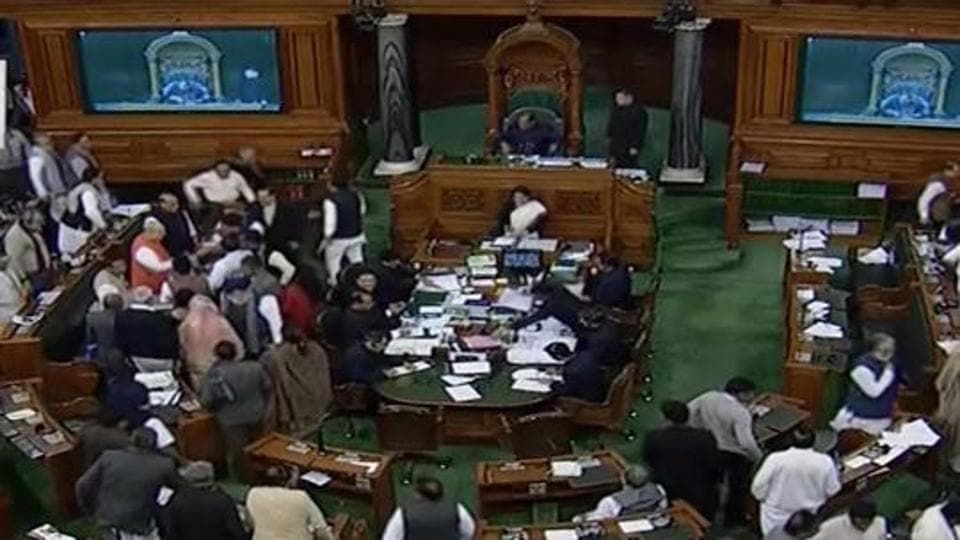
On Tuesday, the Constitution Amendment Bill was passed in the Lok Sabha extending the reservation provided for SCs and STs communities in Parliament and Assemblies for 10 years, but stopping the nomination of Anglo-Indians to Lok Sabha and certain State Assemblies.

 Prefer HTon Google


As the Lok Sabha passed a legislation that will do away with the reservation for Anglo-Indians in the Lok Sabha and state legislative assemblies, the leaders of the community have written to the Prime Minister Narendra Modi and Union law minister Ravi Shankar Prasad.
The Constitution provides the reservation of two Parliament seats and 13 MLA seats members of the community.
On Tuesday, a Constitution amendment bill was passed in the Lok Sabha extending the reservation provided for Scheduled Castes and Scheduled Tribes in Parliament and state assemblies for 10 years, but stopping the nomination of Anglo-Indians.
In a letter to the Prime Minister on December 8, Barry O’Brien, the president of the All-India Anglo-Indian Association, has urged Modi to not go ahead with the legislation.
“The founding fathers of our Constitution under the leadership of Dr BR Ambedkar included this provision after a significant majority of Anglo-Indians, led by Mr Frank Anthony, himself a member of the Constituent Assembly, chose to live in independent India and swear allegiance to the country of their birth. We, Anglo-Indians, have been fiercely loyal to our beloved India and have made a significant contribution to nation building in various fields, including the Armed Forces,” read O’Brien’s letter.
The community was granted reservation after the founding president of the All-India Anglo-Indian Association, Anthony, secured a promise from Jawaharlal Nehru. The rationale was that the community was not native to any state, and hence needed representation.
Over the years, the community has been represented by several people in Parliament, some with associations to political parties. Anthony has represented the community as an independent for one term, and as the representative of the Congress twice. Other prominent representatives include Neil O’ Brien, Sheila F Irani, Richard Hay, George Baker, to name a few.
The Constitution originally provided for political reservation to SCs, STs and Anglo-Indians for a period of 10 years, which meant it would have expired in 1960. The validity of reservation for SCs and STs has been extended periodically by various governments through similar amendments. It was extended for 20 years in 1959 and 30 years in 1969. In 2009, it was extended by another 10 years.
West Bengal MLA Michael Shane Calvert, too, has written a letter to PM Modi asking him to not go ahead with the legislation.
“... by discontinuing with the reservation at the State level as well, the very federal structure of our country is being brought into question. It wouldn’t be out of place to mention that ours is the only community that finds mention in the Constitution of our country. One of the many reasons why the founding fathers of our nation felt the need to have the Anglo-Indian community represented was because we do not have a native state,” Calvert’s letter read.
The government evaded questions and during the bill’s passage, and law minister Prasad said that the government was deliberating on the provision to extend the reservation to the community. “The House will take a call in a day whether to grant reservation to the community,” Prasad said, leading to an uproar from the Opposition.
While the government has not publicly provided a rationale behind the move, people familiar with the matter said that due to the small population of the community, it did not need a representation of two people in Parliament.
The law minister also came under attack from the Opposition when he quoted the 2011 Census to say that there are only 296 Anglo-Indians, or persons who are descendents of European lineage.
“This figure is not correct,” said Saugata Roy of the Trinamool Congress. Congress member Hibi Eden accused him of misleading the House.
Community members say that there is no definitive census of Anglo-Indians, but an idea of the community’s presence is indicated from the number of people registered with the various Anglo-Indian associations. Calvert says that in Kolkata alone, the Calcutta Anglo-Indian Service Society has over 400 registered members, the Calcutta Rangers Club has 240 registered members, and the Kolkata branch of the All-India Anglo-Indian Association has more than 600 members.
In his letter to the law minister, O’Brien said that the All-India Anglo-Indian Association, which is the oldest in the country formed in 1876, has 62 branches across 20 states and union territories. “We have has many as six Branches in Chennai alone and each of them has between 300 and 1,000 members. Similarly, in branches like Bangalore and Kolkata, we have more than 700 members in each of them. We have branches with about 300-400 members in cities like Madurai, Cochin, Tiruchirapalli, Hyderabad Secunderabad..., “
Calvert said the that Census data provided by the law minister could be misleading because there is no provision for a person to identify as an Anglo-Indian. “There is no column where one can indicate that they belong to the community. Inside West Bengal alone, we have more than 25,000 people of the community,” he said.


