
 E-Paper



After Doklam standoff, India and China may revive military ties
The revival of military-to-military follows a positive meeting between national security advisor Ajit Doval and China’s top diplomat Yang Jiechi in Shanghai last week.


India and China are expected to take their first steps to revive military-to-military ties after the 2017 Doklam stand-off with both the Indian Army and the Peoples Liberation Army (PLA) opening up select military colleges for training each other’s officers on a reciprocal basis, according to officials familiar with the matter.
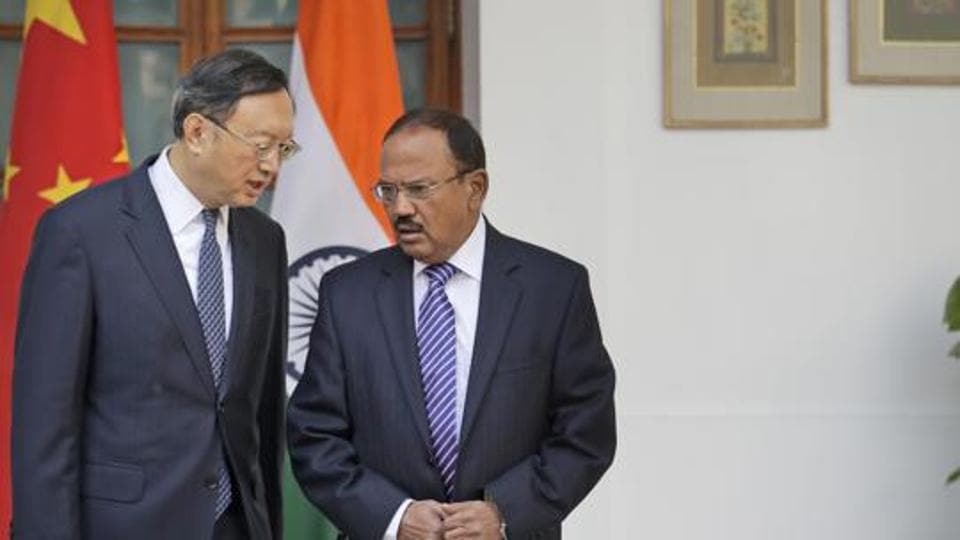
A decision to this effect is expected to be taken when defence minister Nirmala Sitharaman meets her Chinese counterpart Wei Fenghe in Beijing on April 24. Sitharaman will be on a two-day trip to China for a ministerial meeting of the Shanghai Cooperation Organisation (SCO)l next week.
The revival of military-to-military follows a positive meeting between national security advisor Ajit Doval and China’s top diplomat Yang Jiechi in Shanghai last week. Yang is a member of Politburo of the Communist Party of China and is currently director of the newly formed Central Foreign Affairs Commission. He is said to directly report to China’s paramount leader Xi Jinping.
According to top South Block officials, both Doval and Yang were of the opinion that India and China needed to cooperate to make the 21st century an Asian one. With the two interlocutors sharing a close personal chemistry, it was agreed that the atmosphere of confrontation must give way to cooperation in all spheres. Doval had gone to Shanghai to do the spadework for the much anticipated summit between Prime Minister Narendra Modi and Xi meeting before the SCO summit in June.
While Indian armed forces are in favour of exercising with their Chinese counterparts and want a hotline between the military operation wings in New Delhi and Beijing, the Modi government is prepared to wait for a decision on these by the Xi regime. As a first step, India will open the doors of the National Defence College to PLA officers for military courses with the Chinese expected to reciprocate in Beijing’s National Defence University.
China watchers say that with the US talking to North Korea directly without any help from either China or Japan and Russia leaning on China for support in the Syrian theatre, the rapidly changing geopolitical equation is pushing New Delhi and Beijing towards cooperation.
“Deng Xiaoping told Rajiv Gandhi in 1982 that 21st century will be Asian century only if India and China combine to make it so. India’s message to China is that it cannot make it to the forefront without the support and cooperation of New Delhi,” said a senior official on condition of anonymity.


