
 E-Paper



After SC/ST stir, government may roll back new faculty quota move
In its last cabinet meeting before the national elections are announced, the Union government might clear an ordinance to roll back a controversial new system for faculty recruitment in universities and colleges, which activists say drastically reduces the number of reserved seats.

 Prefer HTon Google


In its last cabinet meeting before the national elections are announced, the Union government might clear an ordinance to roll back a controversial new system for faculty recruitment in universities and colleges, which activists say drastically reduces the number of reserved seats.
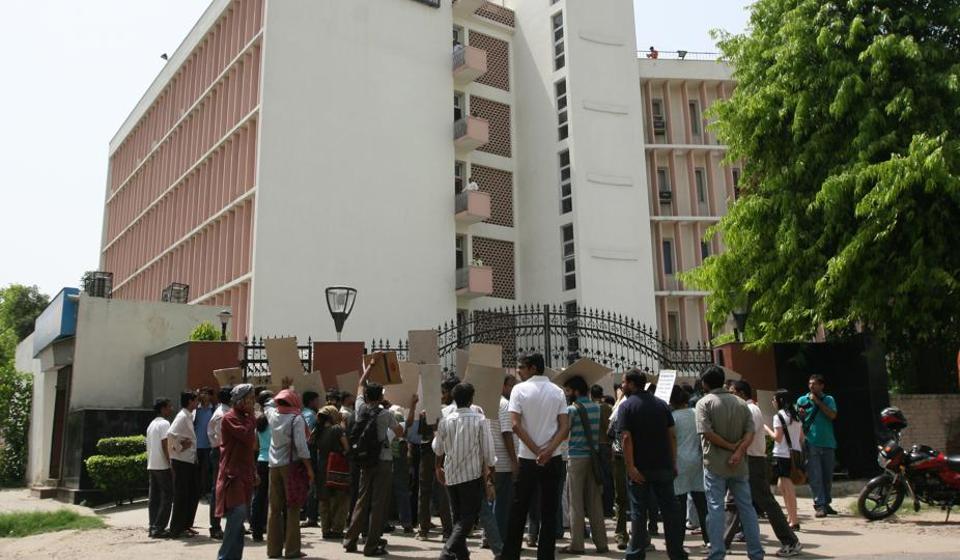
The ordinance is expected to classify an entire university or college as a single unit for determining Scheduled Caste (SC), Scheduled Tribe (ST) and Other Backward Class (OBC) quota. This was the practice until an Allahabad high court order in 2017 mandated that departments, and not the entire institute, should be treated as the unit for determining reserved positions.
Union minister and the National Democratic Alliance’s senior-most Dalit face, Ram Vilas Paswan, indicated in Patna on Tuesday that the government is likely to bring an ordinance to revert to the older system, known as the 200-point roster.
“The ordinance is ready with the government and would be brought in the next cabinet…I assure the ordinance will be tabled before the model code of conduct is introduced,” he said, adding that the 10% quota economically weaker sections (EWS) would also be included in the ordinance.
The final meeting of the Union cabinet is likely to be held on Thursday.
Union human resource development minister Prakash Javadekar tweeted that justice would be done. “The @narendramodi government is in favour of 200 point roster & we are going to give it. I want to assure the university community that justice will be done. @narendramodi Govt stands for social justice,” he said.
The announcement came on a day SC-ST groups hit the streets in several parts of the country against the new system, known as the 13-point roster, alleging that if it is implemented, the number of reserved positions would be slashed.
The controversy began in 2017 when the Allahabad high court said the entire institute couldn’t be the unit to determine reservation. In 2018, the University Grants Commission issued new guidelines under the 13-point roster, triggering protests. The Centre challenged the HC order but the Supreme Court dismissed the petition on January 22.
“We would have come up with the ordinance long time back but were rendered helpless as the Supreme Court barred us from filing a special leave petition (SLP) till it passed an order in the case. The SC order eventually came on January 22 and the Pulwama attack [which killed 40 soldiers] occurred on February 14 diverting our entire focus on protecting the nation’s boundaries,” said Paswan, asserting that the government is on board with the people protesting.
The announcement is being seen as the latest in a slew of measures by the government to woo voters ahead of the general elections this summer. These steps include the 10% EWS quota that is aimed to appease upper-castes, a pension scheme for the country’s vast unorganised sector workers and promise of no income tax for people with taxable income up to Rs 5 lakhs. Recently, the Employees Provident Fund Organisation (EPFO) raised interest rates for provident fund by 10 basis points, belying market expectations, in a move that is likely to help around 50 million subscribers.
If cleared, the ordinance will also be the second time the government has effectively rolled back a court order in the face of protests by the SC-ST communities. Nationwide demonstrations against the perceived dilution of the SC/ST Act by the Supreme Court, which barred provisions such as automatic arrest and no anticipatory bail, had spurred the government to introduce a bill last August to effectively reverse the judgment.
Since it came to power, the government has made several attempts to reach out to the SC, ST and OBC communities, such as inaugurating an Ambedkar memorial and setting up a revamped National Commission for Backward Classes.
When the protests against the 13-point roster broke out, a number of opposition parties, such as the Rashtriya Janata Dal and Samajwadi Party, had supported the protesters. Paswan on Thursday alleged these parties were “shedding crocodile tears”.
“You can’t do anything with the opposition of our country that wants to declare itself martyr with a mere finger cut,” he said.
Paswan said the ordinance will also include reservation for backwards among minorities, who were included in the Mandal Commission. He said it was a common issue that concerned all parties. “Those who are frightened that they might lose their reservation, be rest assured that as long as Paswan is in the government, he would not allow their constitutional rights being compromised,” he said.
The minister said his party had demanded an Indian Judicial Service (IJS) system on the lines of Union Public Service Commission, which is the nodal body for appointing bureaucrats and police officers, so that the recruitment of judges could be made transparent. “At present, there are hardly any SC or ST judges at higher judicial systems. Our prime minister had raised the issue at a couple of forums and I am sure with him continuing in the next term, we would be able to address this problem as well.”


