
 E-Paper



After wage code, labour safety on Cabinet table
If cleared by the Cabinet, this will be the second major labour reform approved by the government.

 Prefer HTon Google


The Union Cabinet could consider clearing the Occupational, Safety, Health and Working Conditions Code, also known as the OSH Code, when it meets on Wednesday, Hindustan Times learns. It’s a clear indication that the Narendra Modi government, in its second term, is ready to push ahead with labour reforms.
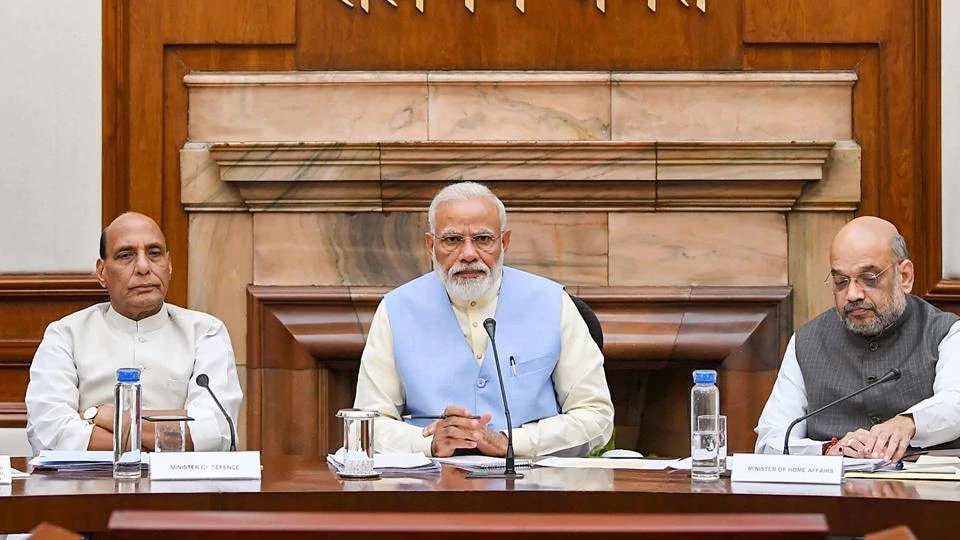
If cleared by the Cabinet, this will be the second major labour reform approved by the government. It cleared the Wage Code last week that contained “provisions of minimum wages and payment of wages to cover employees in both the organised and unorganised sectors”, unlike the current Minimum Wages Act and the Payment of Wages Act that apply only to employees engaged in certain kinds of jobs.
Government officials who spoke on condition of anonymity said the National Democratic Alliance (NDA) administration is very keen that both bills be introduced and passed in the ongoing Budget Session of Parliament.
The OSH code will cover 400 million workers in the organised and the unorganised sectors and encompass provisions from around 13 labour laws, including the Factories Act, the Mines Act, the Dock Workers Act, the Working Journalists and other Newspaper Employees Act, and the Cine Workers and Cinema Theatre Workers Act.
India’s labour laws are complex and cumbersome and the government’s plan is to simplify them into four codes: wages; OSH; industrial relations; and social security. For instance, according to government officials, the OSH Code will ensure that provisions pertaining to 622 sections in 13 laws will now be simplified and covered by just 134 sections.
A draft of the OSH Code that was circulated by the government last year said that it will now be mandatory for employers not just to provide a safe working environment, but also to have annual medical examinations for all employees. The code also says that women working in mines should be provided creches for children under the age of six.
The code also suggests showers or bathing places and locker rooms with separate ones for women mine workers. The code empowers every employee to demand information.
“This government increased the maternity leave for women. This code will help increase the number of women in the workforce,’’ said a person directly involved in the framing of the code who asked not to be identified.
“The biggest difficulty with our labour laws is that the multiplicity of labour laws has been a nightmare for employers and employees. As our economy evolved and the labour force grew, the government kept adding new laws without considering that contradictions might arise with older laws. So 2014-19 saw a repeal of over 10 laws seen as redundant. The remaining 35 or so have been rationalised into four codes. What this attempts to do is fantastic but the devil lies in the details,’’ said Santosh Mehrotra, a professor of economics at Delhi’s Jawaharlal Nehru University.


