
 E-Paper



Amid Ukraine war, wheat purchase suggests govt-to-private market shift
According to latest official updates from the Centre’s food department, the government has procured 6.9 million tonne of wheat so far from 586,000 farmers, who have been paid minimum prices of nearly ₹1,400 crore.

 Prefer HTon Google


The Ukraine war has changed dynamics in India’s agricultural markets, as private traders are making larger purchases of wheat, the winter staple, from farmers than in previous years, anticipating strong export demand. On the flip side, government procurement at minimum support prices (MSP) so far has been sluggish compared to the corresponding period in 2021.
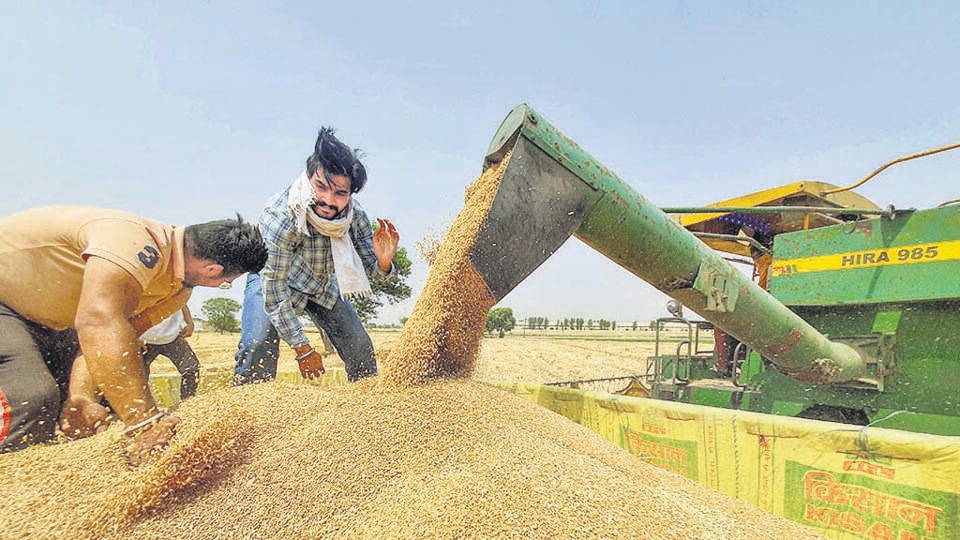
The main winter staple is currently being harvested and purchased in major grain-bowl states of Punjab, Haryana, Uttar Pradesh, Rajasthan and Madhya Pradesh.
The Food Corporation of India (FCI), the Centre’s main grain-handling agency, has begun procurement operations, but data shows it’s off to a slow start.
Overall, FCI and state agencies buy nearly 60% of overall output, while 40% ends up in open markets.
According to latest official updates from the Centre’s food department, the government has procured 6.9 million tonne of wheat so far from 586,000 farmers, who have been paid minimum prices of nearly ₹1,400 crore.
Comparatively, the government procured 12.6 million tonne in 2021 as on date, which points to a sluggish pace of procurement.
In Punjab, wheat purchases by private traders in the current rabi season has been the highest so far in eight years high. It touched 3.34 lakh tonne as the total wheat arrivals crossed 67.5 lakh tonne tonne. The single day purchase by private players on Tuesday was 28,400 tonne.
India is relying on surplus stocks and an anticipated bumper harvest to plug a large gap in global wheat supplies due to the Ukraine war. India is looking to export wheat to countries such as Egypt, Turkey, Philippines, a few African nations and even Europe, as food prices soar.
Also Read | India steps in to plug global wheat shortfall due to Ukraine war
On April 15, Egypt, the world’s top wheat importer, approved India as a supplier to fill a sizeable void in its domestic stocks due to the war.
World food prices jumped significantly in March 2022 -- up 12.6% from February -- to reach their “highest levels ever” due to the Ukraine war, according to a latest update by the FAO. Ukraine and Russia account for 30% of global wheat supplies, now disrupted by war.
However, there are concerns over an apparent fall in yields due to hot and dry conditions in March, which damaged maturing wheat crops across farming belts in northern India, according to farmers.
“The main reason for brisk buying by private traders is that they expect high demand in the export market. That’s why they are paying MSP equivalent prices and, in many markets, slightly more than MSP. Current rates are very competitive,” said Ashok Agrawal, an analyst with Comtrade.
Procurement in Punjab for the ongoing season started on April 1 and is expected to continue for two to three more weeks.
“The private purchase this time (by the end of the season) as per our estimates may cross 1 million tonne and it will be highest ever since the government procurement by the state agencies started,” said an officer of the state food and civil supplies department.
While private players are piling up bigger stocks to cater to export demand, the government has procured 3.2 million tonne in Punjab so far.
Punjab’s state-run agencies — Pungrain, Punsup, Punjab State Warehousing Corporation and Markfed besides the Centre’s Food Corporation of India (FCI) — have so far procured 65.4 lakh tonne.
The last time private traders bought such record levels of wheat in Punjab was in 2014, when they picked 209,000 tonne, and in 2017, when private traders bought 262,000 tonne.
According to a department official, the private trade is expected to pick in the days of the current week as state-run wheat procurement has been sluggish in Amritsar, Tarn Taran and Gurdaspur. The government’s procurement operations has picked up now.
“These districts have Jammu & Kashmir on the other wide of the border where a large number of wheat processing units are located, feeding the needs of their state,” said an additional director in food and supplies department.
According to analysts, Madhya Pradesh, Uttar Pradesh, Rajasthan and Gujarat were the first choices for wheat exporting companies, who are now turning to Punjab, as in the former, harvest and purchases have almost concluded.
In Madhya Pradesh, government agencies have purchased only 700,000 tonne, leaving the rest for private traders. In the last season, the government’s purchase of wheat was 1.25 million tonne.
“In Punjab, there is a sentiment among the traders and wheat processing units to stock grains due to the Ukraine war,” said Naresh Ghai, the president of Wheat Flour Mills Association.
Big market players have not entered the market so far. Local traders and processing unit owners are making most of the purchases, he said.
“I expect purchases by government agencies to be around 90-100 lakh (9-10 million) tonne,” he said. The state food department has made arrangements for 13.5 million tonne.


