
 E-Paper



Russia-Ukraine war may adversely impact wheat procurement in Punjab
The food and civil supplies department, Punjab, is apprehending an adverse impact of the ongoing Russia-Ukraine war on the upcoming wheat procurement in the state scheduled to start from April 1

 Prefer HTon Google


The food and civil supplies department, Punjab, is apprehending an adverse impact of the ongoing Russia-Ukraine war on the upcoming wheat procurement in the state scheduled to start from April 1.
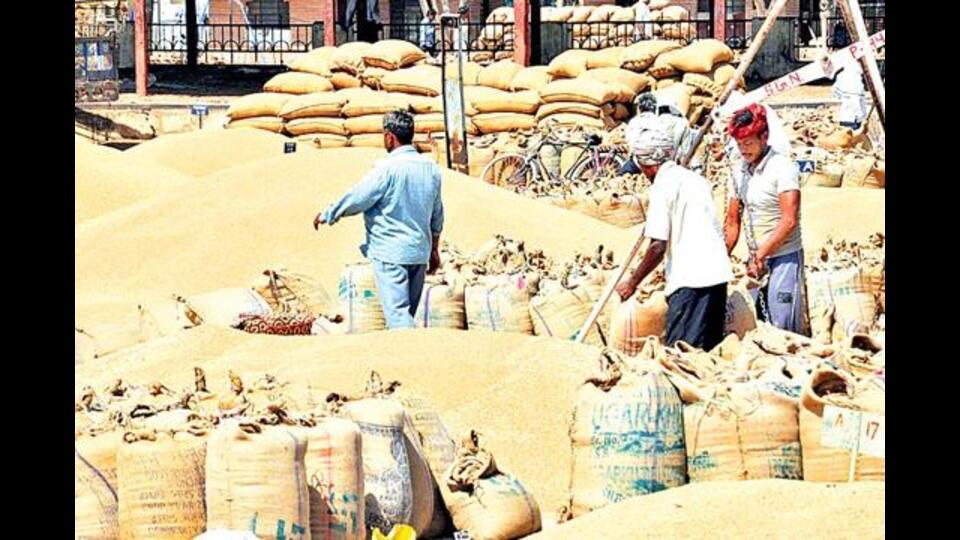
As against a target of 135 lakh tonnes fixed by the department for the rabi season procurement, officials in the department are of the opinion that it may witness a steep fall and the total procurement might be restricted to around 100 lakh tonnes as traders and corporates that export the foodgrain are keen to lift stocks from the state.
The total wheat production in the state is likely to touch 175 lakh tonnes.
The state food department has raised a cash credit limit of ₹30,000 crore for wheat purchase.
“Most of the Middle-East countries dependent on Ukraine and Russia for food requirements, particularly wheat, are now looking towards India for their foodgrain requirements,” said a food department officer, adding the affluent farmers in the state are expected to retain their crop as wheat prices in the commodity market reported on Thursday was ₹2,350 per quintal more than the minimum support price of ₹2,015 a quintal.
Reportedly, wheat flour mills and traders have started hiring storage space for stocking wheat.
The country’s agency that drives nation-wide public distribution system also feels that wheat arrivals to mandis in the state during the purchase season will fall but not in quantity as projected by the state good department. “It will be 10-12 lakh tonnes,” said an FCI officer.
“The present sentiment of world food market will have resonating impact on Punjab also,” said Naresh Ghai, president, Flour Mills Association, Punjab.
“As per reports, farmers are directly dealing with traders for the sale of their rabi produce as prices in the open market are more than the MSP offered by state procurement agencies,” he added.
“We are all geared up for the procurement. We have sufficient space for the storage of fresh crop and will deal with any eventuality during the procurement days,” said FCI general manager, Punjab, Arshdeep Thind. He, however, refused to comment on the purchase in the open market.
Ghai said Madhya Pradesh and Rajasthan have major potential for lifting of wheat for exports because of their proximity to the Kandla port in Gujarat. “Also, the MP government has waived levies on wheat purchase for the benefit of traders,” he added.
However, Punjab levies taxes for about 8.3%, which includes 3% market fee and rural development fund and ₹45 per quintal arhtiya fee, which comes to about 2.25%. “Punjab cannot afford to waive the taxes as it is the major revenue source for the state,” said an officer of the state food department. It could be said that no taxes are levied on flour mills, the potential sources of making purchases in the open market.
“Punjab’s turn for the purchase by traders will come after Madhya Pradesh and Uttar Pradesh. Punjab will certainly see wheat trade in open market,” said DC Singla, who operates a flour mill in Khanna.
Private traders and corporates have lifted 9.5 lakh tonnes from Punjab during the past three months from the FCI under the open market sale scheme and it is expected to go up this season.
Secretary, food and supplies, Gurkirat Kirpal Singh, said, “Private traders will come to Punjab, but right now we can’t say how much they will buy.”
He added that Punjab may be logistically placed far off from the international ports but there are advantages such as the state has well-entrenched procurement system and storage facilities are much better. The matter was also discussed at a meeting chaired by chief secretary Anirudh Tewari to review the wheat procurement.


