
 E-Paper



Govt's goal is zero infiltration, can be achieved through quadrangular security grid: Amit Shah
Home minister Amit Shah also said that BSF personnel delivered a commendable performance during ‘Operation Sindoor’

 Prefer HTon Google


Union home minister Amit Shah interacted with Border Security Force (BSF) personnel at the Sanchu Post in Rajasthan's Bikaner on Tuesday, and virtually inaugurated women's barracks. He praised the BSF and affirmed the Centre's goal of ‘zero infiltration’.
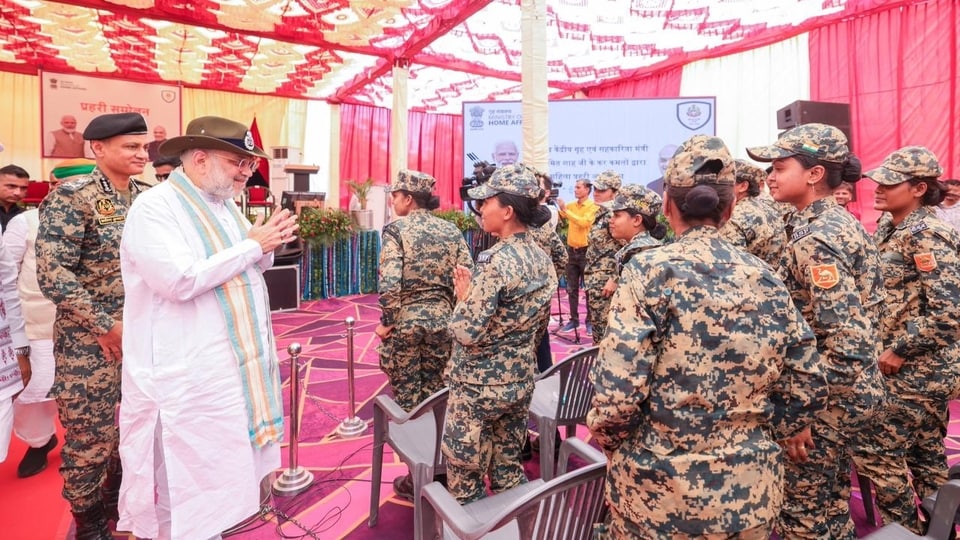
Shah hailed the dedication of the BSF, saying that they have fulfilled their responsibility to the nation "without caring for scorching heat, severe cold, rain, dense forests, snow-covered peaks, or temperatures ranging from 45 degrees to minus 45 degrees Celsius."
Noting that the Narendra Modi-led government has adopted a policy of "ruthlessly giving a befitting reply to any attempt by terrorists", the home minister hailed the BSF personnel for their "commendable performance" during Operation Sindoor.
ALSO READ | Centre forms high-level committee to address unnatural demographic changes, says Amit Shah
Wherever the BSF held the frontlines, Shah said, they stood firm with complete determination. "Wherever required, BSF personnel gave a befitting reply to Pakistan in keeping with their proud tradition."
'Zero infiltration', 'Anti-drone systems'
Home minister Amit Shah emphasised that border security relies on a 'quadrangular security grid' -- comprising the BSF, the Army, border-area citizens and the local administration -- and said that it is not an "isolated duty, but a territorial responsibility."
He said that the central government's goal is to ensure "zero infiltration", which Shah noted can only be achieved through the quadrangular security grid.
“The responsibility for securing the Pakistan and Bangladesh borders lies with the BSF. Along both these borders, we have to strengthen the quadrilateral security grid. To deal with any threat, the BSF, the armed forces, border residents, and the local administration must work jointly; that is why it has been named a quadrilateral grid. Border security is not an isolated duty, but a territorial responsibility shared by all of us,” Shah said.
ALSO READ | Don't take Bangladeshi infiltrators to courts, send them to BSF instead: Suvendu to Bengal police
On the same day he announced the formation of a high-level committee on demographic change, Shah urged the BSF to keep a vigilant watch on any "unnatural demographic change" occurring in villages situated near the border.
Additionally, Amit Shah said the Centre will begin installing anti-drone systems within the next six months.
In reference to the cross-border drone incidents, Shah stressed that it is important to identify who receives the drones once they land on Indian soil and who uses the material brought by them for anti-national activities.
Shah pressed on constant vigilance over all threats originating from across the border, adding that, at the same time, attention must also be paid to those within our borders who are used to create internal threats.


