
 E-Paper



Antibodies against Nipah found in bat samples from north Kerala, says Veena George
Amid Covid-19, the Nipah outbreak had really jolted the state. Experts said the strict protocol in place due to Covid-19, like masking, physical distancing and no overcrowding, helped the state to blunt the impact of the zoonotic disease.


Results of samples collected from bats after the death of a 12-year-old boy in north Kerala on September 6 have confirmed the presence of antibodies against the Nipah virus, state health minister Veena George said in Thiruvananthapuram on Wednesday.
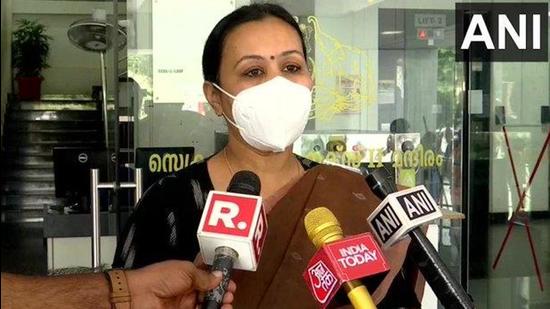
The minister said after the death of the boy a team from the National Institute of Virology (NIV) had taken samples of many species of bats from the area and the samples indicated the presence of antibodies against the virus in two varieties. She said the latest results have given credence to the theory that bats are the main carriers of the Nipah virus.
The health department was on high alert after the third outbreak of Nipah, the first being in 2018 in Kozhikode and the second in Ernakulam in 2019. It cordoned off the entire area and samples were collected from all houses. Around 800 samples were checked in two days and all turned positive. Like earlier outbreaks, it was localised and contained effectively.
“The NIV has conveyed to us about the presence of IgG antibody in some. We are expecting more results in the coming days,” the minister said. She said different studies conducted by NIV, the Indian Council of Medical Research and National Institute of High Security Animal Diseases will continue. She said though the 21-day incubation period was over the department will observe a double incubation period of 42 days to declare the area Nipah free.
After the death of the boy, his parents said he had eaten rambutan fruit before taking ill and authorities have asked people not to eat fruits picked from the ground. But samples of half-eaten fruits did not show any signs of contamination during initial tests. Later authorities warned people not to disturb bat habitat in panic.
Reeling under the high number of Covid-19 cases, the state contributed more than 60 per cent of the country’s total cases for about four months. Amid Covid-19, the Nipah outbreak had really jolted the state. Experts said the strict protocol in place due to Covid-19, like masking, physical distancing and no overcrowding, helped the state to blunt the impact of the zoonotic disease.
Kozhikode reported the Nipah infection for the second time in three years-- in 2018 it claimed 17 lives in the district. Two persons also survived the infection. And in 2019 a youth tested positive for the zoonotic disease in Ernakulam but he was also nursed back to life after long hospitalization.
After the first outbreak in 2018, many promises like setting up of a high-end animal testing lab, virology institute, a scientific study on bats (chiropterology) and a treatment protocol for separate zoonotic diseases were made. Experts say most of these remained only promises. “Since zoonotic diseases recur frequently in the state it needed an integrated approach and team of experts from all fields to study it,” said Dr N M Arun, an internal medicine expert.
Experts like him want a proactive strategy to face the increasing threat of recurring zoonotic diseases and not wait for the outbreak to act. The state needs to strengthen its surveillance system backed by enough scientific studies, they say.
It is a fact that zoonotic diseases have recurred at regular intervals in the state in the last three years. Many cases of Kyasnur forest disease (monkey fever), avian influenza, swine flu and anthrax were reported. Thousands of ducks were culled in Alappuzha two years ago to check the spread of avian influenza.
“We need a permanent mechanism for early detection of such diseases and early warning to the people. More research is also needed in the area,” said Dr Prejit Nambiar, a teacher at the Kerala Veterinary and Animal Sciences University, who specialises in zoonosis and food safety. He said a close interaction is necessary between medical experts, veterinary professionals, environmental scientists and wildlife professionals to tackle zoonotic diseases.


