
 E-Paper



Apex court puts on hold setting up of Centre’s fact-checking unit
Using the rule, the government on Wednesday designated the Press Information Bureau as the government’s fact-checking body for any content relating to the central government


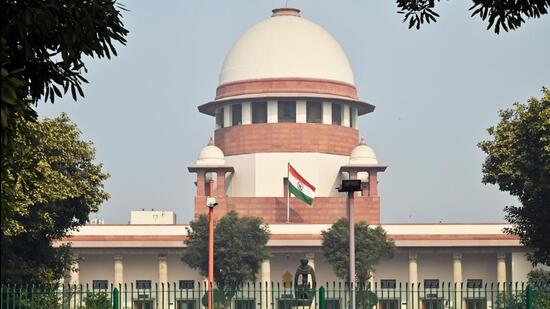
The Supreme Court on Thursday stayed the implementation of rules that the government used a day earlier to set up a “fact check unit” to take down online content deemed fake or misleading, citing serious constitutional concerns over freedom of speech.
A bench headed by Chief Justice Dhananjaya Y Chandrachud said there was a “prima facie case” to stay Rule 3(1)(b)(v) of the Information Technology (Intermediary Guidelines and Digital Media Ethics Code) Amendment Rules 2021(that was amended in 2023).
Using the rule, the government on Wednesday designated the Press Information Bureau as the government’s fact-checking body for any content relating to the central government.
“The challenge to Rule 3(1)(b)(v) involves serious constitutional questions. The impact of Rule 3(1)(b)(v) on the fundamental rights of freedom of speech and expression protected under Article 19(1)(a) would fall for analysis by the high court,” said the bench, which also comprised Justices JB Pardiwala and Manoj Misra.
The top court’s order came in response to petitions filed by stand-up comedian Kunal Kamra, the Editors Guild of India, and the Association of Indian Magazines. They had challenged orders passed by a division bench of the Bombay High Court, which gave a split verdict on the issue – including on interim orders restraining the government —on January 31.
A third judge on March 11 said there was no need for an interim stay till the larger challenge to sections of the IT Rules 2021’s validity was settled. The Union government issued a notification for the unit on March 20.
The Supreme Court stayed the notification as well as the Bombay High Court’s order of March 11 that refused interim relief to the petitioners.
Solicitor General Tushar Mehta, appearing for the Centre, argued there was no reason for the top court to interfere as the High Court would decide the matter next month. He clarified that the rule did not require social media platforms like Twitter, Facebook, and Instagram to take down content critical of the government’s functioning.
“The rule under challenge does not require the social media intermediaries to take down any post against the ‘business of government’ but can give a disclaimer indicating that a content on its platform is fake, false or misleading, once it receives an alert from the FCU,” Mehta told the court.
However, the petitioners, represented by senior advocates Darius Khambata, Shadan Farasat, and Gautam Bhatia, highlighted the “chilling effect” the rule could have on free speech, especially during elections.
“For 10 months, this rule has not been notified. Why the haste now. There are elections coming up and this is the time public must have information about Central government and not want FCU to take down any information,” Khambata argued.
Farasat, representing the Editors Guild, said, “This is a classic case where the state is restricting speech about itself. This is the worst time to bring the rules as during elections, it affects the ability of the media to present both sides to an issue.”
Bhatia raised concerns about the rule’s impact on the “safe harbour” protection for intermediaries under Section 79(1) of the IT Act, which could be lost if they fail to comply with the fact check unit’s directions.
The Supreme Court bench said the issue was “whether the status quo as it obtained before the division bench can be allowed to be altered at this stage” when one judge had declared the rule invalid and the other had interpreted it with safeguards.
Kamra’s petition stated, “While the IT (Intermediary) Rules are facially directed at intermediaries, it is users (and the information created and hosted by them on various platforms) that are the subject of the impugned Rules.”
With the split verdict in the Bombay High Court, the matter was referred to a third judge, Justice AS Chandurkar, whose opinion will determine the fate of the controversial rule. The Supreme Court refrained from commenting further, given the pending consideration before Justice Chandurkar.


