E-Paper



Arunachal Pradesh to build memorial to honour hero who won Tawang for India
The foundation stone of the memorial will be laid on February 14, the day when Khathing is believed to have hoisted the Indian flag in Tawang in 1951.


Seventy years after he brought Tawang under Indian rule by reaching the area located near McMahon Line and unfurling the tricolour there, the Arunachal Pradesh government has decided to honour Major Ralengnao Khathing with a memorial.
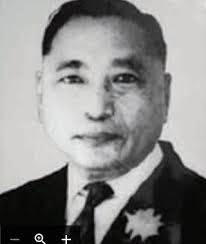
The memorial will be constructed at a site decided by the Tawang district administration and besides highlighting Khathing’s life it will also showcase traditions of the Monpa tribe.
The foundation stone of the memorial will be laid on February 14, the day when Khathing is believed to have hoisted the Indian flag in Tawang in 1951.
Arunachal Pradesh chief minister Pema Khandu announced this on Friday while speaking at a function in Tawang to felicitate newly elected gram panchayat and zila parishad chairpersons.
Khathing, who was more popular as Bob, is relatively an unknown figure for most of India and even in parts of Arunachal Pradesh. But people in Tawang still remember him with respect for establishing Indian control over the area when the threat of China loomed.
“Not many of us are aware of Maj Khathing and his contribution to Arunachal Pradesh. Once the memorial is constructed, visitors will come to know about him and his contributions,” Khandu said.
Born at Ukhrul in Manipur in 1912, Khathing had served the British Army in the Second World War. He was awarded the Military Cross and received the Member of British Empire (MBE) as well.
After Independence, he was appointed as an assistant political officer in November 1950 in Tirap division and was posted in Pasighat in Arunachal Pradesh (known earlier as North East Frontier Agency-NEFA).
It is believed that he started an arduous journey on foot from Charduar on January 17, 1951 with a team of soldiers from 5 Assam Rifles traversing difficult and inhospitable terrain to reach Tawang on February 6.
“To establish Indian presence up to the extent of the McMahon Line, which was demarcated as the border between India and Tibet in 1914, under the terms of the Shimla Treaty, required covering the area by foot over very difficult terrain,” said an Arunachal Pradesh government release.
“Khathing and his troops of 5 Assam Rifles successfully accomplished this. He then met and interacted with a number of ‘gaonburhas’ (village headmen) and quickly and effectively established authority over Tawang. Indian administrative presence was thus established in this remote part of the country,” it added.