E-Paper



In first month, Himanta Biswa Sarma govt focuses on Covid, war on drugs
The Bharatiya Janata Party-led coalition, which includes Asom Gana Parishad and United Peoples’ Party Liberal took charge at a time when the second wave of the Covid-19 pandemic was at its peak

 Prefer HTon Google


Tackling the Covid-19 situation in the state and a relentless campaign against illegal drugs have been the two key areas of focus for the Himanta Biswa Sarma-led coalition government in Assam, which completes its first month in office on Thursday.
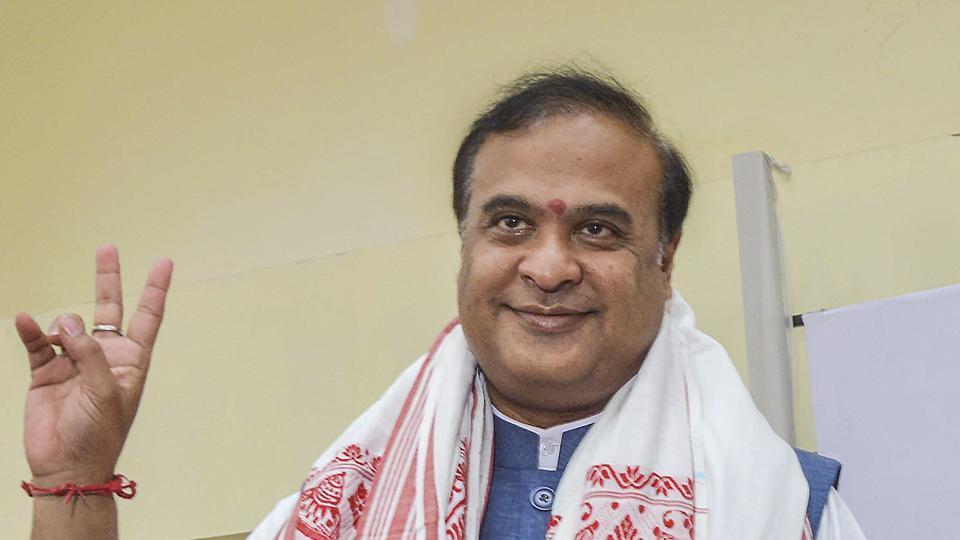
The Bharatiya Janata Party (BJP)-led coalition, which includes Asom Gana Parishad (AGP) and United Peoples’ Party Liberal (UPPL) took charge at a time when the second wave of the Covid-19 pandemic was at its peak.
After deliberations by the BJP high command in Delhi, the issue of leadership was resolved — with Sarma attaining his ambition of becoming chief minister (CM), and outgoing CM Sonowal being assured he would be accommodated by the party or government in another capacity, perhaps in Delhi.
The Covid challenge
On May 10, the day the new Cabinet took oath, the state recorded 5,803 positive cases. Within the next 10 days, the figure kept increasing, going up to 6,573 cases on May 20 — the highest-ever daily cases for the state. Nearly 80-90 deaths from the disease were taking place and hospitals were filled to the brim with patients.
Contrary to expectations, Sarma, who handled the health ministry in the previous Sarbananda Sonowal government, gave the charge of the ministry to Keshab Mahanta, working president of AGP, instead of handling the responsibility himself.
Also Read | Assam opens 300-bed Covid hospital in stadium; built in 20 days by DRDO
Initiatives such as a strict curfew, extending to as long as 17 hours daily, without going in for a complete lockdown; the setting up of new Covid care centres; improvement in oxygen supply; a ban on inter-district movement; and increasing the number of Covid tests as well as speeding up vaccination has helped bring down the figures in the past two weeks.
Daily numbers have now come down to around 3,800 cases and nearly 40 deaths. The positivity rate, which hovered around 8% a month ago, has now decreased to nearly 3%. The state, however, still has 49,000 active Covid-19 cases at present.
The war on drugs
While the health department is handling the pandemic situation, the state’s police is busy busting drug cartels, arresting traffickers and recovering contraband and cash since the new government took office.
Though the drive against drugs has been part of the routine police operations, the campaign picked momentum last month after the new government under Sarma, who also holds the home portfolio, took charge.
Between May 10 and June 7, the police across Assam has registered 401 cases and arrested 701 persons in connection with illegal drugs. Over 8.5 kgs of heroin, 2 kgs of brown sugar, nearly 6,000 kgs of marijuana, over 270,000 illegal tablets and around ₹26 lakh in cash have been recovered in this period.
Also Read | Assam state board class 12 exams to be held in July-Aug
As per police records, there has been a big jump in Narcotic Drugs and Psychotropic Substances (NDPS) Act cases in past 10 years in the state. From 180 cases in 2010, the police registered 1,023 cases last year.
“We will continue our operations against drugs continuously. Many families have been destroyed because of it, so we are taking this action as our responsibility. I am of the firm belief if our police acts actively, Assam would be able to get rid of this menace,” Sarma said in Delhi last week.
The militant challenge
The release of Ritul Saikia, a junior engineer assistant of the Oil and Natural Gas Corporation (ONGC), kidnapped by the banned United Liberation Front of Asom-Independent (ULFA-I), within two weeks of the new government taking charge, has been another highlight of the past month.
“The CM took personal interest in the matter and visited the affected family. His appeal to ULFA-I commander-in-chief Paresh Baruah elicited quick and positive response and led to Saikia’s release on the Indo-Myanmar border,” said information minister Pijush Hazarika.
Saikia was abducted along with two other colleagues from a work over rig site of ONGC in Sivasagar district of Assam on April 21. While his colleagues were rescued three days later by security forces from Nagaland, close to the Indo-Myanmar border, in a joint operation, Saikia’s whereabouts were not known.
Also Read | Assam to raise 10 commando battalions on lines of NSG to fight crime, border issues
In the past month, the government also increased its stake in Numaligarh Refinery Limited (NRL) from 12.35% to 26% with an investment of ₹2,187 cr, marking the biggest-ever investment by the state.
On the administrative front, the government created the role of “guardian ministers”, giving responsibility of two to three districts to each Cabinet minister for development projects and welfare schemes in those districts.
The critique
But the Opposition isn’t impressed. “Assam is one of the worst performing states in Niti Ayog’s Sustainable Development Goals Index. And despite assurances by the new CM, crime against women continues unabated in the state,” said Bobbeeta Sharma, media in-charge of Opposition Congress state unit.
“The BJP had always committed to revive the two closed paper mills of Assam, but recently we have seen how they are all out to auction them without consideration of the interest of the people of Assam,” she added.
Experts believe that while it is too early to judge the Sarma government, especially given that its hands were full tackling the pandemic in the first month, there are clear challenges.
“The government was formed during a crisis and hence it has been mainly preoccupied in dealing with Covid-19,” said Kaustubh Deka, professor of political science in Dibrugarh University. He however highlighted the delay and cancellation of board exams, and the closure of two paper mills that the BJP had promised to revive as weaknesses in the first month.