E-Paper



Assam launches financial incentive scheme for girl students to end child marriage
The scheme—Mukhya Mantrir Nijut Moina Asoni (MMNMA)—is expected to cover around one million girl students

 Prefer HTon Google


Guwahati: The Assam government on Thursday launched a scheme to provide monetary benefits to girl students every month in order to put an end to child marriages.
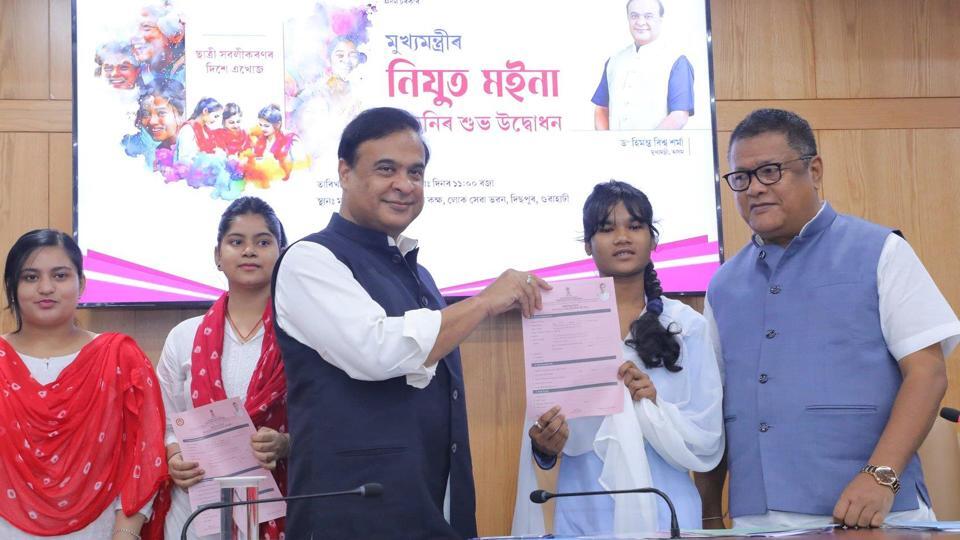
The scheme—Mukhya Mantrir Nijut Moina Asoni (MMNMA)—is expected to cover around one million girl students and cost the exchequer Rs.300 crore in the first year and around Rs.1500 crore over a five-year period, government officials familiar with the matter said.
According to the state government, the scheme would increase the enrollment ratio of girls in schools, colleges, and universities, and around 200,000 more girl students are expected to enroll in educational institutions this year.
Emphasising his objective to end child marriages in the state, chief minister Himanta Biswa Sarma said that the National Family Health Survey 2019-21 had found that 31.8% of women in the age group of 20-24 were mothers, indicating that most of these women had gotten married before the legally permissible age of 18.
“They got married when they were not mature, had not completed their education, or were physically capable of bearing children. In some cases, these girls also ended up being victims of domestic violence,” the CM said, adding that the new scheme will aim to encourage more girls to carry on higher studies, become economically independent, and get married at an appropriate age.
State education minister Ranoj Pegu took to X to thank chief minister Sarma for launching the scheme and said, “This ambitious scheme, undertaken by the state government to combat child marriage and to provide a secure educational future for girl students, is a historic step for women’s education in Assam.”
“I urge all girl students in the state government’s HS/SS schools, colleges, and universities to start collecting forms for the “Mukhyamantri Nijut Moina Scheme” from today,” he added.
According to the scheme, girl students who have passed Class 10 and have enrolled in Class 11 will get Rs.1,000 per month (excluding two months of summer vacation) for two years till they complete their Class 12 board exams. The amount will be transferred to their bank accounts on the 11th of every month, Sarma said.
Girls who have completed Class 12 boards and enrolled in degree courses will get a monthly stipend of Rs.1,250 for the next three to four years till they complete their graduation. Those girls who have enrolled in bachelor and post-graduation courses will get Rs.2,500 per month till they complete their courses, Sarma added.
School and college girl students who have been married would not be able to get benefits of the scheme. But if they have been married while pursuing postgraduate, they will be able to get benefits, Sarma said.
He said that this scheme will reduce the burden on parents, who sometimes were unable to allow their daughters to pursue higher education due to economic constraints.
The CM added that the children of ministers, legislators, MPs, and meritorious students who receive scooters and other benefits given by the government will not be able to avail themselves of this scheme.
Students who are studying in private schools, colleges, and universities will also not be able to avail themselves of the benefits of the MMNMA scheme.
As per the existing government scheme, girl students scoring over 60% marks in their school are eligible of getting scooters from the government. This year, nearly 50,000 girls are expected to get this benefit.