E-Paper



At COP29, India takes aim at rich countries’ stance
India urged developed nations to address "carbon debt" and prioritize equity at COP29, emphasizing that just transitions must start with wealthier countries.

 Prefer HTon Google


India delivered its strongest intervention yet at the COP29 climate talks on Monday, demanding discussion on “carbon debt” owed by developed nations and calling out trade measures that disadvantage developing countries, while arguing that just transition must begin with wealthy nations, not developing economies.
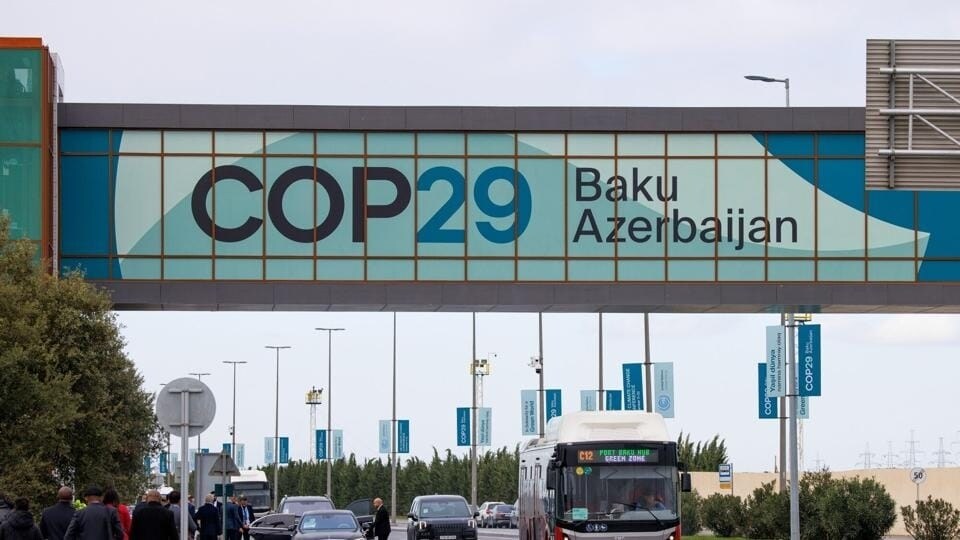
Speaking at the high-level ministerial round table on ‘just transition’, India’s deputy delegation lead Leena Nandan challenged the narrow framing of climate justice, emphasising that developing countries like India consume just one-third of the global average per capita energy. This stark inequality in energy access, she argued, must be central to any discussion of climate transitions.
“Global climate justice is at the core of our work here under the Convention and its Paris Agreement,” Nandan said, stressing that development remains “the over-riding priority for countries of the global South.” She emphasised that the principles of equity and Common But Differentiated Responsibilities and Respective Capabilities (CBDR-RC) are foundational to climate action, not optional considerations.
India called for monetisation of “carbon debt” owed by developed nations for their historical emissions and overuse of the global carbon budget. “Monetisation of this carbon debt would be in trillions,” Nandan stated.
The intervention identified several critical barriers to global just transition. India raised strong concerns about unilateral trade measures that restrict development opportunities for developing nations, likely referring to measures like the EU’s Carbon Border Adjustment Mechanism (CBAM) without explicitly naming it.
Read more: COP29: India calls for “mutual trust” at key stage in Baku negotiations
The statement also highlighted how intellectual property rights on green technologies continue to hinder their free and scalable access to developing countries, calling for open discussion of these barriers. India questioned whether current climate science adequately reflects considerations of global equity and environmental justice.
Nandan pointed out the double standards in how developed and developing country citizens’ choices are treated, noting the stark contrast between “the choices of citizens in developed countries being sacrosanct vs the costs imposed on the citizens of developing countries due to transition.”
India also called for greater emphasis on sustainable lifestyles, referencing agreements made at the United Nations Environment Assembly in Nairobi earlier this year. This marks a continued push by India to bring consumption patterns into climate discussions.
“The denial of international equity narrows our domestic options and poses further challenges to our objectives of achieving immediate, rapid, and sustained access to development opportunities and affects the most vulnerable communities in our countries the most,” Nandan emphasised, highlighting the real-world impacts of inequitable climate action.
India took particular aim at attempts to frame climate transitions as investment opportunities, stating this “undermines the ‘just’ element of just transitions by making the victim pay up for remedies rather than providing him the remedy.” This criticism appears directed at developed nations’ emphasis on private finance and market mechanisms in climate funding discussions.
The intervention firmly rejected premature discussions of transition pathways in nationally determined contributions (NDCs) and national adaptation plans (NAPs), insisting that “just transition has to begin with transition in developed countries.” This position challenges the current push by wealthy nations for universal enhancement of climate commitments.
In perhaps its most ambitious demand, India called for developed nations to achieve net zero emissions by the end of this decade - a timeline far more aggressive than current pledges by most wealthy nations. This accelerated transition by developed countries would serve two purposes, Nandan argued: providing necessary “carbon space” for developing countries while lowering the transition costs currently imposed on their citizens.
The statement emphasised that Common But Differentiated Responsibilities and Respective Capabilities (CBDR-RC), equity, and climate justice should be core to discussions, warning against “prescriptive top-down approaches” that disregard nationally determined transition pathways. India stressed that transitions in developing countries should not be seen merely as investment opportunities.
“A frank discussion of these issues and their inclusion in our decisions taken at COP29 will be the cornerstone of building trust that would unlock a truly equitable and just global transition,” Nandan concluded, ending with the pointed observation: “Just transitions must be just.”