
 E-Paper



Avoid misogynistic comments in sexual offence cases: Here’s what SC told courts
A bench of justices AM Khanwilkar and S Ravindra Bhat set aside a July 2020 order of the Madhya Pradesh high court asking a molestation case accused to get a rakhi tied on his wrist by the complainant as a condition for bail


The Supreme Court on Thursday directed all courts in the country to desist from commenting upon the dressing, behaviour, past conduct, morals or chastity of women, or suggest any “compromise formula” while deciding cases of sexual offences. Here is all you need to know about the directions and what prompted them:
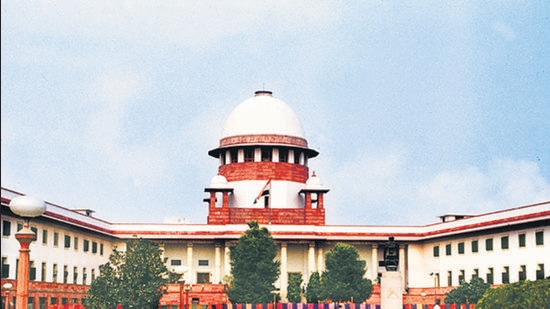
• The court emphasised that “entrenched paternalistic and misogynistic attitudes that are regrettably reflected at times in judicial orders’’ must be forbidden.
• The court issued a slew of directives, along with a checklist for judges, to eliminate social bias from entering judicial reasoning.
• A bench of justices AM Khanwilkar and S Ravindra Bhat set aside a July 2020 order of the Madhya Pradesh high court asking a molestation case accused to get a rakhi tied on his wrist by the complainant as a condition for bail.
Also Read | Consider lawyers for vaccine priority, top court asks government
• The top court held that this order transformed a molester into a brother by judicial mandate and, thus, reflected adversely on the entire justice delivery system.
• “This is wholly unacceptable and has the effect of diluting and eroding the offence of sexual harassment. The law does not permit or countenance such conduct, where the survivor can potentially be traumatised many times over or be led into some kind of non-voluntary acceptance or be compelled by the circumstances to accept and condone behaviour what is a serious offence,” it said.
• Justice Bhat handed out a checklist for the judges on what must be avoided during judicial proceedings and could never become part of an order.
• He said the use of reasoning or language which diminishes the offence and trivialises the survivor has to be avoided under all circumstances.


