
 E-Paper



Ayodhya case: Joint possession of site not possible, says lawyer
Resuming his arguments on the fifth day of the hearing in the politically sensitive Ram Janmabhoomi-Babri Masjid land dispute case in the top court, senior advocate C S Vaidyanathan claimed the 2010 Allahabad High Court verdict provided conflicting findings on the status of the deity and gave 1/3 rd of the disputed land to Sunni Wakf Board.

 Prefer HTon Google


Lawyers representing deity “Ram Lalla Virajman” on Tuesday argued in the Supreme Court that “janmasthan [birthplace] itself is the deity” and there cannot be joint possession of the place with Muslim parties as “it will cause destruction and division of the deity and that is not possible”.
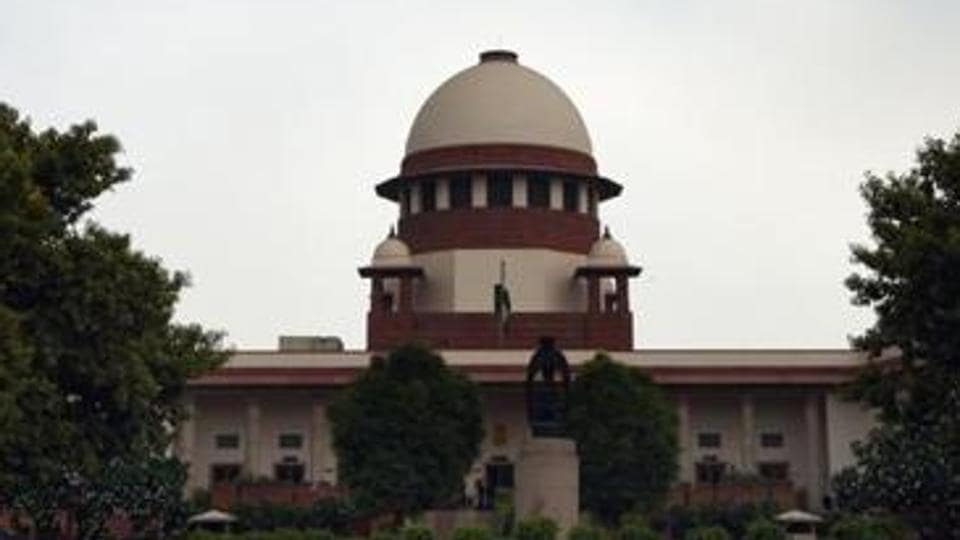
Resuming his arguments on the fifth day of the hearing in the politically sensitive Ram Janmabhoomi-Babri Masjid land dispute case in the top court, senior advocate C S Vaidyanathan claimed the 2010 Allahabad High Court verdict provided conflicting findings on the status of the deity and gave 1/3 rd of the disputed land to Sunni Wakf Board.
“High court is not right in mixing up concepts. In one part, the high court judgment holds that the place (janmasthan) is the deity, at another it says deity is the owner of the place and then goes on to conclude that there is a joint possession of the janmasthan. There cannot be destruction of the idol or the deity,” Vaidyanathan said.
Advancing his argument on whether there existed a temple over which the mosque came up, before a five-judge constitution bench headed by Chief Justice of India Ranjan Gogoi, Vaidyanathan said, “Whether there was a structure of a temple standing there or not, people’s faith and belief that this is the janmasthan did not go into ruin; that faith and belief was not destroyed. The fact that this was the janmasthan has always continued.”
Vaidyanathan further argued, despite the construction of the mosque, the place has always remained a matter of faith for Hindus. “It wasn’t that it became a deity after a particular date; it has always been the deity. It is the faith, a belief of the people. And whether a mosque is constructed or not does not make a difference to this as it did not affect the faith of the people. People continued to pray, that faith was never destroyed or shaken.”
Vaidyanathan claimed “janmasthan” has been there for hundreds of years and Hindus have performed “pooja” at the spot. “The mosque was built on ruins of temples. It is a historical fact that there were persons who came to this country and destroyed temples. We can’t get over that,” he argued.
Just before the conclusion of the proceedings for the day, CJI Gogoi reiterated that “the court will hear all sides and all counsel can raise their case as they want”.
Fourteen appeals have been filed in the apex court against the 2010 Allahabad high court judgment, delivered in four civil suits, that the 2.77-acre land in Ayodhya be partitioned equally among the three parties — the Sunni Waqf Board, the Nirmohi Akhara and Ram Lalla.
On December 6, 1992, the Babri Masjid, which was constructed at the disputed site in the 16th century, was demolished.


