
 E-Paper



Sheikh Hasina in India: When Indira Gandhi gave her asylum after father Mujibur Rahman's assassination in Bangladesh
Sheikh Hasina resignation: In 1975, Sheikh Hasina's father, Sheikh Mujibur Rahman, was assassinated along with 18 members of her family.

 Prefer HTon Google


Sheikh Hasina resignation: External affairs minister S Jaishankar on Tuesday told Parliament that he was “deeply concerned till law and order is visibly restored” in neighbouring Bangladesh, a day after the ouster of prime minister Sheikh Hasina.
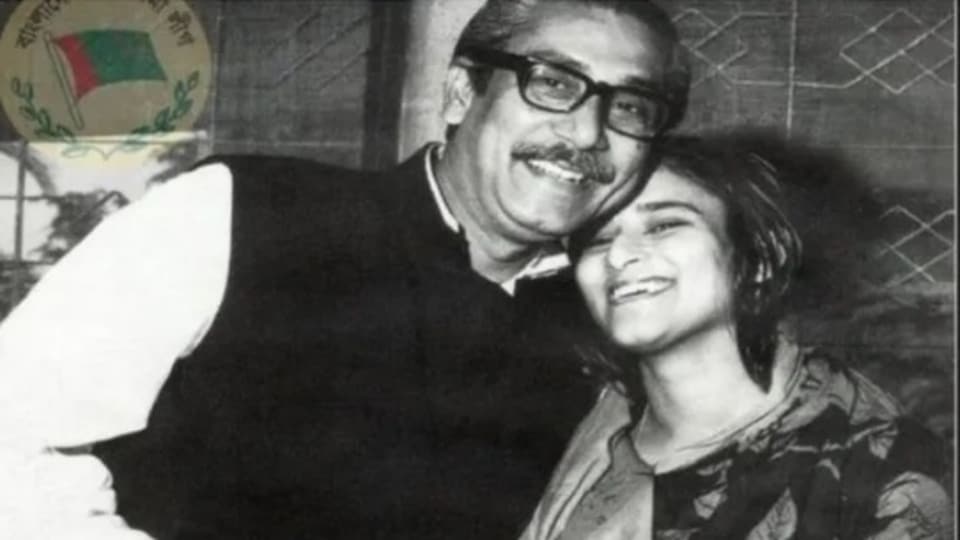
S Jaishankar also gave the first official confirmation Sheikh Hasina was in India where she fled to on Monday as protesters stormed her palace.
In a statement to Rajya Sabha, the EAM also briefed the MPs on former prime minister Sheikh Hasina's “very short notice” request to come to India “for the moment”.
Also Read | India reaches out to Dhaka, wants military to restore peace and normalcy
He said India has instructed its border guarding forces to be exceptionally alert in view of this complex and still evolving situation in the neighbouring country.
Follow Sheikh Hasina Bangladesh News LIVE updates
Sheikh Hasina, 76, who ruled the Banglasdesh with an iron fist for 15 years, resigned as the prime minister following massive protests that initially began as an agitation against a job quota scheme but weeks later morphed into a mass movement demanding her ouster from power.
The controversial quota system provided for 30 per cent reservations in civil services jobs for the families of veterans who fought the 1971 liberation war.
When India gave shelter to Sheikh Hasina and family
On August 15, 1975, Sheikh Hasina's father, Bangabandhu Sheikh Mujibur Rahman, the founding father of Bangladesh, was brutally assassinated along with 18 members of her family, nearly four years after assuming the presidency of the newly formed country.
The tragic incident sent shockwaves throughout Bangladesh, plunging the nation into political turmoil and military rule.
At the time, Sheikh Hasina was in West Germany with her husband, MA Wazed Miah. With no other options, they sought refuge in India, a country that had played a crucial role in Bangladesh's 1971 Liberation War against Pakistan.
Under the leadership of then Prime Minister Indira Gandhi, India extended a helping hand to Sheikh Hasina, providing her with security and shelter.
"Mrs. Indira Gandhi immediately sent information that she wanted to give us security and shelter... We decided to come back here (Delhi) because we had in our mind that if we went to Delhi, from Delhi, we'd be able to go back to our country. And then we'll be able to know how many members of the family are still alive," Sheikh Hasina recounted in a 2022 interview, reflecting on the moments after Mujibur Rahman's assassination.
After leaving Germany, Sheikh Hasina, along with her family, including her two young children, was initially placed in a secure house in New Delhi, living under tight security due to fears for their lives. She described her time in Delhi as being a “secret resident”.
Upon arriving in Delhi, Sheikh Hasina met Indira Gandhi and learned about the killing of 18 members of her family.
“She (Indira Gandhi) made all the arrangements for us. A job for my husband and the Pandara Road house. We stayed there,” she told news agency ANI in 2022.
Sheikh Hasina's bonding with Pranab Mukherjee
During this time, Hasina developed close relationships with Indian leaders, including Congress leader Pranab Mukherjee and the Gandhi family. Her stay in India not only provided her safety but also allowed her to form connections that would later play a pivotal role in her political career.
In Delhi, Hasina initially resided at 56 Ring Road, Lajpat Nagar-3, before moving to a house on Pandara Road in Lutyens' Delhi.
Hasina still remembers those days and remains grateful to India and the Gandhi family. She frequently meets members of the Gandhi family whenever she visits India.
After six years, on May 17, 1981, Hasina returned to Bangladesh, where she was elected in absentia as the general secretary of the Awami League.
Sharmistha Mukherjee, Pranab's daughter, writes in her book 'Pranab, My Father' about the bond which then developed between Hasina and the Mukherjees, The Week reported.
“They soon became a part of our family and would be there for all family occasions like birthdays, get-togethers and annual picnics,” writes Sharmistha Mukherjee.
Apart from a select few family friends, no one knew the true identity of Hasina and her kin. Suvra, Pranab's wife, would introduce Hasina to strangers as her sister.
“I used to wonder why she addressed my father as ‘dada’ (elder brother) and my mother as ‘didi’ (elder sister), and not ‘boudi’—the appropriate form of address for an elder brother’s wife. As she was supposed to be my mother’s sister for strangers, this subterfuge was perhaps adopted to ward off any unwanted attention and suspicion. Even after so many years, she became emotional talking about Ma. After returning to Bangladesh at the end of her exile, she would send exquisite Dhakai Jamdani sarees for Ma and for all the female members of the family. Ma would always reciprocate,” she adds.


