
 E-Paper



Baradar likely to head Afghanistan’s new Taliban govt
Baradar, who heads the Taliban’s political office, will be joined by Mullah Mohammad Yaqoob, the son of late Taliban co-founder Mullah Omar, and Sher Mohammad Abbas Stanikzai, in senior positions in the government, three sources said.


Taliban co-founder Mullah Abdul Ghani Baradar is set to lead a new Afghan government to be announced soon, officials in the group said on Friday, as the militant outfit faces an enormous challenge of shifting gears to administrative power after the US withdrew its troops and ended two decades of war.
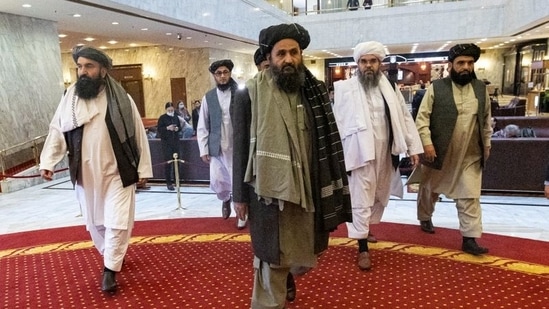
Baradar, who heads the Taliban’s political office, will be joined by Mullah Mohammad Yaqoob, the son of late Taliban co-founder Mullah Omar, and Sher Mohammad Abbas Stanikzai, in senior positions in the government, three sources said.
“All the top leaders have arrived in Kabul, where preparations are in final stages to announce the new government,” a Taliban official told Reuters, speaking on condition of anonymity.
While the Taliban have spoken of their desire to form a consensus government with other Afghan leaders, a person close to the Islamist militant group said the interim government now being formed would consist solely of Taliban members.
It would comprise 25 ministries, with a consultative council, or Shura, of 12 Muslim scholars, the person added.
Also being planned within six to eight months is a Loya Jirga, or grand assembly, bringing together elders and representatives across Afghan society to discuss a constitution and the structure of the future government, the source said.
All the sources expected the interim government’s cabinet to be finalised soon but differed over exactly when, with some saying it would be settled by Saturday while others felt it would take until the middle of next week.
Nonetheless, forming a government is the obvious next step for the Taliban, which seized Kabul on August 15 and celebrated with gunfire as last US forces abandoned the Capital after closing a frenzied airlift operation that saw more than 123,000 foreign nationals and Afghans flee.
RECOGNITION
A Taliban-led government’s legitimacy in the eyes of international donors and investors will be crucial.
Western powers and others say formal recognition of the Taliban government, and a resulting flow of economic aid, will depend on action to safeguard human rights, the rule of law, and the media, not just words.
The Taliban enforced a radical form of Sharia, or Islamic law, in particular oppressing women, when it ruled from 1996 to 2001. This time around, the movement has tried to present a more conciliatory public face to the world, promising to protect human rights and refrain from reprisals against old enemies.
So far, India and western countries have adopted a wait-and-see approach to the Taliban, saying it’s too early to recognise a government.
New Delhi, which held discussions with Taliban officials in Qatar earlier this week, said on Thursday its focus was not on recognising a government formed by the group but on ensuring that Afghanistan’s territory is not used for terrorism and “anti-India activities”.
Still, some signs of engagement with the new leaders are gathering pace.
China on Friday confirmed a tweet from a Taliban spokesperson who indicated that Beijing will keep its embassy in Kabul open. “We hope the Taliban will establish an open and inclusive political structure, pursue moderate and stable domestic and foreign policy and make a clean break with all terrorist groups,” foreign ministry spokesperson Wang Wenbin said.
EU countries, too, laid out their conditions for stepping up engagement with the Taliban, agreeing to establish a joint Kabul “presence” to help departures if security allows.
“We have to engage with the new government in Afghanistan, which doesn’t mean recognition, it’s an operational engagement,” EU foreign policy chief Josep Borrell said, following a meeting of the bloc’s foreign ministers in Slovenia.
CHALLENGES
The new government’s most immediate priority will be to avert the collapse of an economy grappling with drought and the ravages of a 20-year conflict that killed around 240,000 Afghans before US forces completed a tumultuous pullout on August 30.
At stake is whether the Taliban can govern a country facing economic meltdown, a humanitarian disaster, and threats to security and stability from rival jihadist groups, including a local offshoot of the Islamic State.
In Kabul, residents voiced worry over the country’s long-running economic difficulties, now seriously compounded by the militant movement’s takeover.
“With the arrival of the Taliban, it’s right to say that there is security, but business has gone down below zero,” Karim Jan, an electronic goods shop owner, said.
Humanitarian groups have warned of impending catastrophe and said the economy, reliant for years on millions of dollars of foreign aid, is near collapse. In addition to this, swathes of the country are bearing a drought and are on the brink of a hunger crisis.
The Joe Biden-led American administration has no plans to release billions in Afghan gold, investments and foreign currency reserves that are parked in the US, but international agencies and countries have begun the process of delivering aid to Kabul.
The UN said it had restarted humanitarian flights to parts of the country, linking the Pakistani capital Islamabad with Mazar-i-Sharif in northern Afghanistan and Kandahar in the south.
The country’s flag carrier Ariana Afghan Airlines also said it would resume domestic flights later on Friday, starting with a plane from Mazar-i-Sharif to Kabul, after getting a “green light” from the Taliban and aviation authorities.
Western Union and Moneygram said they were resuming money transfers, which many Afghans rely on from relatives abroad to survive, and Qatar said it was working to reopen the airport in Kabul -- a lifeline for aid.


