E-Paper



Behind the fake league that broke hearts
The ground where the matches were staged was hidden from sight on the outskirts of the village. When HT visited Molipur, the pitch was deserted and overgrown, the floodlights dumped in one corner, a stream flowing nearby.


Sanjay Thakor, 30, was good at cricket, but only in the version played with tennis balls. Growing up in Sundhiya village in Gujarat’s Mehsana district, some 90km from state capital Gandhinagar, he worked in his farm and played alley cricket in his free time. Till recently, he had never actually seen a real cricket ball.
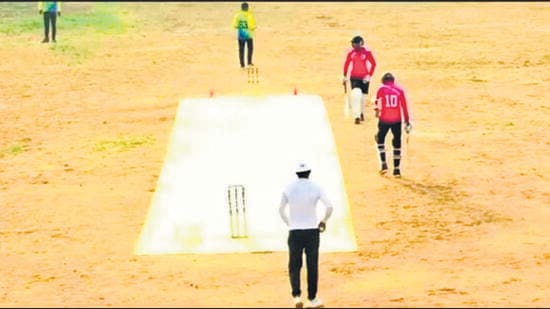
When the news of a cricket tournament being held in Molipur, less than 10km away, and streamed live on YouTube, began circulating in May, the cricket enthusiast in him was intrigued. Sanjay and his friend Sukhaji Thakor, 38, who lived nearby, began visiting Molipur to watch the matches. They were enthralled. The games were played under floodlights, and each team had their own jerseys.
As they became regulars, the organisers spotted their interest, and asked them to join the teams. There was money to be made as well, ₹400 for every match played. By the beginning of June, Sanjay, a spin bowler, was made captain of Chennai Fighters. Sukhaji, a batsman, was made captain of Gandhinagar Challengers.
Their dream of playing real cricket matches did not last too long. Two days after the two friends were made captains, the Molipur cricket ground was raided by Gujarat police in the evening of July 6. Twenty-four people, dressed in their bright cricket dresses, were detained for questioning.
For Sanjay, the immediate concern was money. “The organizers had promised to pay us after 10 matches and we had completed only eight,” he said. “Our main concern was about our payment.”
Soon, getting paid was the least of their concerns, as it had already dawned on the two men that they were part of an elaborate hoax — of staged matches to con punters in Russia, of matches telecast live on the internet complete with fake crowd noises, of organisers making a quick buck from illegal betting.
Four people — Shoyeb Dawda, Saqib Mahamad, Koli Mahamad Abubakar and Sadiq Dawda — have since been arrested, with 20 of the 24 cricketers picked up from the Molipur ground, including the two friends, let off. Except Saqib Mahamad, who hails from Uttar Pradesh, the other three are from Molipur.
“I always wanted to play with a tournament ball and it was fun being out here. But we started connecting the dots after we were to get out or instructed how to play,” Sanjay said. “Our family stopped talking to us for some time when they came to know that police had taken us for questioning. Now things are better for they know we had no role in the scam.”
Setting the stage
Molipur is a small Muslim dominated village of about 1,200 households, 3km from Vadnagar, where most are involved in farming. The village also has a significant population of Cheliyas, who run restaurants, mainly on highways that connect the cities of Gujarat, serving vegetarian food.
The ground where the matches were staged was hidden from sight on the outskirts of the village. When HT visited Molipur, the pitch was deserted and overgrown, the floodlights dumped in one corner, a stream flowing nearby. In another corner, there is a small shed where organisers were often seen with their computers, streaming the matches live on a YouTube channel. But the players did not know that since they were barred from that area.
It was in this village that the main organiser, Shoyeb Dawda, 25, grew up.
Villagers recalled Dawda as a simple and shy man who worked in a hotel as an attendant till some years ago. The son of a family of farmers that owned a small patch of land, he tried his hand at different professions, including electric repair work, but was unsuccessful. Many youngsters in the village go to the Middle East for work, and Dawda wanted to do the same.
“Shoyeb comes from a very ordinary family and has gone through some tough times. He got a passport, sold off his three bigahs of land, but his agent could only arrange to send him to Russia instead of the UAE (United Arab emirates). He returned within three months,” Ismail Dharniya, village chief of Molipur, said sitting in his office about 5km from the playground.
“One fine day, Shoyeb came and told us that he wanted to prepare our children for sports.”
With most unaware of what it would finally be used for, Dawda began looking for a playground in villages nearby, and approached the village councils of Visnagar, Khesimpa, and Madrapur. “Shoyeb had come to our village, but the villagers refused. The panchayat land is usually not given to outsiders,” said a resident of Badarpur who did not wish to be identified.
Dawda also began selecting players, spending two and a half months in the process. Cricket matches are common in Mehsana, and Dawda visited grounds where the sport was being played and interacted with the players. He managed to zero in on some. Most were farm labourers, electricians, waiters and even a schoolteacher, and each were promised ₹400 for playing a match.
At the end of May, Dawda settled for an obscure ground in his own village, a little away from where people lived. “The playground was set up on six bigahs of land that belongs to a villager. Shoyeb agreed to pay a rent of ₹20,000 a month,” said Dharniya.
The ground was surrounded by bushes and was not visible from the road, or to those working in the fields.
In first week of June, work started to prepare the ground for a T20 cricket tournament. The grass was trimmed and a pitch was prepared. Floodlights were put on top of bamboo poles, big speakers were placed on a corner of the field and a person was engaged to do work the camera. Shoyeb brought an electricity generator to ensure regular power supply to stream the matches.
From the players he had selected, six teams were carved out — Haryana Warriors, Palanpur Sports Kings, Maharasthra Rangers, Chennai Fighters, Chandigarh Challengers, Gandhinagar Challengers. They were given team jerseys but had to share the cricket kit.
The accused used ₹3 lakh, likely to have been sent from overseas, to pay for preparing the ground, get the generator and floodlights on rent, and arrange for payment for the first few matches, police said. The first match was played on the afternoon of June 20. Some 10-12 matches were played, police said after questioning Dawda and the other accused.
After a few matches, Dawda got in three professional cricketers who had played in local leagues for the matches to look more real. These players found it odd when they were asked to lose their wickets, or go slow in making runs, police said.
And information reached police, which raided the ground during a match on July 7. “The match was being played under floodlights and there was a camera recording it when we reached,” said a police officer who was part of the raid. Police detained 24 people present on the grounds and took away the generator, the camera and the speakers. The floodlights, too cumbersome to move, were left behind.
Although there were only 24 people on the day police raided the playground, villagers said there would be at least 60 present everyday. “Some people fled to their fields and took to hiding for a few days in fear that the police might come looking for them as well,” said a Molipur villager, not wanting to be named.
Russian twist
The matches were streamed on a YouTube channel called Centuryhitters T20, and bets were accepted via a Telegram channel, officials aware of the investigation said. The images on screen were made to seem as real as possible, particularly to an audience not familiar with the sport. The entire tournament was staged to dupe punters in cities like Tver, Voronezh and Moscow in Russia, investigations have revealed.
“For the audience at whom it was targeted, there was no love for the sport. Nobody knew these players and their names,” said Achal Tyagi, superintendent of police, Mehsana. “It was for some gamblers in Russia who would place bets on various sporting events.”
The bets were placed on the teams that would win the match, and on the fours and sixes hit by the players. Gujarat police have identified a man based in Russia and identified as Asif Mohammad as the person had asked Dawda to start the fake league.
A Russian named Efimov could be the man behind the gambling racket, another police officer said. “Most likely they were running the racket for Efimov, who provided the money,” he said, seeking anonymity.
While not much is not known about Mohammad, he is said to be from Uttar Pradesh and came in contact with Dawda during his visit there, police officials said. He is also said to have introduced Dawda to Saqib Mahamad, also from Uttar Pradesh. Mahamad is one of the four accused in the case. He operated the camera and recorded the matches.
“Shoyeb played professional cricket in Russia. He met Asif over there during his visit and he put Shoyeb on the job. Asif promised to pay Shoyeb a few thousand rupees a month for organizing the matches,” police said.
The Gujarat fake cricket tournament could be just the tip of an iceberg. On July 7, Uttar Pradesh police unearthed a similar scam in Meerut called the Punjab Big Bash, and the person behind it was again Asif Mohammad, according to Meerut police.
The wicket that ended the swindle
For more than two weeks, the accused seemed to have planned it with surgical precision. On the YouTube channel, the boundary was never shown, and umpires were seen signalling four or six every time the ball went out of the one camera frame, enabling betting.
In June, however, three players from Kheralu village were roped in. Skilled at the game, and unaware this was an elaborate con, the three players began to play seriously. One of them was then given an instruction in the middle of the match.
“He was asked to throw his wicket, but he refused. This created a tussle between the Kheralu players and the organizers. The Kheralu guys were expelled from the game. They went back home and spread the word about the game not being played fairly,” said a police officer aware of the matter.
There was indeed a fight that led to murmurs about the tournament, Tyagi said. “Police started keeping a watch over the place and soon noticed that matches were being recorded, instructions were being given to players, umpires were taking orders on walkie-talkies,” the police superintendent said. “We asked the people involved in the game and everyone had a different story to narrate.”
The accused were arrested under Prevention of Gambling Act, sections 120B (conspiracy), and 420 (cheating) of Indian Penal Code and Information Technology Act. All four were later granted bail by a Vadnagar court on July 11 after a two-day police remand.
“We are trying to find out the amount of money that was bet for these fixed matches. We are also investigating other places in the country where the racket might have spread,” said Tyagi.
It is, however, proving difficult to reach Asif Mohammad, who is based in a Russian city. “India does not have an extradition treaty with Russia and a lookout notice for Asif is not likely anytime soon as it’s a long-drawn process,” police said.
“The offence was carried out by a person based out of Russia who used to cheat Russians in Russia and not Indians,” said Ray Bhalnji, the lawyer representing Dawda.
“The matches played here were shown online in Russia after editing and making changes in such a way that it resembled an Indian popular cricket league match,” he said.
 ABOUT THE AUTHORMaulik Pathak
He is an Ahmedabad-based journalist with more than two decades of experience. His career spans business journalism and general news, with reporting across politics, crime, governance, public policy, business, industry, infrastructure, energy, ports, aviation, the environment, wildlife and social issues. He began his career in feature writing before moving into business journalism, reporting on companies and sectors including energy, infrastructure, pharmaceuticals, automobiles and real estate. Over the years, his work expanded to politics, courts, crime, public policy, civic affairs, the environment and wildlife. His reporting has taken him from government offices and courtrooms to factory floors, ports, forests and remote villages, covering stories that range from industrial investments and financial markets to elections, conservation and issues affecting everyday life. While many assignments demand the pace of the daily news cycle, others require sustained reporting over months and years to follow developments beyond the headlines. He started his journalism career with the Asian Age in Ahmedabad in 2002 as a feature writer and sub-editor. Since 2022, he has been working with Hindustan Times. Earlier, he worked with Business Standard, DNA, The Economic Times, Mint and The Times of India. His longest stint was with Mint, where he spent more than eight years reporting across multiple beats. During his career, he has worked in both reporting and editing roles, contributing to page planning, local editions and special editorial projects as newsrooms evolved from print-first operations to digital publishing. Early in his career, he also worked on media and documentary projects with an NGO and as a copywriter at a communications agency before returning to journalism. Away from work, he sometimes makes time for a pair of binoculars, table tennis, cinema and the occasional poem.Read More