
 E-Paper



Behind the headlines: How BJP state in-charges strategised in UP, Goa, Manipur
What was conspicuous was the absence of these men from the headlines while carrying out this mandate of planning and supervising the most challenging electoral exercise.

 Prefer HTon Google


New Delhi: As in-charges of state elections in Uttarakhand, Uttar Pradesh, Manipur and Goa, they had a mandate to follow — multiple rounds of meetings with the rank and file, planning rallies and outreach programmes, setting the narrative and the most difficult task of all, selection of candidates.
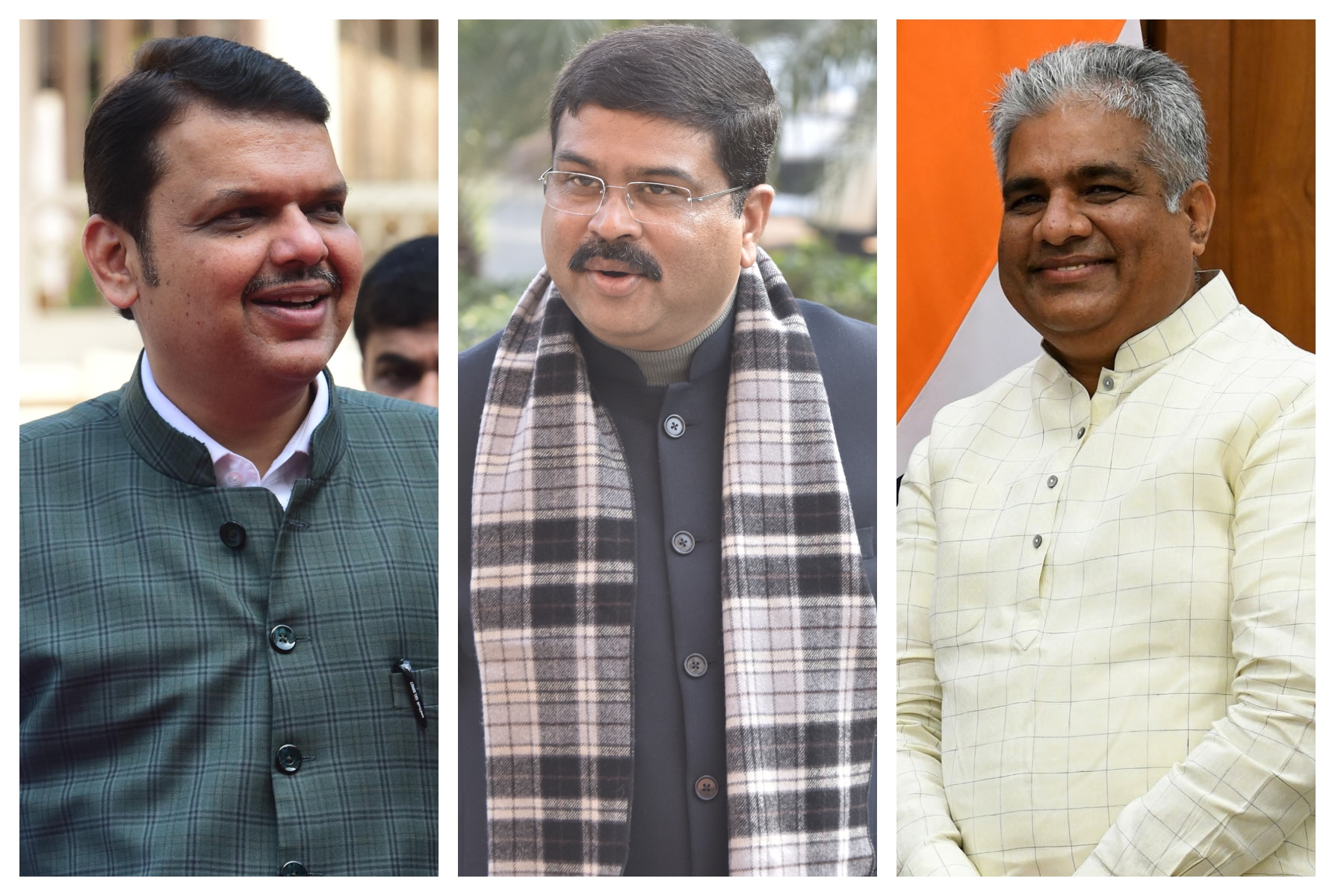
The four men who were put in charge — Prahlad Joshi for Uttarakhand, Dharmendra Pradhan for Uttar Pradesh, Bhupender Yadav for Manipur and Devendra Fadnavis for Goa — had just about six months to plan and implement the election strategy with a team of co-in-charges.
What was conspicuous, however, was the absence of these men from the headlines while carrying out this mandate of planning and supervising the most challenging electoral exercise.
“The election in-charges worked silently, behind the scenes and implemented the template that has been designed by Prime Minister Narendra Modi and home minister, Amit Shah, of fighting all elections with an eye on victory. It wouldn’t be wrong to say that they worked like Sangathan Mantris (organisational general secretaries) who work silently and away from the public gaze,” said a party leader commenting on the strategy followed by the election in-charges.
The elections came on the back of a slew of challenges from the pandemic-induced devastation in the sectors of economy and employment, the deficiencies in health care that led to deaths and hardships and anti-incumbency that governments in power face.
While the issues largely remained the same across states, the in-charges also had to face a unique set of challenges that differed from region to region. HT spoke to a set of national and state leaders to offer a snapshot of the role of the state-in-charges in three of the states that went to polls.
Uttar Pradesh
In Uttar Pradesh, the most populous state that sends the highest number of lawmakers to Parliament, education minister Dharmendra Pradhan camped in the state for six months supervising the implementation of poll strategies. As a key lieutenant of Modi and Shah, Pradhan worked as a bridge between the state and central leadership.
A party functionary who worked closely with Pradhan credits him for strengthening coordination between different groups which in turn helped in streamlining communication. “He set about creating different groups to understand and assess the problems of different sections (castes) in the state and how to include them and elicit their support. A major challenge was setting the narrative. Both the party and the government had a powerful organisation in the state and each had its own narrative so the challenge was to find a common theme. A team was appointed for daily review and planning meetings which included representatives both from the party and the government,” the functionary said.
The setting of a “positive narrative” was a key area. The party and the government were on the backfoot over the response to the covid crisis, the economic crisis in the rural areas and the overall mood that was despondent.
Pradhan and his team had to showcase the accomplishments of the government and at the same time ensure that the anger against it was mitigated. Consequently, the focus shifted from the “negatives” to the “positives” said a third party leader. “Instead of defending the lapses, the party only focused on the achievements, the improved law and order; the free ration and the benefits of schemes reaching people without any middlemen,” the third functionary said.
To prevent differences in the party unit from affecting the electoral outcome, a decision was taken to hold meetings with representatives of each caste and social group. The constant engagement with workers on the ground ensured that when Other Backward Class (OBC) leaders who were ministers in the Yogi Cabinet quit, there was no damage inflicted on the vote bank that these leaders claim to represent.
Ticket distribution, a key factor in shaping election outcome, was also carried out with precision. An OBC face of the party, Pradhan, set up teams to work as the party’s eyes and ears on the ground and seek feedback about probable candidates. There was a thorough assessment of the impact the selection would have. “He acted as a Sutradhar, giving and receiving feedback between the state and the central unit,” the functionary quoted above said.
Co-incharges were given specific mandates to work as well; for instance, union minister for information and broadcasting, Anurag Thakur who is credited for energising the outreach programmes was made in charge of all media and publicity related issues. Each coordinator was given an area to nurture and excel in.
Pradhan, who was earlier in charge of elections in Chhattisgarh, Tripura Jharkhand and Karnataka, is also learnt to have played a key role in ironing out differences between the allies. The second person aware of the details said it was for perhaps for the first time that pre-poll seat sharing arrangements were carried out without rancour. “He had excellent working relations with both the Apna Dal and the Nishad Party and the whole process of seat distribution was carried out without a glitch,” the second functionary said.
Union Ministers Anurag Singh Thakur, Arjun Ram Meghwal, Shobha Karandlaje, and Annpurna Devi, MPs Saroj Pandey and Vivek Thakur have been appointed as the election co-in charge of the UP polls.
“Uttar Pradesh elections are considered to be fought on the issue of caste but this time that narrative was changed. The work that was done by the state and the central government to change the life of people for the better became the focal point of the campaign. And consequently 44% men and 48% of the women voted for the BJP,” the second functionary said.
Manipur
The experience of overcoming challenges from caste differences to issues that the opposition raked to put the government on the mat in states such as Bihar and Gujarat came in handy for union environment minister Bhupender Yadav while scripting the election strategy for Manipur.
Far from the gaze of the national media, the state hit headlines multiple times in the past five years on account of the differences within the party between Chief minister Biren Singh and a clutch of legislators. On more than one occasion, the party high command had to step in to announce a truce between the CM and the legislators.
These differences within the party were a major challenge for the central leadership. “It was no surprise that they picked Yadav, who is known for his skills in untangling knots. He is patient, a good listener, and when it comes to delivering, he knows how to crack the whip,” said a party leader.
In Manipur, the BJP not only retained power but did so with a better seat share and voting percentage than the previous election.
In 2017 with 21 legislators the party reached out to other outfits to keep its prime opponent, the Congress from forming government in the state. In 2022 it went to polls on the planks of development, peace and stability asserting that the double engine Sarkar, as it refers to the BJP run government in the state and at the centre, had not only put an end to bandhs and blockages that had become a regular feature in the hill state.
A big advantage was the decimation of the Congress, its prime opponent. The party that had 27 legislators in 2017 saw its leaders abandon ship and join the BJP. In 2022, the Congress shrunk to 5 seats. To be sure, BJP was not the only party that gained from the Congress’s decimation in the state; National People's Party also saw its performance in the state improve from the previous term.
“The biggest challenge for the BJP in the north-eastern state was striking a balance between the aspirations of the people in the hills and the valley. And that is precisely what the party managed,” said the functionary quoted above.
Yadav, who had national spokesperson Sambit Patra as his co-incharge, for his part credits the schemes for paving the way for the party’s return to power.
“There were multiple challenges that the party faced earlier, but it overcame these on the basis of the good governance in the state and at the centre, the delivery of social schemes, and the steps taken to ensure people got a respite from what had become a recurrent cycle of bandhs, blockages and violence,” he said. Yadav
went on to add that the party’s focus was on carrying out development in the state; Prime Minister Narendra Modi laid the foundation of five national highway projects that will be built at a cost of ₹1,700 crore.
“The BJP has also been able to address a crucial issue of acknowledging and respecting the Manipuri identity. The home minister renamed Mount Harriet a historical tourist spot in the Andaman and Nicobar islands, as Mount Manipur,” Yadav said.
In October 2021, Shah had announced the renaming as a tribute to freedom fighters from Manipur.
Goa
As in the other states going to polls, Goa too faced the challenges of anti-incumbency and the state unit being in disarray. By the time the election was in full swing, there were murmurs of legislators pushing the high command to replace, CM, Pramod Sawant.
The BJP has had to struggle to get the popular mandate in the state after the death of its popular face in the state, Manohar Parrikar who during his term as CM was able to carry out his development agenda, accommodating the concerns of different communities. The challenge for the party was to showcase leaders of that mettle along with its governance model.
“He (Fadnavis) is known to share a comfortable equation with Vishwajit Rane (who defected to the BJP in 2017). He had key role to play in getting the MGP on board too. So, the first task was to bring the party leaders on the same page and fight as a united front," said a party functionary.
A large part of the election strategy that was implemented by Fadnavis and his team is said to have been scripted by the general secretary (organisation) BL Santhosh.
"The biggest challenge of course was to keep the party unit from getting demotivated by the friction between Sawant and Rane. The focus was on how the Congress would perform in the wake of new entrants, the Trinamool Congress and the Aam Aadmi Party throwing their hat in the ring," said the functionary quoted above.
The party had to counter allegations of mismanagement during the Covid pandemic, the closure of mining activity in the state which has left people split down the middle, scams in recruitment and an overall slump in economy because of the pandemic having severely impacted tourism in the state. "Apart from anti-incumbency, the party also faced allegations of corruption and mismanagement; so, the work for Fadnavis and his team was to devise a campaign that would overcome this challenge," the functionary said.
After Parrikar's demise, the party has also struggled to find a face in the state and has had to rely on individuals with political heft who can add value to the party's campaign. "While there are many leaders who are willing to join the BJP, the process of balancing the aspirations of the newcomers with existing partymen is a tough one. Fadnavis and the team had to ensure that those who were defecting from the Congress but bringing a certain value in terms of votes, found space in the party without alienating those who have worked for a long time and been instrumental in the party's expansion in the state," said the functionary.
In all three states, the BJP’s state-in-charges showed that electoral success rested on careful preparatory work, smoothening out organisational challenges, reconciling contradictions between various social groups, setting a winning narrative, ensuring careful ticket distribution, and motivating workers to mobilise voters in polling day.
 ABOUT THE AUTHORSmriti Kak Ramachandran
Smriti covers an intersection of politics and governance. Having spent over a decade in journalism, she combines old fashioned leg work with modern story telling tools.


