E-Paper



Bengal panchayat poll violence: Step in where needed, not in other’s domain, SC tells NHRC
NHRC had appealed against a Calcutta high court order that set aside the appointment of observers by NHRC for the 2023 panchayat elections in West Bengal.

 Prefer HTon Google


The Supreme Court on Friday ruled that the National Human Rights Commission (NHRC) has no authority to put in place a mechanism for a parallel supervision of elections, criticising the statutory body for not stepping in where there are serious complaints of rights violation but pressing for its power to appoint observers during the 2023 panchayat elections in West Bengal. NHRC is currently headed by former Supreme Court judge Arun Kumar Mishra.
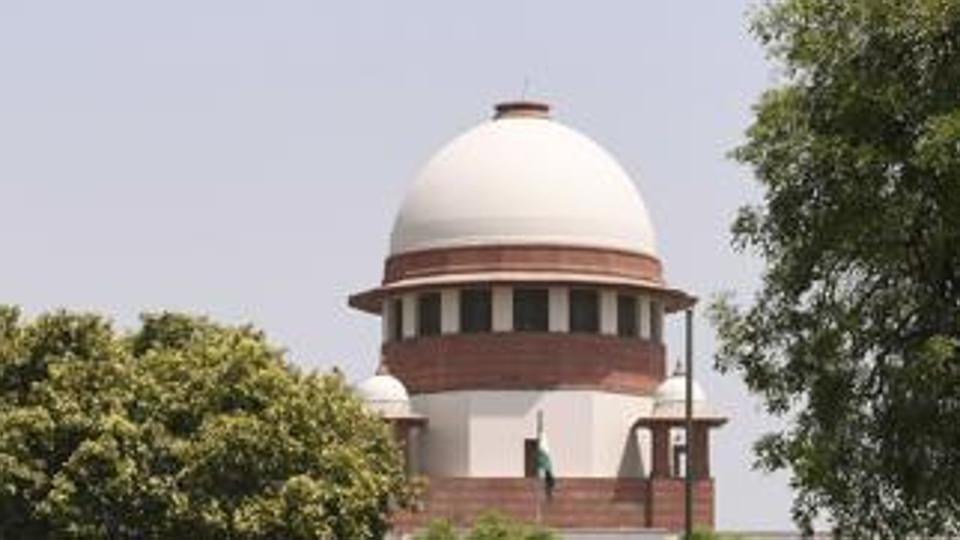
According to a bench led by justice BV Nagarathna, NHRC cannot become the “super Election Commission of India” even as the rights body has been shying away from taking note of various other relevant events where it should exercise its jurisdiction.
Also Read: Life is more precious than a vote: Bengal poll violence victims
“We will appreciate it if it (NHRC) steps in where it is required...not threatening to enter into someone else’s jurisdiction. In India there are many areas where NHRC should intervene. It is not doing that but it is doing it in some other places and trying to enter into someone else’s jurisdiction...NHRC will become the super ECI?” asked the bench, which also included justice Ujjal Bhuyan.
Maintaining that the Supreme Court cannot allow NHRC to supervise any other autonomous body, the bench added that the statutory body cannot assume the authority of superintendence of election since that is within the exclusive jurisdiction of the Election Commission of India (ECI) and state election commissions (SECs).
Also Read| Dragged out of home, neck severed: How political violence rocked Bengal panchayat election 2023
NHRC approached the court in an appeal against a July 5 order of the Calcutta high court, which affirmed a single-judge order of setting aside the appointment of observers and other related directions issued by the commission “to protect human rights” in the course of the 2023 panchayat elections in West Bengal. The high court held that it is the duty of the SEC, being a constitutional authority, to appoint observers in accordance with the provisions of the 2003 Act. Therefore, NHRC cannot encroach upon the jurisdiction of the SEC by appointing observers, it added.
Challenging this order, senior counsel Maninder Singh, for NHRC, argued that there was nothing in the Constitution or any other law to deny the jurisdiction of the commission when it comes across instances of human rights violations in the course of the conduct of an election. Singh cited various news reports on violence in West Bengal between June and July to justify NHRC’s intervention.
Senior counsel Siddharth Agarwal and advocate Astha Sharma appeared for the state government. Senior advocates Jaideep Gupta and Meenakshi Arora represented the West Bengal SEC. They supported the high court’s judgment.
Nixing the commission’s appeal, the bench declared that NHRC has no jurisdiction or authority to have a mechanism of parallel superintendence over elections when the Constitution under Article 243K and 324 vests the power of superintendence, direction, control and conduct of polls in the ECI and SECs respectively for Parliament and state assemblies.
Notwithstanding the intention that NHRC may have, the court held, its mandate to appoint observers and seek reports on the conduct of polls from SEC as well as from the Centre and the state government was “totally in contravention and violation of salutary provision of Article 243k on regulation and conduct of panchayat elections.”
The order added: “Issuance of notices to state and the Centre was nothing but superintendence of elections. If there were individual complaints, NHRC could have written to the state and Centre, asking for action take reports. We find that such suo motu action being in contrary to Article 243K, which is para materia to Article 324, should not have been done. What the impugned communications sought to do was to have a parallel mechanism for the conduct of elections.”
The whole purpose of placing the responsibility on ECI and SEC is for them to be autonomous and independent, emphasised the bench, adding that the purpose of giving this autonomy is to ensure ECI and SEC can discharge their duties fearlessly and fairly. “NHRC was not right in interfering in the conduct and supervision of elections,” stated the court order.
During the proceedings, the bench pointed out that there is no constitutional or statutory provision that authorises NHRC to have a parallel mechanism to oversee the conduct of elections and thus, it is incumbent upon constitutional courts to protect the autonomy of the institutions, such as CEC and SECs.
The bench observed that there is a view that constitutional courts have no power to order for additional forces for the conduct of polls since that is also for the ECI and SECs to examine. “In fact it is also debated whether this court has crossed the limits by allowing additional forces to be deployed during elections. Now you want us to let you cross another limit. We don’t want NHRC to supervise any other autonomous body.”
It added that the Calcutta high court was already monitoring the conduct of the panchayat polls in West Bengal after several petitions were filed before it, complaining against rampant violence. “There was not a free-for-all kind of a thing in the state. The whole objective for the high court to pass orders was to ensure free and fair poll,” said the court.
In the polls held on July 8, the Mamata Banerjee-led Trinamool Congress (TMC) swept the violence-scarred local body elections keeping intact the mandate it won two years back during the assembly polls. The party won all the 20 zilla parishads in the state, besides winning nearly 80% (2,641 of the total 3,317) gram panchayats and 92% (313 of the total 341) panchayat samitis.