
 E-Paper



Bengaluru second on list of world's most congested cities; 7 days lost in traffic in 2025, says index
Commuters in Bengaluru lost 168 hours to rush hour traffic in 2025. This came to 7 days and 40 minutes, which was 12 hours and 46 minutes more than in 2024.

 Prefer HTon Google


Bengaluru, already infamous for its traffic problems, has been ranked as the world’s second and India’s most congested city, with an average congestion level of 74.4 per cent, according to the TomTom Traffic Index 2025. Closely following the Karnataka capital is Maharashtra’s Pune, which is the world’s fifth most congested city, with an average congestion level of 71.1 per cent.
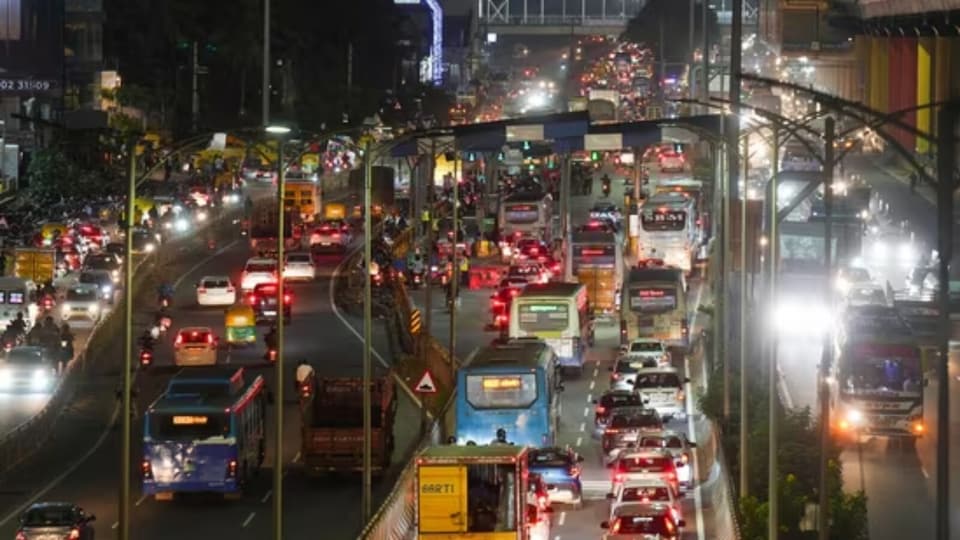
The report, based on anonymous travel data covering 3.65 trillion km of driving across the globe, places Bengaluru behind Mexico City and ahead of Dublin in the global top three.
Bengaluru takes the second spot
The data shows that people travelling in Bengaluru take an average of 36 minutes and 9 seconds to cover 10 km within the city. This was 2 minutes and 4 seconds more than in 2024.
The average distance covered in 15 minutes was 4.2 km, which is 0.2 km less than last year’s data.
Compared to 2024, the average congestion level rose by 1.7 percentage points in 2025.
In the morning rush hour, it took 41 minutes and 6 seconds to travel 10 km, with an average congestion level of 94.2 per cent and an average speed of 14.6 km/h. In the evening rush hour, the same distance took 45 minutes and 27 seconds, with congestion at 115.2 per cent and an average speed of 13.2 km/h.
As per the index, commuters in Bengaluru lost 168 hours to rush hour traffic in 2025. This came to 7 days and 40 minutes, which was 12 hours and 46 minutes more than in 2024.
Pune is fifth most congested in the world
The latest index showed that Pune’s average congestion level was 71.1 per cent. This was an increase of 5.4 percentage points compared to 2024.
The average distance covered in 15 minutes was 4.5 km, which was similar to the previous year’s data.
The average time needed to travel 10 km was 33 minutes and 20 seconds, which was 11 seconds more than in 2024.
During the morning rush hour, a 10 km journey took 38 minutes and 13 seconds, with an average congestion level of 91.8 per cent. In the evening rush hour, the time rose to 41 minutes and 40 seconds, while the average congestion level stood at 110.9 per cent.
Commuters in Pune lost 152 hours to rush hour traffic in 2025. This came to 6 days and 8 hours, which was 8 hours and 56 minutes more than in 2024.


