
 E-Paper



Best ever strike rate in CBSE’s Class 10 results
A record 99.04% of tenth graders cleared their exams, the Central Board of Secondary Education (CBSE) announced on Tuesday, in a trend similar to what was seen for twelfth graders after both board assessments were held on the basis of previous assessments in a pandemic year.


A record 99.04% of tenth graders cleared their exams, the Central Board of Secondary Education (CBSE) announced on Tuesday, in a trend similar to what was seen for twelfth graders after both board assessments were held on the basis of previous assessments in a pandemic year.
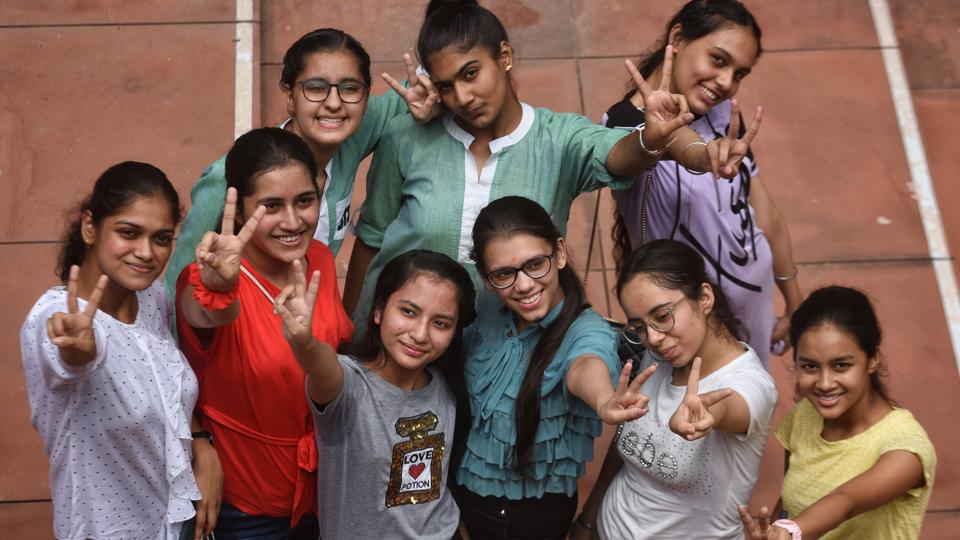
The pass percentage was 7.58 percentage points higher than the previous academic year, when the Class 10 exams were largely held as usual except for in a few subjects before the country entered the first lockdown due to Covid-19.
The pass percentage for Class 12 was 99.37% this year.
Class 10 students were evaluated on the basis of their performances in unit tests, mid-term/half-yearly exams, and the pre-board examinations. Like last year, the board has not announced a merit list this year either, in view of the change in assessment method.
The board declared the results of 2,097,128 out of the 2,113,767 regular students who appeared for the examination this year. Of them, 2,076,997 or 99.04% cleared it.
As many as 200,962 and 57,824 students scored above 90% and 95% marks, respectively, higher than last year’s tally of 184,358 and 41,804 students scoring in that range.
To check “inflation of marks”, CBSE had asked schools to keep their overall passing percentage in line with their best performance in Class 10 final exams in the last three years. The year they selected would be considered a reference year, and the schools were also required to ensure the overall average marks this year did not exceed the overall average marks in the reference year.
The result of around 16,639 students was yet to be processed, officials said.
CBSE controller of examinations, Sanyam Bhardwaj said, the schools of these students “either did not fulfil the required criteria or did not provide the required information in these cases”.
“The board has already opened the online portal for these schools. The regional officers have already started working on it. We will declare the results of these students at the earliest,” he said.
Bhardwaj also spoke on why the pass percentage shot despite the reference year requirement. “The increase in the overall pass percentage is because schools moderate the marks by +2 or -2 in accordance with their best percentage in the last three years. So the best of all the schools have together increased the overall pass percentage this year.”
The overall pass percentage of Delhi has increased to 98.27% from last year’s 85.86%. The overall pass percentage of government schools in Delhi rose to 97.52% from last year’s 82.61%. Among private schools, this number increased from 90.2% last year to 99.58% this year.
Delhi chief minister Arvind Kejriwal said in a tweet: “The result for Delhi government schools is 97.52%. Our 186 children have scored above 95%. Many congratulations to the children, their parents and team education.”
Several principals of private schools also said they were satisfied with the results. Jyoti Arora, principal of Mount Abu Public School in Rohini, where the average score stands at 82% and overall pass percentage is 100%, said: “The result is in accordance with our students’ performance in pre boards. We had strictly followed the CBSE criteria and the board also did not make any changes in the marks submitted by the school. We are quite satisfied with the results announced through the alternate method of assessment.”
Educationist Meeta Sengupta said the alternate assessment method improved chances for more students, not just “toppers”. “It is heartening to hear the good news of a raised pass percentage in the CBSE examination, which not only reflects kinder assessments but also reflects that less stressful modes of testing students can improve the chances of more students, not just the toppers. This in-school portfolio mode of assessment supports the anxious student, the neurodiverse, the less abled and the many others who do well if the element of time and stress is removed, even if the stakes remain high, as they did this time,” she said.
Parents also expressed relief. “Even as the school already started Class 11 lessons for my son, we were really anxious about his Class 10 result. There was a fear that the alternative assessment method could put him in a disadvantaged position since he is a high performer. But we are satisfied with the results. We hope things get better soon and he returns to the school,” said Sagar Pathak, father of a Class 11 student at Delhi Public School in RK Puram.
Thiruvananthapuram remained at the top of the score tally with 99.99%, followed by Bengaluru (99.96%), Chennai (99.94%), Pune (99.92%) and Ajmer (99.88%).
Maintaining the trend, more girls passed than boys by 0.35 percentage points, although the gap in performance shrunk drastically. Previously, this gap was 3.17% percentage point.
Students appearing under the children with special needs category also recorded a pass percentage of 99.44%.
The Kendriya Vidyalayas (KVs) and Central Tibetan Schools Administration (CTSA) recorded a 100% pass percentage across the country, followed by Jawahar Navodaya Vidyalaya (JKV), which had 99.99% pass percentage.
Only 17,673 students were placed under compartment – they need to retake exam in a subject -- as against 150,198 students last year. The compartment exams will be conducted along with those enrolled in private and patrachar (correspondence) mode with the CBSE between August 16 and September 15, since the alternative assessment method could not be implemented in their case due to the unavailability of internal exam performances.
The board has also clarified that in case any candidate is not satisfied with the marks allocated, they will be given an opportunity to appear in an exam as and when the conditions allow for it to be held.


