E-Paper



Better to wind up tribunals if members can’t follow propriety: SC
“It is better to wind up tribunals if things are going to be like this. What about the propriety?” a bench, headed by Chief Justice of India NV Ramana, told additional solicitor general Sanjay Jain.

 Prefer HTon Google


It is better to wind up tribunals if their members cannot honour the principle of propriety, the Supreme Court said on Tuesday, taking strong exception to a technical member of the Appellate Tribunal for Electricity (APTEL) hearing a case involving GAIL (India) Ltd despite having headed GAIL as its chairman-cum-managing director (CMD) in the past.
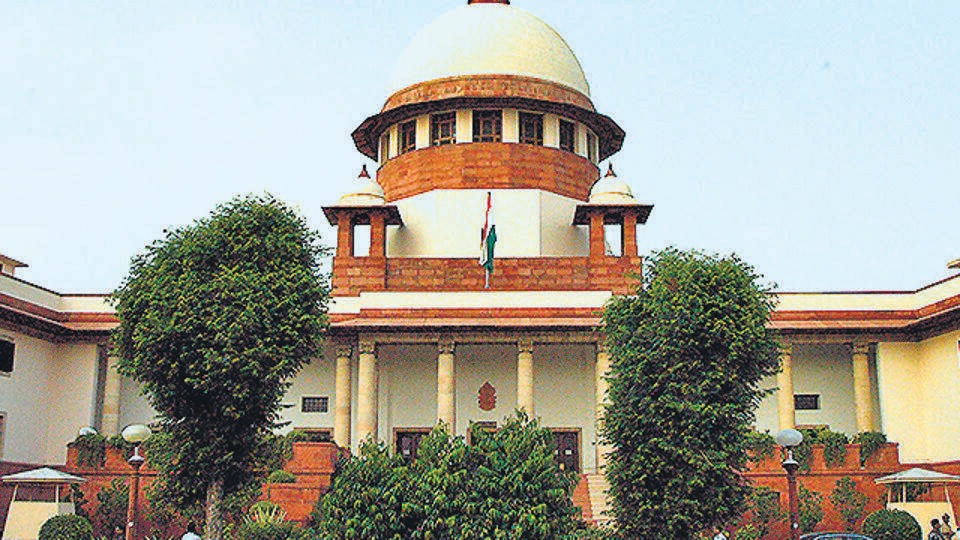
“How can he (member) hear the matter? Whatever it is, how can he hear that matter? It is better to wind up tribunals if things are going to be like this. What about the propriety?” a bench, headed by Chief Justice of India NV Ramana, told additional solicitor general Sanjay Jain.
The bench, which included justices AS Bopanna and Hima Kohli,said that since Ashutosh Karnatak, who is presently a technical member at APTEL, worked with GAIL for several decades , it was improper for him to hear and decide cases relating to the natural gas company.
“He (Karnatak) worked as an officer with GAIL for so many years. Now, he wants to sit on the bench and decide their cases. This is not proper,” the bench told Jain.
Senior counsel Abhishek Manu Singhvi, appearing for the petitioner, Sravanthi Energy Private Limited, told the bench that Karnatak served 38 years with GAIL and was also in-charge of the project as an officer, but was now examining it as an APTEL member. “This bench has decided 17 matters of this nature. I am here because it (the matter) has also been decided against us. Such things cannot be allowed to go on. How can someone like him hear these cases?” Singhvi said.
Jain on his part harped upon the “principle of necessity” to state that there are not enough members available in APTEL to hear and decide cases. “Not many benches are available and thus, they had to hear the case.”
To this, the bench retorted: “Mr Jain, it is a simple question of propriety. If you think there is no other bench available, you appoint other members and chairman so that they can hear it. It cannot mean that he (Karnatak) can start hearing and deciding such cases.”
The bench further told Jain: “We have already made recommendation for appointment of APTEL chairperson and other members. Why don’t you ask your government to appoint them?”
At this, Jain submitted that a reply may be sought from the Government of India of appointment of chairperson and members of APTEL since he is not in a position to answer on this aspect.
“Alright, if that is so, we will seek an answer from the Government of India why they are not appointing APTEL members. So, we are issuing notice to the government to tell us when they are going to appoint chairman and other members of APTEL,” retorted the bench.
It then issued a personal notice to attorney general KK Venugopal to appear on behalf of the Union government on February 15 to apprise the court of the status of appointment. Venugopal represents the government in a separate batch of cases where issues relating to vacancies across various tribunals in the country are being examined by the top court.
The top court has been repeatedly pulling up the Central government over the shortage of manpower and lack of infrastructure in consumers courts across the country.
The CJI-led bench had in August and September 2021 put the Union government in the dock over “making tribunals virtually defunct” by not filling up vacancies. The government is “emasculating tribunals” by not filling up vacancies in them, it said.
While hearing a matter over vacancies in consumer courts, another bench in the top court had in October 2021 reproached the Union government for creating an “imbroglio” over functioning of the tribunals and making “citizens suffer in the bargain”, observing the Centre should abolish all tribunals if the judiciary is compelled to make appointments in these bodies to keep them alive.
APTEL is working without a full-time chairperson since August 2021. The appellate tribunal is currently working with three members – one judicial member and two technical members, including Karnatak. Apart from chairperson, the tribunal is also short of a technical member.
Sravanthi Energy Private Limited filed a petition against an order of the APTEL in October 2021 relating to enforceability of a capacity tranche agreement between the private firm and GAIL, and payment of ‘ship or pay’ charges by Sravanthi. APTEL ruled in favour of GAIL, prompting the private firm to approach the apex court in appeal.