E-Paper



Bihar result a clear mandate against infiltrators, says Shah in Bhuj
Addressing the BSF Diamond Jubilee celebrations in Gujarat’s Bhuj, Amit Shah described the ongoing special intensive revision (SIR) as a “purification” of the voters’ list

 Prefer HTon Google


Ahmedabad: Union home minister Amit Shah on Friday said the recent Bihar Assembly election result is a clear mandate against infiltrators, warning opposition parties that the country will never support those trying to protect them in voter lists.
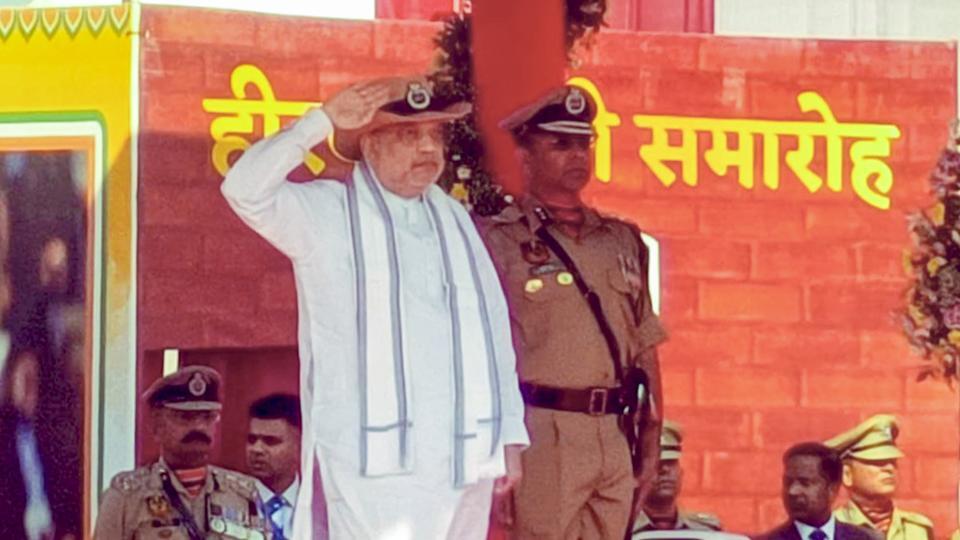
Addressing the Border Security Force (BSF) Diamond Jubilee (61st Raising Day) celebrations in Bhuj, Gujarat, Shah said some political parties are opposing the Election Commission’s ongoing special intensive revision (SIR) as they want to ensure that the names of infiltrators remain on the electoral rolls.
He described the SIR as a “purification” of the voters’ list.
“The BSF is engaged on all borders of the country in stopping infiltration. Stopping infiltration is necessary not only for the country’s security, but it is equally essential to prevent the country’s democratic system from being polluted,” he said.
Opposition parties, including the Trinamool Congress in poll-bound West Bengal, have said the SIR could remove large numbers of valid voters from the rolls.
Shah hit back, saying parties that back infiltrators will not get public support. “Unfortunately, some political parties are busy trying to weaken this campaign to remove infiltrators. Those very political parties are opposing the ongoing SIR process being conducted by the Election Commission and the purification of the voter lists. I want to make it absolutely clear today – it is our firm resolve that we will identify and deport every single infiltrator from this country, one by one,” he said.
He said the BSF has launched numerous operations to curb the infiltration of narcotics into the country and achieved tremendous success, adding that the force has seized more than 18,000 kilograms of drugs so far in 2025.
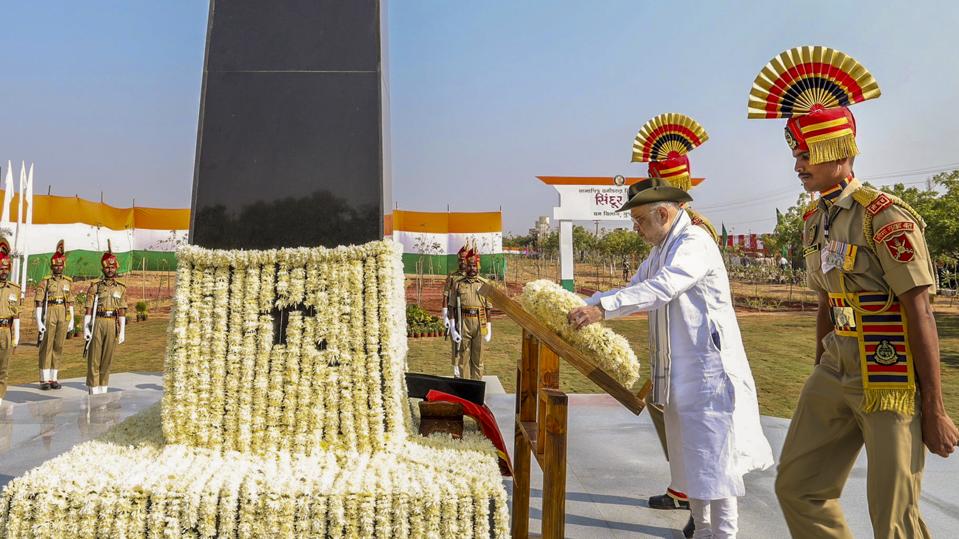
The home minister said that only Indian citizens will decide who becomes the chief minister of any state or the Prime Minister of India. “No infiltrator has the right to pollute our democratic system and influence our democratic decisions. In a way, this SIR is a process to protect and purify our democracy,” he added.
Appealing to the people to extend their full support to the SIR process, he said the revision is a vital step to protect India’s democracy from infiltrators and make it even stronger.
“At the same time, I also want to warn those political parties that have taken up the task of protecting infiltrators. The recent Bihar election is the mandate of the people of the country, and that mandate is against the presence of infiltrators. Parties that are trying to safeguard infiltrators in the voter lists must remember that the people of this country will never support such intentions,” he added.
Shah also highlighted in his speech that in the past few years, border fencing has been rapidly strengthened and rendered virtually impenetrable, with most advanced fencing trials now successfully completed.
He announced the introduction of ‘e-Border Security’ in the coming days. The BSF, he said, will play the central role in its ground-level implementation, having already taken the initial steps itself.
Every effort will be made to fully operationalise the system within the next year, and he expressed complete confidence that within five years, India’s entire land border will be securely protected under this advanced e-security shield.
Shah also described the establishment of the country’s first National Academy for Coastal Policing (NACP) at Okha in Gujarat as a historic step towards making India’s maritime borders impregnable. “The BSF has been entrusted with full responsibility for its operation and management. In the years ahead, the academy will deliver world-class training to India’s coastal and marine police forces, significantly bolstering the nation’s overall coastal security framework,” he said.
Targeting Shah’s statements at the BSF foundation day event in Gujarat, Bengal’s commerce and industries minister Shashi Panja said, “You spoke a lot about infiltration, SIR, democracy, etc. Our nation is indeed suffering from insecurity. Had there been warnings, neither the Pahalgam terror attack nor the Delhi bomb blast would have taken place. These incidents show that people are entering the country. The borders are not being guarded properly. But you are targeting Bengal.”