
 E-Paper



BJP’s outreach in Maharashtra begins with interaction with workers
The Bharatiya Janata Party (BJP) has started its campaign for the Maharashtra assembly polls with an outreach towards its cadre.


The Bharatiya Janata Party (BJP) has started its campaign for the Maharashtra assembly polls with an outreach towards its cadre, pivoted on interactions between a bunch of senior leaders and party workers to air various concerns, such as seat sharing among the allies, which could impact the electoral outcome, people aware of the details said.
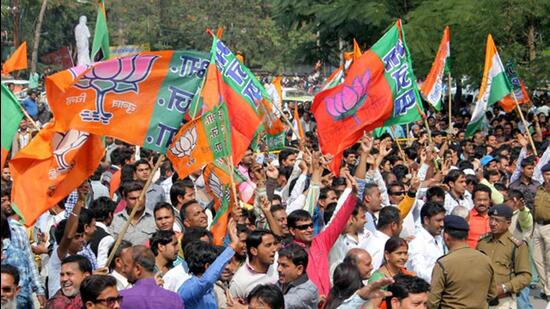
The BJP is part of the ruling Mahayuti in Maharashtra, also comprising chief minister Eknath Shinde-led Shiv Sena and deputy CM Ajit Pawar-led Nationalist Congress Party (NCP). Elections to the 288-member Maharashtra legislative assembly are expected to be held in November.
Discontent and disgruntlement among the cadre over a host of issues, including giving tickets to turncoats from other parties, was partly blamed for the BJP’s tally in the Lok Sabha elections shrinking from 303 seats in 2019 to 240 this June, a party leader privy to the outreach exercise said. In Maharashtra, which sends 48 members to the Lok Sabha, the BJP won only nine of the 28 seats it contested while the overall tally of the NDA stood at 17. The opposition coalition, on the other hand, won 30 seats.
“The feedback from the ground suggests there is a gap between the party leaders and the workers who are eventually responsible for driving the campaign on the ground and motivating voters. In the wake of an alliance with the Shiv Sena and NCP, there is concern among workers about seat sharing and how tickets will be distributed, so senior leaders will travel across the state to meet workers and gauge their concerns,” a senior party leader said, requesting anonymity.
The BJP has formed a team of senior leaders, including national general secretary Vinod Tawde, national secretary Pankaja Munde, state unit president Chandrashekhar Bawankule, Mumbai unit chief Ashish Shelar, and former union minister Raosaheb Danve, to visit at least nine to 10 assembly constituencies till September 5 to meet workers.
Each team will submit a report to party’s election in-charge Bhupendra Yadav and national joint general secretary (organisation) Shiv Prakash. The senior leaders will travel across all five regions — for instance, Tawde has been assigned western Maharashtra and Shelar the Konkan region.
“In the first round, these leaders will get information about grievances and take feedback on hyperlocal issues. They will study the opposition’s narrative and the issues they are flagging and raising on social media,” the leader said.
The Opposition Maha Vikas Aghadi (MVA) — comprising Congress, Sharad Pawar-led NCP(SP) and Shiv Sena (UBT) headed by former CM Uddhav Thackeray — has mounted its attack on the government over issues such as instances of infrastructure deficiencies, the collapse of a 35-foot-tall Chhatrapati Shivaji Maharaj statue in Sindhudurg, and the sexual abuse of two kindergarten girls in a Badlapur school.
Party leaders said there are concerns within the state unit over the impact of not having a chief ministerial face for the upcoming elections. “The other pressing concern is the issue of caste divisions, which have been stoked by leaders like (Manoj) Jarange-Patil (the activist pushing for Maratha reservation). The party will have to weigh in regional and caste aspirations and expectations,” the leader quoted above said.
With the appointment of Rashtriya Swayamsevak Sangh (RSS) functionary Atul Limaye as the state coordinator, the BJP is also working on building bridges with its ideological fountainhead. “A section of people in the party who were not keen on an alliance with the NCP (Ajit Pawar) had approached the Sangh to prevail on the leadership to reconsider the decision. There was a strain among various groups on this issue. The leaders opposed to the decision conveyed that their interests, including their aspirations to contest polls, were being overlooked to accommodate candidates from NCP or other parties, which demoralised the BJP cadre,” a second leader said, also declining to be named.
In 2019, the BJP had fought the assembly elections in alliance with the undivided Shiv Sena and emerged as the single largest party with 105 seats out of the total 288 seats. A disagreement over power sharing led its alliance with the Shiv Sena, which won 56 seats, coming apart. The Shiv Sena then allied with the Congress and the undivided NCP to form the government, which eventually fell apart in June 2022 following a vertical split in the Shiv Sena. Later, the NCP also split into two factions led by the Sharad Pawar and his nephew Ajit Pawar.


