
 E-Paper



Bridge ‘lab to land’ gap, Shivraj Singh Chouhan tells ICAR scientists
Shivraj Singh Singh said his ministry would focus on crop diversification, raising farm incomes and ending India’s dependence on imports to meet local demand

 Prefer HTon Google


NEW DELHI: Union agriculture minister Shivraj Singh Chouhan on Tuesday called upon agricultural scientists to bridge the “lab to land” gap, make farming profitable for small growers and address climate change urgently in an address on the occasion of the 96th anniversary of the Indian Council of Agricultural Research (ICAR).
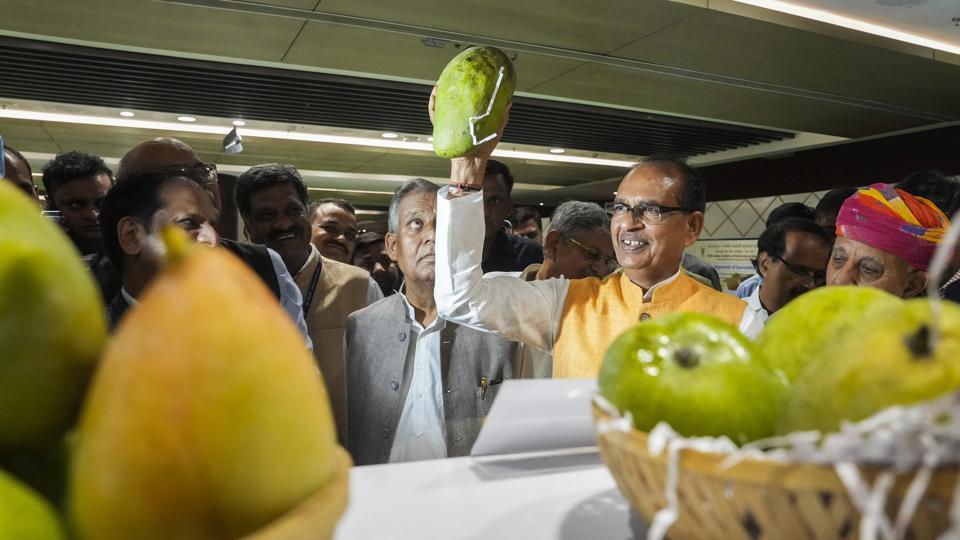
Laying a roadmap for the farm sector, which supports nearly half the population, Singh said his ministry would focus on crop diversification, raising farm incomes and ending India’s dependence on imports to meet local demand for pulses and oilseeds.
The minister said these goals could not be met without cutting-edge contributions from the ICAR, the flagship farm research body, and praised the institution’s numerous inventions that helped make the country self-sufficient in foodgrains.
“We have to bridge the lab to land gap. How much time does it take from lab to land? This needs to be analysed. My experience tells me it takes a lot of time,” Chouhan said. The minister also called upon the ICAR’s technologists to make “science practical for farmers”.
Chouhan asked all 5,521 scientists of ICAR to spread out across the country in teams of two and visit each of the 731 Krishi Vigyan Kendras, which are district-level farm advisory centres, to identify gaps. He also said the scientific community must spend one month in the field annually.
“How can we end import dependency of pulses? Why is our soybean yield lower than other countries? You need to find these answers,” he said, adding that higher yields would reduce farming costs and overall prices.
India is an agricultural powerhouse but still imports 15% of its pulses demand and nearly two-thirds of oilseeds, which tends to stoke prices. Food inflation, which has been sticky, rose 9.6% in June, according to the latest official data.
Chouhan, a four-time Madhya Pradesh chief minister during whose tenure farm growth stayed above 6%, higher than the national average, said diversification of crops away from big cereals could increase farm income four times. “Nothing is impossible and that is what is guiding us.”
Talking about his experience with the state, the minister said Madhya Pradesh was once considered a “BIMARU state” but agricultural development pulled up the state. BIMARU is an acronym coined by demographer and economist Ashish Bose in the 1980s to describe a clutch of heartland states that had high population burden and low economic growth.
Chouhan asked ICAR to develop a model farm for small and marginal growers, who make up nearly 86% of the country’s 140 million farmers. He said agricultural growth creates demand in secondary sectors.
“If farmers earn well and go to markets to buy goods, then demand goes up and industries have to produce more, helping the economy,” the minister said. He also unveiled 25 new varieties of various crops, including rice.


