
 E-Paper





Follow the latest breaking news, major developments and agenda-setting stories from India and around the world with the newsdesk at Hindustan Times. Operating round the clock, the desk brings together experienced editors, reporters and correspondents to deliver fast, accurate and contextual reporting across subjects that influence public policy, governance, business, society and international affairs. The HT News Desk covers politics, elections, government policies, the economy, business and markets, science and technology, the environment, law and order, infrastructure, education, climate issues and geopolitics, while closely tracking developments across states, institutions and global capitals. The team also leads coverage of major breaking news events, policy announcements, court proceedings, natural disasters, public emergencies and significant international developments. Reports published by the newsdesk are based on information gathered from reporters on the ground, official statements, government agencies, court records, regulatory filings, recognised institutions and other authoritative sources. Stories undergo editorial scrutiny and verification processes to ensure accuracy, fairness and relevance, and are updated as events evolve and additional information becomes available. Whether covering a key political decision in New Delhi, an economic policy shift affecting millions, a landmark court ruling or a major global event, the HT News Desk aims to provide readers with reliable, fact-based journalism that delivers not only the latest developments but also the context and analysis needed to understand their wider implications.
BSNL high-speed internet for 929 lower courts in remote locations
The ministry of law and justice has signed a deal with public sector telecom giant Bharat Sanchar Nigam Limited (BSNL) to provide high-speed internet and cloud connectivity to over 900 subordinate and district courts in remote locations of the country


The ministry of law and justice has signed a deal with public sector telecom giant Bharat Sanchar Nigam Limited (BSNL) to provide high-speed internet and cloud connectivity to over 900 subordinate and district courts in remote locations of the country — mostly in Jammu and Kashmir (J&K) and the northeastern states — a senior official of the ministry has said.
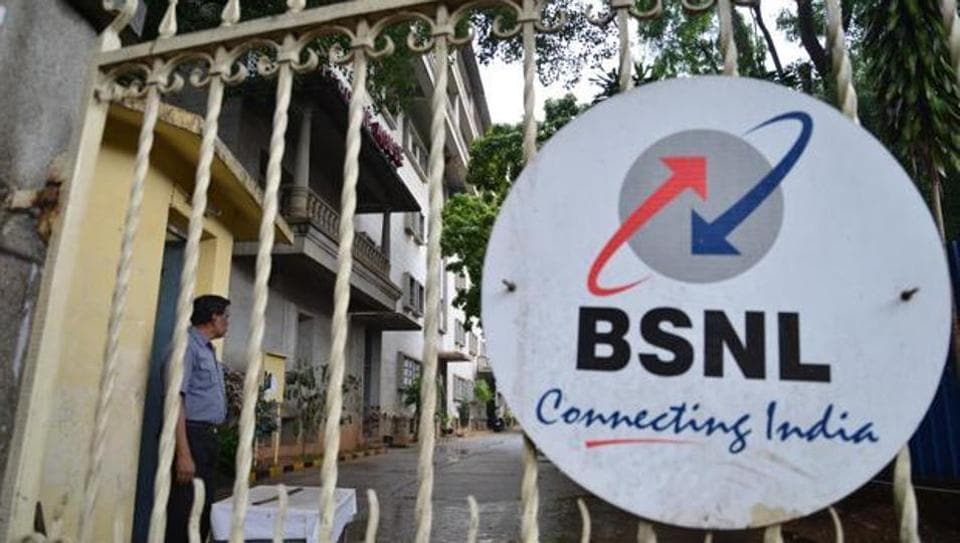
The Rs 194 crore project will provide connectivity to 929 court rooms by mid 2018, secretary, Justice, Alok Srivastava said. “Every single court will be connected through a dedicated 10 Mbps line...” he added.
A number of lower courts located in the remote areas of eight states have poor internet connections, officials said. “There are a large number of courts in the states of Arunachal Pradesh, Nagaland and Mizoram where there is no landline internet connectivity. The makeshift lines are not working,” an official involved with the project in the Gauhati high court which supervises subordinate courts in three states and Assam, said.
Another official in Kargil cited similar problems. “Cell phones work here but there is no internet for the ecourts project,” the official said.
A ministry official said the Supreme Court committee which is supervising the technology-led reforms in the judicial sphere cleared the project last month. The decade-long project is currently in its second phase. It envisages complete computerisation of courts, Local Area Networks and eventually integrating the eCourts with prisons, police and forensics.
Currently, over 16,000 of the country’s 22,677 district and subordinate courts have 4 Mbps internet connectivity, law ministry sources said. By the end of the next financial year, these will be upgraded to 10 Mbps, under the second five-year eCourts project for which the government has already spent Rs 921 crore since August 2015.
Once the courts are connected, they will join the national judicial data grid — a platform that provides information and decisions of the subordinate courts.


