
 E-Paper





Follow the latest breaking news, major developments and agenda-setting stories from India and around the world with the newsdesk at Hindustan Times. Operating round the clock, the desk brings together experienced editors, reporters and correspondents to deliver fast, accurate and contextual reporting across subjects that influence public policy, governance, business, society and international affairs. The HT News Desk covers politics, elections, government policies, the economy, business and markets, science and technology, the environment, law and order, infrastructure, education, climate issues and geopolitics, while closely tracking developments across states, institutions and global capitals. The team also leads coverage of major breaking news events, policy announcements, court proceedings, natural disasters, public emergencies and significant international developments. Reports published by the newsdesk are based on information gathered from reporters on the ground, official statements, government agencies, court records, regulatory filings, recognised institutions and other authoritative sources. Stories undergo editorial scrutiny and verification processes to ensure accuracy, fairness and relevance, and are updated as events evolve and additional information becomes available. Whether covering a key political decision in New Delhi, an economic policy shift affecting millions, a landmark court ruling or a major global event, the HT News Desk aims to provide readers with reliable, fact-based journalism that delivers not only the latest developments but also the context and analysis needed to understand their wider implications.
Budget 2018: 25% corporate tax cut to benefit MSMEs, not big firms
The Union Budget 2018 has reduced the corporate tax rate for companies with an annual turnover of up to Rs 250 crore to 25%.


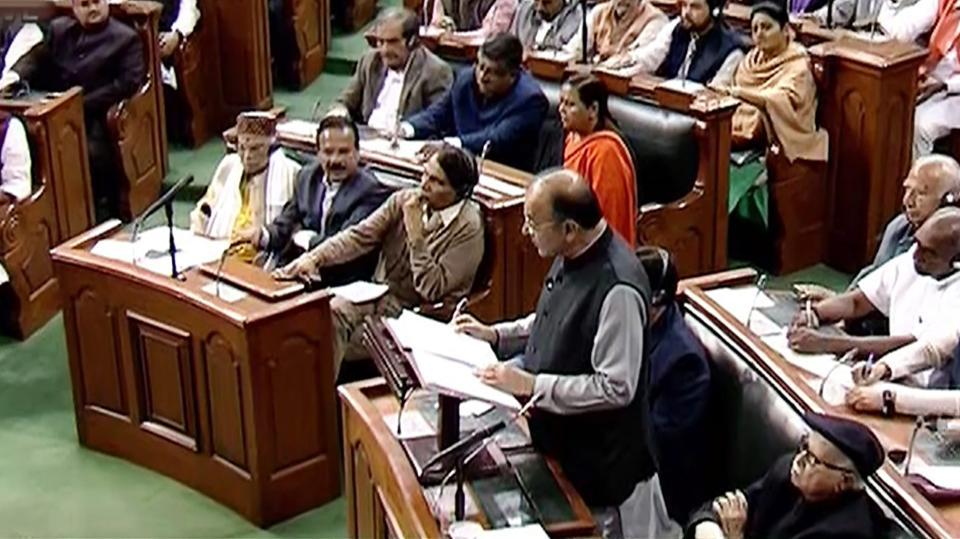
Budget 2018 has reduced the corporate tax rate for companies with an annual turnover of up to Rs250 crore to 25%. The announcement was made by finance minister Arun Jaitley in his budget speech in Parliament on Thursday. (Catch LIVE updates here)
This move is expected to benefit the micro, small and medium enterprises (MSMEs) but will disappoint big corporates that were hoping that the corporate tax cut will be across the board, in line with the finance minister’s earlier promise of reducing the tax rate to 25%, accompanied by a complete phasing out of exemptions. (Read Budget highlights here)
Jaitley, in his budget speech, said the corporate tax cut will help the entire MSME sector and account for 99% of the companies filing tax returns. The government will forego a revenue of Rs7,000 crore.
In last year’s budget, the government had reduced the income tax for small companies with an annual turnover up to Rs50 crore to 25%. This is estimated to have benefited more than 667,000 companies, 96% of all companies filing tax returns, at a cost of Rs7,200 crore to the government.
The government also announced introduction of e-assessment from 2018-19 to minimize interface between tax department and taxpayer.
It also decided to levy long-term capital gains tax on gains from the sale of listed equity shares exceeding Rs1 lakh at 10%. However, it said that gains will be grandfathered till 31 January 2018.
The budget also announced tax sops for senior citizens, including exempting interest on fixed deposits up to Rs50,000. The medical reimbursement and travel allowance limit was also increased to Rs40,000. However, no change was made in tax slabs or in the exemption limit on savings.
Abhishek Goenka, partner and leader, corporate & international tax, PwC India, said the move to reduce corporate tax rates only for companies with a turnover of up to Rs250 crore is disappointing.


