E-Paper



‘Build on Pangong Lake drawdown, disengage at other points’: India tells China
EAM Jaishankar has made it clear that progress in bilateral ties is linked to complete disengagement at all friction points on the LAC.

 Prefer HTon Google


India on Friday urged China to take forward the process of disengagement of frontline forces of the two countries at all friction points on the Line of Actual Control (LAC) to build on the drawdown of troops at Pangong Lake, external affairs ministry spokesperson Arindam Bagchi told a regular news briefing.
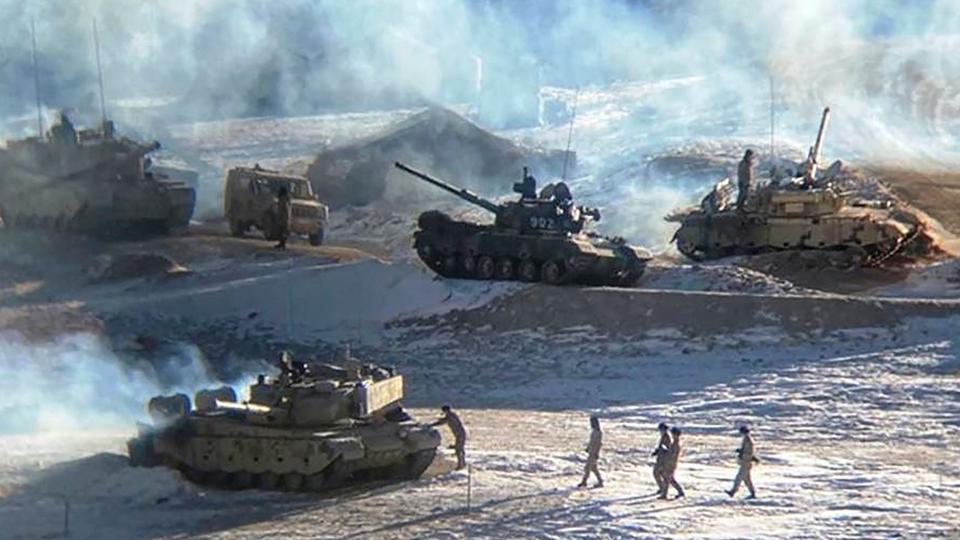
India and China completed the thinning down of troops and withdrawal of armour and artillery units from the north and south banks of Pangong Lake in February but were unable to make progress on disengagement at other friction points in the subsequent military and diplomatic talks.
During a phone conversation on February 26, external affairs minister S Jaishankar and his Chinese counterpart Wang Yi agreed to establish a hotline but were unable to reach common ground on ways to take forward the de-escalation process.
“As [Jaishankar] had pointed out to the Chinese foreign minister, a prolongation of the situation is in neither side’s interest. We, therefore, hope that the Chinese side will work with us to ensure that disengagement in the remaining areas is completed at the earliest,” Bagchi said.
Disengagement at the remaining friction points will allow both sides to “consider de-escalation of forces in eastern Ladakh, as that alone will lead to the restoration of peace and tranquillity and provide conditions for the progress of our bilateral relationship”, he added.
Also read: ‘There should be proper understanding’ - MEA on US report on human rights
The disengagement of frontline troops around Pangong Lake was followed by the 10th meeting of senior military commanders on February 20, the phone call between Jaishankar and his Chinese counterpart on February 26, and a virtual meeting of the Working Mechanism for Consultation and Coordination (WMCC) on border affairs on March 12.
“There is a consensus that the two sides should now quickly resolve the remaining issues along the LAC in eastern Ladakh,” Bagchi said.
The disengagement at Pangong Lake was a “significant step forward” and provided a “good basis for resolution of other remaining issues along the LAC,” he said.
At the meetings of the senior military commanders and the WMCC, the two sides had a detailed exchange of views on the remaining issues and they continue to be in touch through military and diplomatic channels, Bagchi said.
China has suggested that the two countries should normalise relations in other areas while setting aside the standoff on the LAC, which began in May last year and resulted in the first fatalities in a border clash since 1975. Twenty Indian soldiers and at least four Chinese troops were killed in a clash at Galwan Valley last June.
Jaishankar has made it clear that progress in bilateral ties is linked to complete disengagement at all friction points on the LAC. He has also said peace and tranquillity in the border areas is the “essential basis for the development of bilateral relations” and the two sides should work for the early resolution of remaining issues.
Sameer Patil, a fellow for international security studies at Gateway House, said he anticipated more moves and counter-moves by India and China, and even demands from Beijing, on how to proceed with the disengagement process.
“China will seek to gauge the response of other countries such as the US to the disengagement at Pangong Lake, and assess whether it is being seen as a tactical retreat or a concession in the territorial dispute. The fact that the Quad Leaders Summit was held after the disengagement will also be a determining factor for the Chinese behaviour. These factors will shape China’s understanding of how to move forward on this issue,” he said.