
 E-Paper



Can Nitish Kumar’s entry change the 2024 poll calculus?
Nitish Kumar running a government with RJD and the Congress brings a new dimension in the Opposition’s current equations. But several roadblocks to take on the BJP remain


New Delhi: For many years, Congress leader Rahul Gandhi was known to praise two chief ministers — Nitish Kumar and Sheila Dikshit— in his discussions with party colleagues on the achievements of states.
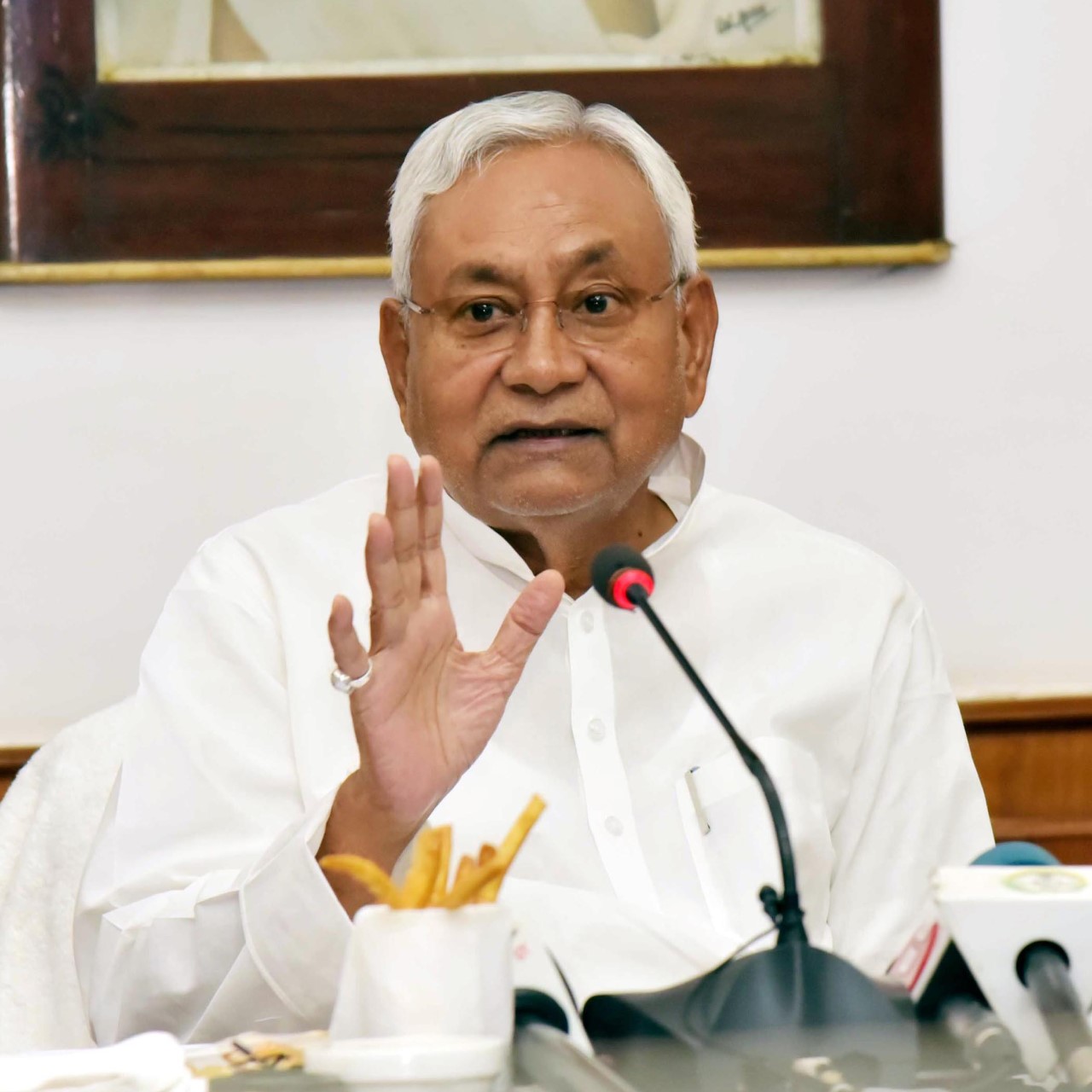
And while the Congress relentlessly attacked the Bharatiya Janata Party (BJP) in Bihar and elsewhere, its central leaders tried to remain soft on Kumar and avoid drawing parallels between the Janata Dal (United) or JD(U) and the BJP even as two were in a close partnership.
Dikshit, the Congress's undisputed face in Delhi at the helm of a record-breaking three terms in power, was the model for stability and rapid development. Kumar, too, was mentioned for his social initiatives, a clean image and trying to initiate development as a plank in a state so steeped in caste-based politics.
As Kumar and his JD(U) have shunned the BJP and formed a new government with Rashtriya Janata Dal and Congress's support, many Opposition parties have renewed hope for the 2024 national elections.
What does it mean for the Congress?
After losing at least five elected governments — Uttarakhand, Arunachal Pradesh, Bihar (in 2017) Karnataka and Madhya Pradesh — midway into their terms after the Narendra Modi government came to power in 2014, the Congress decided to stretch its Lakshman-Rekha to support with any outfit that can keep the BJP out of power in a state.
The result. In 2019, it entered into an alliance with Shiv Sena, a party identified with Hindutva, and the Nationalist Congress Party (NCP) to form a non-BJP government in Maharashtra. It’s another story that this government too was toppled in June this year.
Earlier this month, when the JD(U)-BJP alliance started feeling tremors and Kumar silently prepared for an exit from the NDA, RJD leader Tejaswi Yadav landed in Delhi during a weekend. His mission — to consult Congress president Sonia Gandhi, Rahul Gandhi and a few key Opposition leaders to take the decisive step.
Sonia, according to two Congress leaders, sent a clear message that the Congress will welcome such as move if Nitish opts out of the alliance. She also endorsed support for Kumar as CM but added that the Congress will like to be in the government. The Congress president asked Yadav to consult Rahul Gandhi too.
For the Congress, it was an opportunity to avenge the loss of six states, an example to highlight how allies are deserting the BJP in the Narendra Modi era and the chance to return to power in Bihar, where the party never had a CM after 1990.
But that’s not all.
Changing equations in Opposition land
Nitish Kumar running a government with RJD and the Congress brings a new dimension in the opposition’s current equations, particularly in the context of the ongoing tussle between Trinamool and the Congress.
In Kumar, there is a potential Prime Ministerial candidate if 2024 results throw up such as opportunity. He has been a union minister, a chief minister, and head of a party with a long innings in politics. Bihar’s deputy chief minister has already endorsed Kumar’s PM credentials. Yadav told PTI last week that Kumar is a “strong candidate for the PM’s post” and enjoys the “immense goodwill” of the people.
The JD(U), too, didn’t rule out such possibilities. "Nitish Kumar is not a contender for the Opposition's prime ministerial face but can be an option if other parties want so," Rajiv (Lallan) Singh said.
Kumar’s presence in the Opposition camp can also dwarf similar ambitions of other Opposition leaders, particularly West Bengal CM Mamata Banerjee. While Banerjee herself has maintained that she prefers to play the role of a sutradhar, Trinamool leaders now want to see their leader, a seven-term MP and a three-term CM, at the top seat. They have already coined the theory that it is Trinamool and other regional parties but not the Congress that is successful in halting the BJP’s march, citing election results from various states.
Banerjee’s party, Trinamool too, might find it difficult now to create a super club of regional parties to claim the leadership space of the Opposition camp, sidelining the Congress. Both in Parliament and outside, Trinamool tried to lure the parties that are uncomfortable with the Congress (parties such as AAP or Shiromani Akali Dal) but are opposed to the BJP.
Opposition upbeat
A senior Opposition leader stares at a whiteboard in which his aide has made a chart of different states with a possible tally of the Opposition in 2024. “This shows getting 250 seats wouldn’t be impossible,” said the leader.
The Congress, busy with preparations for Bharat Jodo yatra and its organisational polls, is yet to do a detailed calculation for the 2024 election. One of its prominent strategists, however, feels “It would be difficult to defeat Modi”.
Trinamool Congress leader Derek O’Brien, however, is upbeat. “The match is on. Khela Hobe,” he says when asked about 2024. “This (Kumar’s exit from NDA) is a major setback to the BJP. The top BJP leadership was engaging with him a few days before he left. So, he gave them shock and awe. To use a sporting expression, this happened against the run of play. This is a major boost for parties opposed to BJP ideology. This is a swing of 35 seats in our favour.”
O’Brien, however, doesn’t see Kumar’s entry as a threat to Banerjee’s ambitions. “The focus of all like-minded parties is to defeat the BJP. If everyone does his bit, Modi is beatable. And let me quote Mamata Banerjee, she said, “I am willing to be the squirrel in the garden. In other words, doing all the hard work to make the garden look beautiful.”
The Congress and the Left too, are not looking at a pan-India alliance but maintain that Opposition parties will fight in their respective states and a UPA-like alliance can take shape only in the post-poll situation, as it did in 2004.
The challenge
Kumar’s entry is indeed a boost for the Opposition but the Congress has an enormous challenge to improve its strike rate in places of a direct fight against the BJP.
“While Opposition parties are getting stronger, it is the Congress that remains on the weak foot,” observed a non-Congress leader.
The Congress has not won a single state since 2021. It couldn’t hold on to power in six states in the past eight years and is finding it difficult to get new partners. Mamata refused to give any seat to the Congress in Bengal, Akhilesh Yadav preferred ekla cholo re in the last Uttar Pradesh polls and now AAP has emerged as a key threat to the Congress in north Indian states.
AAP has won two states defeating the incumbent Congress government—Sheila Dikshit’s government in Delhi and Charanjit Singh Channi’s hurriedly-stitched regime in Punjab. Now, AAP has its eyes on Himachal Pradesh, Gujarat and Haryana—the traditional battlefields of the BJP and the Congress.
Kumar’s larger role
The ancestral house of Kumar n Bakhtiarpur is a reminder of the Bihar CM’s early life in a small village. A few years ago, this journalist had met the old caretaker of the house and wondered why the house was in such a dilapidated condition.
“I agree,” the old caretaker retorted, “But whenever I tell Kumar, babua, ghar ka marammat karwa do, he tells me, “pehle Bihar ka marammat karne do.”
Nitish Kumar’s renewed membership of the Opposition camp perhaps has brought added responsibilities. Beyond his house and Bihar, his leadership and abilities might be put to test in the Opposition’s greatest battle in the recent past, the national election of 2024.
 ABOUT THE AUTHORSaubhadra Chatterji
Saubhadra Chatterji is Deputy Political Editor at the Hindustan Times. He writes on both politics and policies.


