
 E-Paper



Why NIA court acquitted Pragya Thakur, other accused in Malegaon blast case: 'Can't convict anyone merely on perception'
In its verdict, NIA court acquitted Sadhvi Pragya Singh Thakur and other accused in Malegaon blast case due to lack of evidence and procedural errors.

 Prefer HTon Google


A special National Investigation Agency court on Thursday acquitted all seven accused in the 2008 Malegaon bomb blast case, including former Bharatiya Janata Party MP Sadhvi Pragya Singh Thakur and lieutenant colonel Prasad Purohit, citing lack of direct evidence and procedural lapses in invoking terror charges.
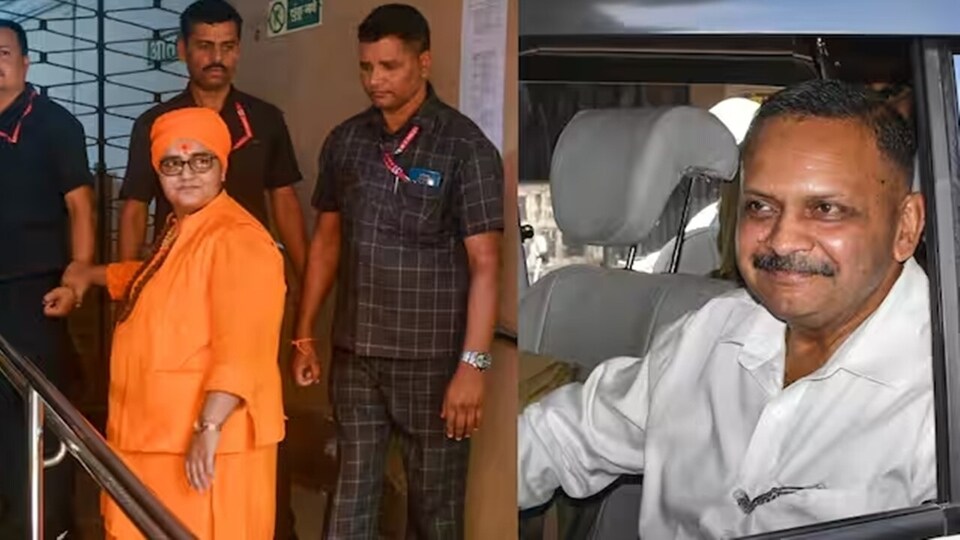
Delivering the much-awaited verdict nearly 17 years after the blast that killed six people and injured dozens in the communally sensitive town of Malegaon in Maharashtra, the NIA court observed that "Terrorism has no religion because no religion can advocate violence. The court cannot convict anyone merely on perception and moral evidence; there has to be cogent evidence," news agency ANI reported.
Also Follow | Malegaon Blast Case Verdict LIVE Updates
The court ruled that the Unlawful Activities (Prevention) Act (UAPA) could not be applied in the case as the sanction for prosecution was not obtained in accordance with legal requirements.
"The UAPA will not be invoked in this case as sanction was not taken as per rules. Both the sanction orders of the UAPA in the case are defective," ANI quoted the court as saying.
The court also highlighted inconsistencies in the prosecution’s evidence. While it acknowledged that a blast indeed took place, the court said the prosecution failed to conclusively link the motorcycle found at the site to an explosive device.
"Prosecution proved that a blast occurred in Malegaon, but failed to prove that a bomb was placed in that motorcycle," the court stated.
The court further noted discrepancies in the number of victims, concluding that "the injured people were not 101 but 95 only, and there was manipulation in some medical certificates."
On the alleged role of the Hindutva group Abhinav Bharat, the court found no material evidence to support the prosecution's claim. "Abhinav Bharat organisation was used as a common reference by the prosecution. There is no evidence that the money of the Abhinav Bharat was used for terror activities," it noted.
As part of its order, the court directed that the families of all six deceased victims be paid ₹2 lakh each, while each injured person is to receive ₹50,000 as compensation.


