E-Paper



CBSE rickrolled: Class 12 math paper QR code links to 1987 Rick Astley hit
The CBSE on Tuesday moved to quash concerns about the integrity of the examination, issuing a press release confirming that the question papers were genuine

 Prefer HTon Google


Students who sat for the Central Board of Secondary Education’s Class 12 mathematics examination on Monday got an unexpected surprise when they scanned a QR code printed on their question paper — it opened a YouTube video of Rick Astley’s 1987 hit “Never Gonna Give You Up”, the song at the centre of one of the internet’s longest-running pranks.
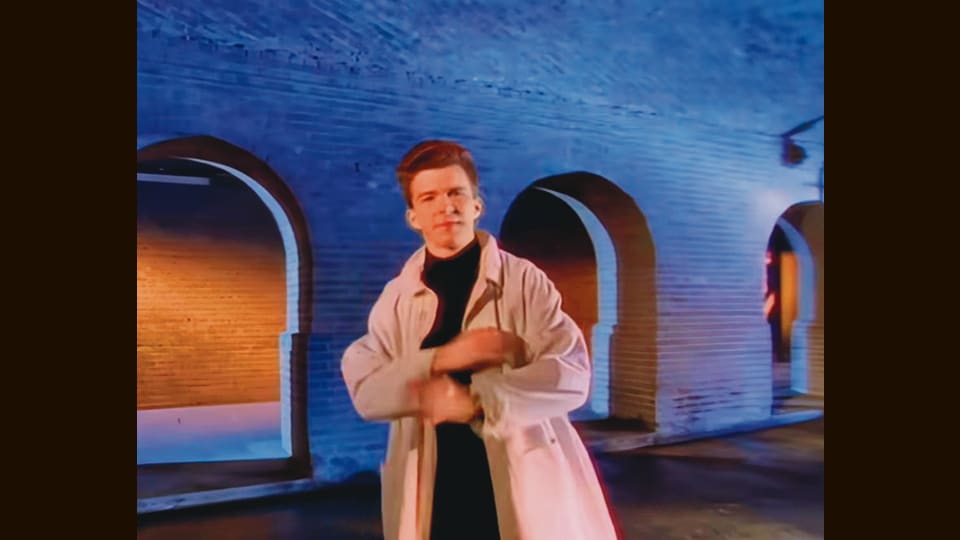
Rickrolling, as the prank is known, involves tricking someone into clicking a link that unexpectedly leads to the music video. Screenshots and videos of students scanning the code began circulating on X, Instagram, and Reddit shortly after the examination, flooding social media with memes and jokes about an entire board exam batch being rickrolled.
The CBSE on Tuesday moved to quash concerns about the integrity of the examination, issuing a press release confirming that the question papers were genuine. “The security of the question papers remains uncompromised,” exam controller Dr Sanyam Bhardwaj said in the statement.
The board said the issue, “it appears”, was confined to a few question paper sets in which one of the QR codes, when scanned, linked to the YouTube video. Not all students reported the same experience.
A student, who gave the exam at a centre in Ghaziabad, said on anonymity: “I was not aware about the QR code incident till Monday evening when my classmates told me about it. Immediately, I also scanned the QR code on my question paper and found that it is linked to a English song.”
Some users questioned how a YouTube link could appear in a security feature designed for exam authentication, while others speculated that the images had been edited or misinterpreted.
A mathematics teacher from a private school in Ghaziabad said the QR code is not meant for students. “It is for authorities involved in the board exam to ensure the integrity of the question paper. It seems there is some inadvertent error by CBSE, despite being a national board that also operates in several foreign countries. Several students complained about this to me. The CBSE should be more careful in designing question papers and ensuring proper QR codes to avoid embarrassment,” he said, asking not to be named.
The board said the matter “has been viewed seriously” and that “necessary steps are being taken” to ensure such issues are not repeated.
The board did not respond to requests for a comment on how the QR code made its way into the paper – and if this was a vendor/contractor problem.
The CBSE began printing QR codes on question papers following a 2019 paper leak scandal, when the Class 12 economics and Class 10 mathematics papers were circulated on social media and messaging platforms before the examinations. The leak forced the board to re-conduct the Class 12 economics examination. The board decided against re-conducting the Class 10 mathematics exam, saying the leak was limited and many students had already appeared.
Each QR code on a question paper typically acts as a digital identifier, embedding information such as the subject, exam date, question paper set, and printing batch, according to educators familiar with the CBSE board examination process. The identifiers help authorities track the distribution chain of question papers and trace the source in case of a leak. When scanned with a regular mobile phone, they generally display either a coded string or a set of alphanumeric identifiers linked to CBSE’s internal database, which authorised systems can then decode to verify the paper’s origin, they said.