
 E-Paper



Census should not merely be data-oriented: House panel
The panel has also recommended the constitution of a separate expert group by the Registrar General of India (RGI) to examine the census pattern since its commencement and suggest measures to bring qualitative change in the exercise.


The pan-India decadal census exercise should not merely be data-oriented but rather provide a perspective of the culture and society, as was done before Independence, a parliamentary standing committee on home affairs has said.
The panel, headed by Congress leader Anand Sharma and comprising 31 members, has also recommended the constitution of a separate expert group by the Registrar General of India (RGI) to examine the census pattern since its commencement and suggest measures to bring qualitative change in the exercise, to ensure the socio-cultural diversity of the country is truly represented.
“The committee, in the meeting held on February 14, 2022, discussed that the census should not merely be data-oriented, rather it should portray the perspective of culture and society. Members opined that since the current census has not commenced yet, an effort should be made on the part of ministry (of home affairs) through the RGI to obtain data on such parameters as well as was being collected/reflected in the census reports in the pre-independence era,” the 238th report of department-related Parliamentary standing committee on home affairs said.
The report was presented in Parliament on Monday.
“………..the census being a pan-India decadal exercise should present the culture, traditions and diversity of the different regions of the country along with the numerical data,” the report added
While the house panel’s report did not provide any clarity on what it means by “pre-independence era”, a government official, on condition of anonymity, said the British had conducted a caste-based census during their rule but the same was not repeated in the first post-Independence census in 1951.
The first complete census in India took place in 1881 and since then, the exercise has been undertaken uninterruptedly once every ten years.
The government has already stated on many occasions that it has no plans to enumerate caste-wise data in the census, other than the Scheduled Castes and Scheduled Tribes.
The decadal census is the largest data collection exercise, which is important to assess the population growth as well as analyse the access to basic facilities such as housing, drinking water, sanitation, housing and electricity. This exercise was last held in 2011.
An increase in the number of questions – from 13 in 1951 to 31 in 2021 – in the census questionnaire is the key reason cited by the panel for its demand for a renewed approach while carrying out the decennial exercise.
In a meeting held on February 14, the panel noted that the provincial registrars/officers and the RGI had not written an annual report on the census process for the past few exercises. It, therefore, asked the ministry to restart the publication of annual reports from the upcoming census onwards.
A former RGI, however, disagreed with the committee’s recommendation. “The census already captures various aspects of Indian society such as different cultures in different regions, economic background, languages etc. I don’t know what can be done differently,” the former official said, seeking anonymity.
The annual report for the 2011 census was prepared but reasons behind not publishing it would be best known to the current census administration and the home ministry, the official added.
Census 2021 – a two-phase exercise – was postponed indefinitely due to the Covid pandemic. The exercise was previously extended from December 31, 2020 to December 21, 2021.
The first phase, which involves house listing – wherein details of all buildings, permanent or temporary, are noted with their type, amenities, and assets – was to be conducted from April 1 to September 30, 2020.
The second phase – Population Enumeration – in which more detailed information on each individual residing in the country, Indian national or otherwise is to be noted, was to be carried out from February 2021.
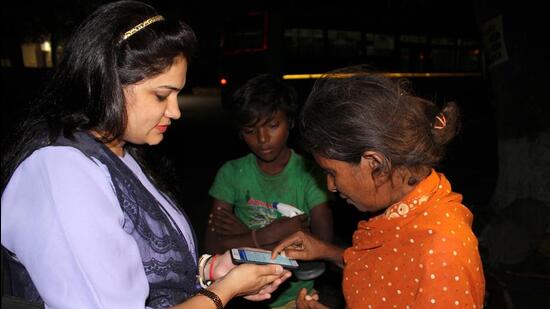
The forthcoming census would be the first digital census, where an enumerator would collect and submit data directly through a mobile app. The provision of a paper schedule is also kept in case of connectivity issues.
The government last week notified the online option for self-enumeration during both the phases of Census.


