
 E-Paper



Centre must step out of lakshman rekha, announce big-bang stimulus: Amit Mitra
The West Bengal finance minister says a substantial stimulus is a must, and also possible, because India has headroom to borrow. He also says the Centre is not as responsive as it should have been in an ideal co-operative federalism and at a time when states are fighting against a pandemic


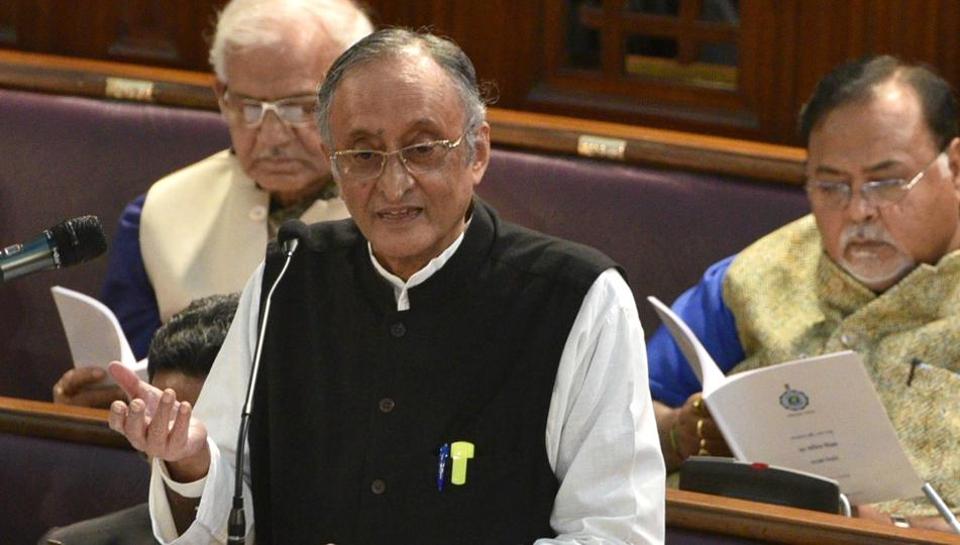
West Bengal finance minister Amit Mitra is an economist by both training and practice. A PhD scholar from the Duke University, USA, Mitra is an ardent advocate of developmental economics. In a telephonic interview with Rajeev Jayaswal of Hindustan Times, he says the role of the Centre is to live up to the true spirit of co-operative federalism and take all measures to boost the sagging economy without worrying about breaching the laid-down fiscal deficit glide path in this difficult time of the coronavirus pandemic. Edited excerpts:
The International Monetary Fund (IMF) has slashed India’s economic growth to 1.9% in the current year when the global economy would contract by 3%. What do you suggest to boost the growth?
This is an unprecedented situation and the central government should come up with a comprehensive plan to boost the economy — which is a must to check rising unemployment, poverty and hunger. The Centre must announce a package of 6% of GDP as suggested by CM [Mamata Banerjee] to the PM [Narendra Modi]. This is around Rs 10 lakh crore.
Click here for the complete coverage of the Covid-19 pandemic
The Union government and the Reserve Bank of India must come out of their “lakshman rekha” and take bold decisions, not incremental measures. There must be a big-bang announcement. A substantial stimulus is a must, and also possible, because India has headroom to borrow. Compared to many developed countries, India’s debt-to-GDP ratio is less than 70%, while it is 106% for the USA and 240% for Japan. Besides, international oil prices are subdued, which is in favour of a country like India that imports more than 80% of its crude oil requirements. Another source of headroom is India’s large foreign exchange reserves.
Also Read: Covid spread, restrictions hit NREGS work allotment
The Centre must leverage these incidental advantages now and stop worrying about the fiscal deficit at a time when the question is of survival. The government must provide money in the hands of the poor, who are fighting to survive. About Rs 4 lakh crore could be transferred to the states who have the capacity to digitally transfer the requisite money into the bank accounts of the poor. In West Bengal, all disbursements are done digitally, no cheques or cash is used in our treasury. The poor must be provided free ration, as we have done in West Bengal, providing rice and wheat at zero price from ration shops.
What about the formal sector?
Industry is facing both demand and supply challenges as supply channels have broken down. The stimulus will help in creating demand and provide liquidity in the system. It can even be considered to provide what is internationally done (during such times) — 80% salary of the workers paid (for) by the corporate sector during the lockdown is borne by the government. This will allow the retention of the worker and this human capital can be quickly put on use when the Covid-19 pandemic is over.
Also Read: Covid-19 update: BJP calls for new manufacturing policy to revive economy
Liquidity crunch is acute, particularly for the micro, small and medium enterprises (MSMEs). It calls for soft loans for a period of four years with a moratorium on repayments and interest for at least the first year. This will give them the breathing space. Similarly, other formal sectors need calibrated support. Sectors such as aviation, hospitality, tourism, and non-essential retail have been almost crippled due to the lockdown.
What is your assessment of the economic growth post Covid-19?
It is difficult to predict at this juncture when even developed countries are unable to give any precise answer on when this [Covid-19 pandemic] will end. If the pandemic ends by October...with adequate policy and fiscal stimulations, India could see at best 1% GDP growth (in financial year 2020-21). But if the pandemic continued for longer, it will have a direct impact on GDP, which may even contract, posting a negative growth.
Is Centre providing enough financial support to the states, particularly to West Bengal?
The Centre is not as responsive as it should have been in an ideal co-operative federalism and at a time when states are fighting against a pandemic. Finance minister [Nirmala Sitharaman] has not replied to any of my letters, though I had one conversation with her. I have written eight letters, highlighting some genuine concerns of states and precarious financial positions they are suffering from. Of course, one or two suggestions have been accepted partially. An ideal co-operative federalism must encourage a culture of dialogue. States are the real implementers of policies and welfare programmes. They must be considered as part and parcel of a united India.
Are you referring to the controversy regarding Inter-Ministerial Central Teams (IMCTs) being sent to West Bengal?
The Centre’s decision to send two Inter-Ministerial Central Teams to West Bengal was done without consulting the state government. This is a breach of federalist protocol. The Centre’s move was not in the right spirit of co-operative federalism. We are also unable to understand, why particular districts had been chosen. In terms of both number of [Covid-19] cases and the rate of increase, Ahmedabad in Gujarat had far larger numbers of cases and faster rate of increase. But it was not in the Centre’s radar.


