
 E-Paper



Centre should reduce taxes to support common man: Tamil Nadu finance minister
Sitharaman, who was speaking after a fierce showdown between the Narendra Modi government and the opposition, charged that the state government did not reduce the taxes on petrol and diesel while the union government had done so.


Tamil Nadu finance minister Palanivel Thiaga Rajan (PTR) on Tuesday said it was the central government that should come forward to reduce taxes to help the common man.
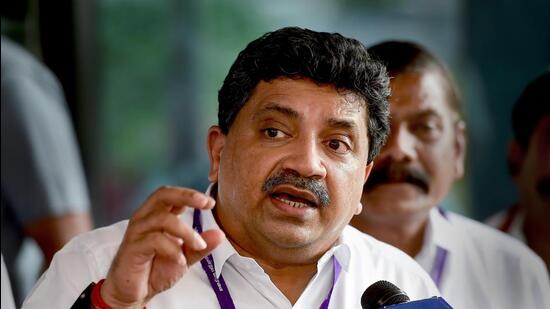
“There are not enough avenues for the state to augment its revenues,” he said in his rebuttal to union finance minister Nirmala Sitharaman’s speech in the Lok Sabha on August 1.
Earlier in the day, PTR took to Twitter to say, “A lot of half-truths and one whole-lie doing the rounds since yesterday (Monday).” He said he will release a detailed statement as “truth alone triumphs, especially when backed by data and unarguable facts.”
In a statement released Tuesday evening, he described it as his “explanations” on her comments on price rise, increase in GST rates and taxes on petrol and diesel.
Sitharaman, who was speaking after a fierce showdown between the Narendra Modi government and the opposition, charged that the state government did not reduce the taxes on petrol and diesel while the union government had done so.
PTR pointed out that even before the union government had first reduced its taxes on fuel in November 2021, the Tamil Nadu government had cut the VAT on petrol by ₹3 per litre in August 2021. He said with the union government cutting taxes on petrol has reduced the state taxes by ₹1.95 per litre. “So overall, the state taxes on petrol have reduced by a total of ₹4.95 per litre. Similarly, the reduction of taxes by the union government on diesel has reduced the state taxes by ₹1.76 per litre. In addition, the state government provided diesel subsidy to the departments of fisheries and transport.”
PTR said the union government’s reduction in taxes in November 2021 will cause a loss of about ₹1,050 crore in annual revenue to Tamil Nadu. Further, the reduction in May 2022 will cause an additional loss of ₹800 crore in the state’s annual revenue.
He said Tamil Nadu’s share in the national population is 6.21% and its share in the GDP is 9.16%, but the state only gets 4.079% as devolution from central taxes. Tamil Nadu did not get its due share in successive finance commissions and the share for the state has continually decreased, he said.
“On the other hand, the union government’s levies on petrol have gone up substantially in the past 7 years,” the Tamil Nadu finance minister said, adding that though the revenue to the Centre has increased by several lakh crores, there has not been a matching increase in the revenues to states.
“This is because the union government has increased the cess and surcharge on petrol and diesel while reducing the basic excise duty that is shareable with the states.”
He said in the last seven years, the Modi-led central government has increased the taxes on petrol and diesel by ₹23.42 per litre (247%) and ₹28.23 (790%), respectively. “The union government’s reduction in taxes in November 2021 and May 2022 together was ₹13 on petrol and ₹16 on diesel. Though the union government has reduced the taxes, it is still higher than the 2014 rates by ₹10.42 per litre for petrol (110%) and ₹12.23 per litre for diesel (342%). Therefore, there is a need for the union government to further reduce its taxes,” he said.
On the issue of GST, he said Tamil Nadu had sent its objections since the imposition of GST on essential food items will adversely affect the common man. PTR blamed “inherent issues in the basic structure and design of the GST council,” adding that the decisions regarding imposition of taxes are being taken in three stages.
He pointed out how the Centre which has a voting right of 33% and all the other states have 2% each (whether it is a big state or a small state), any state who wants to stop any decision on GST tax imposition, it requires either the full support of 25 states or the support of the union government.
He added that the report containing the recommendations of tax imposition which was placed before the GST council for decision had to either be accepted in its entirety or rejected in its entirety. “After deliberations, the interim report of the Group of Ministers containing 56 recommendations was accepted by the GST council. Even the Hon’ble Union Finance Minister had mentioned this three-stage process of deciding upon the imposition of GST,” PTR said.
“After the introduction of GST, the State’s power to levy taxes has been reduced greatly,” he said. “Therefore, it is the Union Government which has the opportunities and resources to help the common man, and I request the Union Government to come forward and reduce its taxes.”


