E-Paper



Centre’s changes to the women’s quota bill to serve as blueprint for states
PM Modi announced that a special three-day sitting of Parliament from April 16 to 18 will fast-track the implementation of the bill.

 Prefer HTon Google


Proposed amendments to the 2023 women’s reservation bill will not only pave the way for increasing the number of female members of the Lok Sabha but also provide a road map to effect a similar rise in state assemblies, people aware of the matter said on Tuesday.
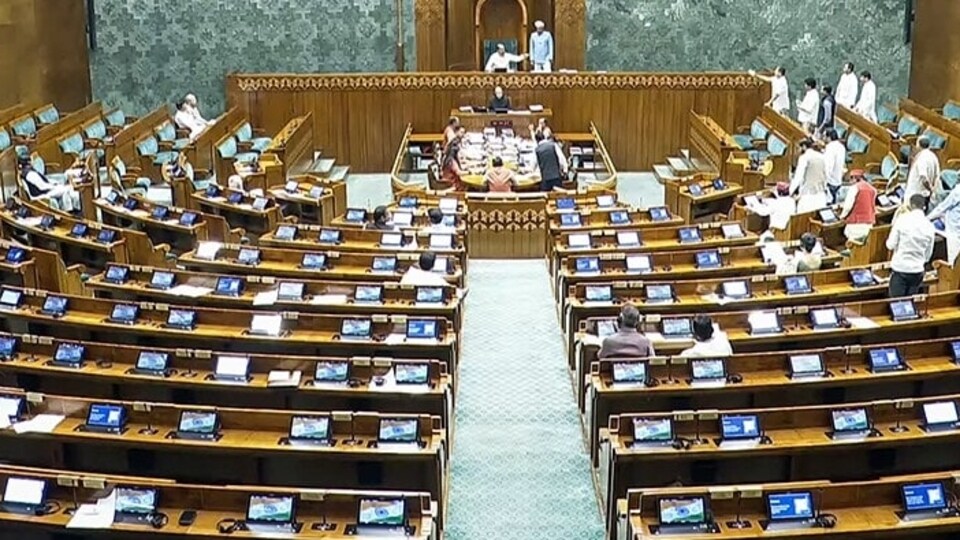
As HT reported two weeks ago, the government is working on delinking the bill to provide 33% reservation to women in the Lok Sabha and state assemblies from the ongoing census, and roll out the law from 2029 general elections. This will involve raising the number of seats in the legislatures by 50%.
Also read | Centre working to delink women's quota from census, delimitation process
Earlier this week, Prime Minister Narendra Modi announced that a special three-day sitting of Parliament from April 16 to 18 will fast-track the implementation of the bill, assuring southern states that their representation will not reduce.
“The bill will give us a formula of how the seats earmarked for women will be chosen at both levels [Parliament and state assemblies],” said an official aware of the details. “State assemblies have about 9% women MLAs, which is much less than the 13% women MPs in Parliament.
The new amendment will immediately give an effective date for the increased numbers of women in states too.” HT has previously reported that the amendments could see the number of seats in the Lok Sabha increase to 816. Of this, 273 will be reserved for women, and the proportional representation of each state will remain the same. The number 816 is close to the 814.5 figure that can be arrived at by increasing the number of seats in the Lok Sabha, currently at 543, by 50%.
Also read | Congress may back amendments to women’s reservation bill
After the current round of assembly elections, a clutch of states are scheduled to go to the polls in 2027, including Uttar Pradesh, Punjab, Uttarakhand and Gujarat. These are likely to be the first elections to be scheduled after the reservation.
Women make up only 9.43% of all legislators in state assemblies in India. The lowest share of representation, 1.47%, is in Himachal Pradesh and the highest is in Chhattisgarh with 21.11%. The assemblies of Assam and Tamil Nadu have the lowest share among states with more than 100 legislators, with 4.76 and 5.13, respectively. West Bengal and Andhra Pradesh have the highest among such states, at 13.61 and 12.57, respectively.
The person cited above said that the law ministry was currently finalising details of two pieces of legislation — one to delink women’s reservation from the census and another to set up a delimitation commission. It is unclear what the delimitation commission’s purpose will be, given that the government has more or less signalled that the expansion of the Lok Sabha will be solely for reserving seats for women.
The Constitution requires the government to set up the delimitation commission, and Article 82 mandates equitable proportional representation for states and UTs in the Lok Sabha — something that the current exercise will not achieve.
With the seats being increased proportionately across states (as the government has indicated), a vote in a more populous state will be worth less (in terms of weightage in electing a representative) than one in a less populous state.
To be sure, it is still not clear whether the government plans to bring one bill or two bills in the special sitting of Parliament. Any bill will require a two-thirds majority in Parliament. However, a minister told HT that the proposed change will require two separate bills- one on the amendment to the 2023 Act and the second on setting up the delimitation commission.
Proportional representation means, for instance, that Uttar Pradesh, with 80 seats in the 543-member Lok Sabha (14.73%), will have 120 seats in the new Lok Sabha; and Tamil Nadu, with 39 seats (7.18%), will have 59. “The increase in the number of seats is being done with the same philosophy as when we brought in the 10% quota for economically weaker sections in the general category. At that time too, the new quota didn’t eat into anyone’s share, we just increased,’’ said the person cited above, speaking on condition of anonymity. “This ensures that all these changes are brought in without creating any heartburn and with consensus on all counts,’’ they added.
Opposition parties have welcomed the fast-tracking of the women’s reservation bill but have said that any amendments to increase the strength of the Lok Sabha in the middle of election season will violate the model code of conduct. Tamil Nadu goes to the polls on April 23. West Bengal goes to the polls on April 23 and 29.
But the government dismissed any such electoral motive, arguing there are always some polls round the corner. “PM’s philosophy is Yahi Samay, Sahi Samay (The right time is now),” said the official quoted above, adding that the previous timeframe – of waiting for the 2027 census data to bring in delimitation – would have made women’s reservation difficult even in the 2034 general elections.
The Opposition argued that the timing of the amendments is designed to give the government a positive talking point, when the West Asia conflict has thrown up many challenges. “To divert the public’s attention from the serious economic crisis and to influence voters in five states, the PM has decided to amend Article 334-A and remove the condition of delimitation and census. They’ve woken up after 30 months and taken yet another U-turn. Now they’re turning it into an election issue. The people of the five states will give them a resounding response and decisively reject the BJP,’’ said Congress leader Jairam Ramesh.
Leaders from southern India, such as Telangana CM Revanth Reddy, have raised concerns over what they fear will be an “unfair delimitation exercise”.
To be sure, Congress has indicated that it might back amendments to the women’s reservation bill. Several Opposition parties had suggested immediate implementation of the law when it was passed in 2023.