
 E-Paper


Chandrayaan-2-launch: Here are the main objectives of the mission
Chandrayaan 2 Launch Mission: To demonstrate the ability to soft-land on the surface of the Moon and to operate a rover on the surface is one of the key objectives of the mission.

 Prefer HTon Google


Chandrayaan 2, the unmanned Moon mission, aims to improve India’ s understanding of the Moon — discoveries that will benefit India and humanity as a whole, says the ISRO website. These insights and experiences aim at a paradigm shift in how lunar expeditions are approached for years to come.
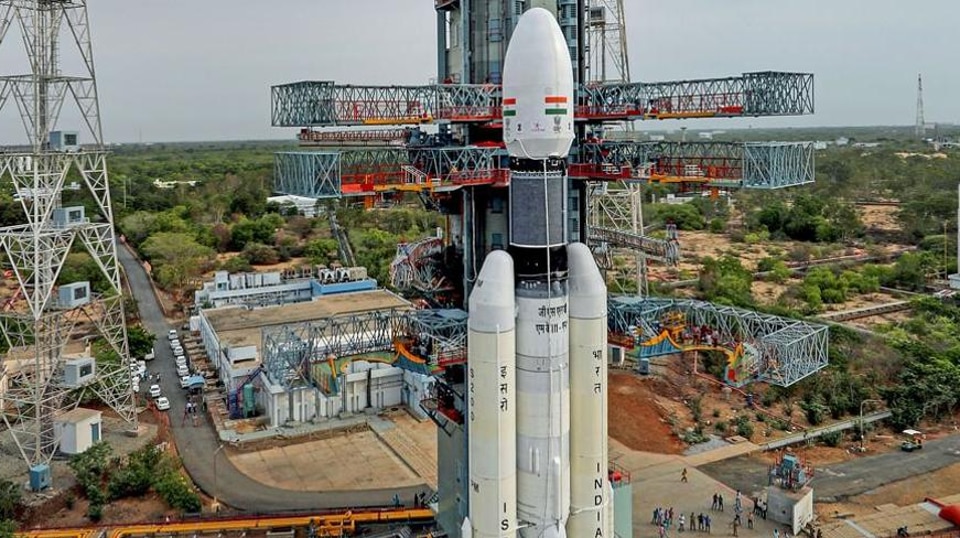
On why the organization chose to have Chandrayaan 2 -- a moon mission -- the website adds: “It is a promising test bed to demonstrate technologies required for deep-space missions. Chandrayaan 2 attempts to foster a new age of discovery, increase our understanding of space, stimulate the advancement of technology, promote global alliances, and inspire a future generation of explorers and scientists.”
So why was the south pole of Moon chosen for landing mission landing? “Moon provides the best linkage to Earth’s early history. It offers an undisturbed historical record of the inner Solar system environment. Extensive mapping of lunar surface to study variations in lunar surface composition is essential to trace back the origin and evolution of the Moon, the website adds.
To demonstrate the ability to soft-land on the surface of the Moon and to operate a rover on the surface is one of the key objectives of the mission. Here’s a look at the key objectives of Chandrayaan 2:
•To identify or to find out the minerals and indicators of hydroxyl and water molecules.
•To study the surface of the moon.
•To study the density of the electrons in the Moon’s ionosphere that is the uppermost part of the atmosphere that is ionised by radiation.
•The Orbiter will observe the lunar surface and relay communication between Earth and Chandrayaan 2’s Lander
•The lander is designed to execute India’s first soft landing on the lunar surface.
Also read: India’s heavy rocket ‘Bahubali’ gearing up for Moon


