
 E-Paper



China’s Masood Azhar move may strain relations with India
After the Azhar listing hold, it is evident that China will not yield an inch in accommodating India in the Nuclear Suppliers Group (NSG) or give up any of its traditional territorial claims over India.

 Prefer HTon Google


By single-handedly standing up to the other four permanent members of the United Nations Security Council (UNSC) and holding up the latest attempt to designate Jaish-e-Mohammed (JeM) chief Masood Azhar as a global terrorist, China has virtually put at stake its bilateral relations with India in providing comfort to the beleaguered Imran Khan regime in Pakistan.
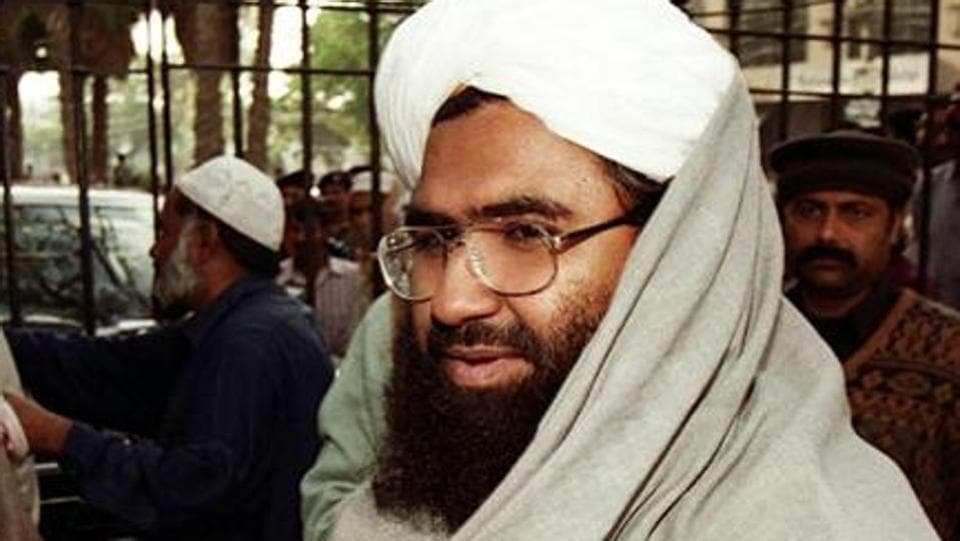
Although the Indian foreign ministry said it was “cautiously optimistic” that Azhar would eventually be listed by the UN’s Islamic State and al-Qaeda Sanctions Committee, meaning that China would come around to agreeing with France, Russia, the UK and US, the fact is that the hold will lead to a hardening of positions both in New Delhi and Beijing.
Listing Azhar as a global terrorist was in many ways low-hanging fruit to deepen India-China bilateral ties, but Beijing is clearly siding with its client state, and has given priority to the economic corridor it is building through Pakistan that will lead to the warm waters of the Persian Gulf. It is another matter that Islamabad supported the jihad waged by the Mujahideen against occupying Soviet forces in the 1980s Afghan war because of a perceived threat from Moscow to Karachi port. The latter was confirmed by no less than then Pakistan National Security Advisor Naseer Janjua to his Indian counterpart on December 26, 2017, in Bangkok.
After the Azhar listing hold, it is evident that China will not yield an inch in accommodating India in the Nuclear Suppliers Group (NSG) or give up any of its traditional territorial claims over India. It will choke Indian strategic ambitions by intensifying its economic ties and infrastructure linkages with other South Asian countries. India should also be prepared for China, as an upper riparian state, further harnessing the precious water resources on the Tibetan plateau.
In this emerging scenario, India should work with its close allies like the US for a seat on the UNSC, given the fact that it is the sixth largest and fastest growing economy in the world.
The Azhar hold yet again showed the power of permanent members — a global terrorist with the blood of hundreds on his hands and Pakistan are allowed to go scot-free by an indulgent ally. India should also rebalance its trade ties with China, given that its deficit is creeping upwards of $40 billion. The Narendra Modi government will have to take into account a growing clamour within the ministry of external affairs for strong steps to be taken to curb its trade deficit with China.
With 70% of the Brahmputra river flows originating from India territory, work on Upper Siang dam projects need to be speeded up in anticipation of weak flows from China because of dams built on the great Tsangpo bend in Tibet.
While India has been building up its infrastructure capacities along the Line of Actual Control (LAC) with China, the work needs to be accelerated so that it is close to matching the level across in Tibet.
As the Azhar episode shows the Chinese resolve in taking on the remaining permanent members of the UNSC to favour a client state, India should not expect any relief from Beijing on resolution of the boundary dispute.
The evolving geostrategic equation, wherein India’s traditional ally Russia is increasingly ambivalent to a rising China and the latter is in a strong position to extract economic leverage from India’s neighbours, poses a threat to New Delhi for the near future. This real-time threat can only be handled by a strong leadership holding the reins of power in New Delhi as Chinese paramount leader Xi Jinping’s authority grows from strength to strength. The other option left is for New Delhi to scale down its global ambitions.


