E-Paper



China securing loans to low-income nations with revenue streams in Chinese banks
A new study has found that such practices are prevalent in some of India’s neighbours, such as Myanmar, where the country’s gas revenues are being deposited directly into restricted Chinese bank accounts

 Prefer HTon Google


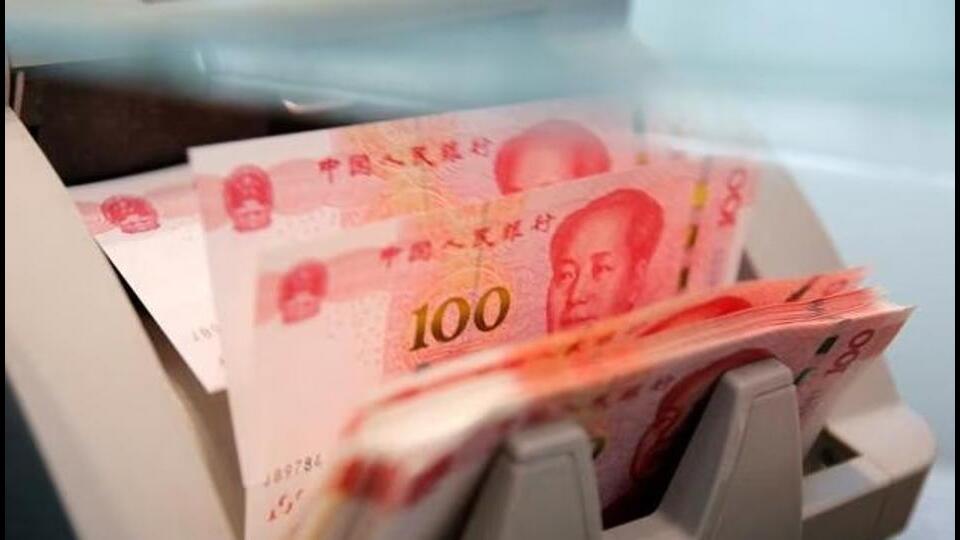
New Delhi: China is securing loans to low-income and developing nations with commodity revenue streams and cash held in restricted escrow accounts in Chinese banks, with such practices implemented for almost half of the total loans worth $991 billion, according to a new study.
The study, done by the Kiel Institute for the World Economy, AidData and Georgetown University and Oxford University and released on Thursday, found such practices prevalent in some of India’s neighbours, such as Myanmar, where the country’s gas revenues are being deposited directly into restricted Chinese bank accounts.
In the case of Pakistan, the country is required to simultaneously hold cash collateral in four Chinese escrow accounts. Figures are available for holdings in only one account, and the overall cash holdings in the four accounts are likely to be significantly larger, according to the study titled “How China Collateralizes”.
The partially government-guaranteed loan from Bank of China and China Eximbank for the 1,320-MW Patuakhali thermal power plant project in Bangladesh was supported by 50% equity stakes that Bangladesh’s Rural Power Company Ltd and China’s NORINCO International Cooperation Limited hold in a special purpose vehicle responsible for the venture.
China significantly ramped up loans to developing countries in Asia, Africa and Latin America after launching its Belt and Road Initiative (BRI) in 2013, but there have been significant concerns about the opacity surrounding agreements covering both loans and projects taken up under BRI. In December 2017, Sri Lanka handed over the strategic port of Hambantota to China on a 99-year lease after struggling to pay debts to Chinese firms.
India never signed on to BRI because a significant component - the China-Pakistan Economic Corridor (CPEC) - passes through Pakistan-occupied Kashmir. The Indian side also has concerns about the lack of a level playing field under BRI.
The study said China’s total public and publicly guaranteed lending to low-income and developing countries between 2000 and 2021 was worth $911 billion, and nearly half - or $418 billion provided to 57 countries - is secured with cash deposits in Chinese bank accounts. The study concluded China’s practices are impeding the ability of borrowing countries to effectively manage their finances.
Borrowing countries are forced to route incomes from their main commodity exports to Chinese bank accounts, the study said. “Our findings reveal a previously undocumented pattern of revenue ring-fencing, where a significant share of commodity export receipts never reaches the exporting countries,” it said.
“Revenues routed overseas secure priority repayment for the creditor; they remain out of public sight and largely beyond the borrower’s reach until the secured debts are repaid,” it added.
More than 60% of collateralised public and publicly guaranteed loans by Chinese creditors to low-income and developing countries rely on collateral unrelated to the stated purpose of the debt, the study said. This means bank accounts securing Chinese infrastructure project loans are not typically funded from project revenues. Instead, most cash flows come from sales of the borrowing country’s leading commodity export, such as gas in Myanmar and Indonesia, oil in Angola, and copper in Congo.
A state-owned enterprise of the borrowing country typically agrees to sell commodities under an offtake agreement with a Chinese state enterprise, and both enterprises “agree to deposit the proceeds directly into bank accounts that secure unrelated infrastructure finance”, the study said.
“Chinese creditors and their debtors have taken extraordinary measures to shield the use of escrow accounts - and the cash deposits that they hold - from public scrutiny,” the study said.
The deposits in Chinese bank accounts, which are controlled by the lending entities, can average more than 20% of annual payments made by low-income countries to service external debt, the study found. “Some of these revenues remain offshore beyond the control of the borrowing government for many years,” it said, adding the lack of access or transparency compromises the ability of borrowing countries to monitor and manage their fiscal affairs.
Another important feature of Chinese lenders using cash collateral pools is that they simultaneously act as security for multiple debts. Cross-collateralisation accounts for 46% of China’s collateralized public and publicly guaranteed lending volume to low-income and developing countries and this “can exacerbate debt distress and complicate a debt restructuring if multiple creditors have competing rights to the same assets”, the study said.
The study also found that a common source of collateral supports multiple loans from the same Chinese creditor, and this practice “poses a different challenge: it can cede government control over assets or revenue streams to a single creditor for long periods of time, until all the underlying debts for all the financed projects or programs are repaid”. Such a process can take decades, the study said.