
 E-Paper



Civil society’s division will hurt nation: Doval
Doval was speaking to young Indian Police Service officers at the passing out parade of the 73rd batch of IPS probationers at the Sardar Vallabhbhai Patel National Police Academy (SVPNPA) .

 Prefer HTon Google


Wars have ceased to be effective instruments to achieve political and military objectives, are unaffordable, and have uncertain outcomes, National Security Adviser Ajit Doval said on Friday, but if civil society can be subverted, divided and manipulated it will “hurt the interest of the nation”.
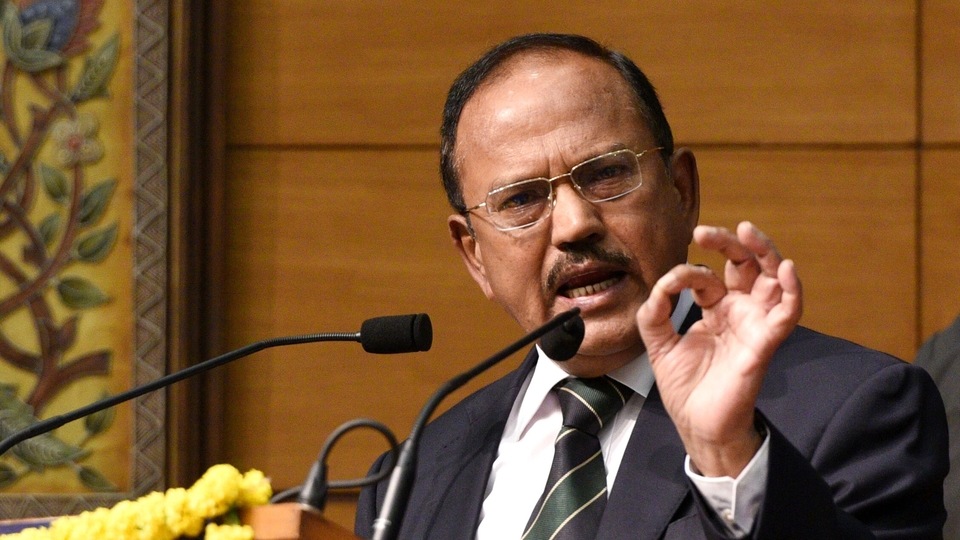
Doval was speaking to young Indian Police Service officers at the passing out parade of the 73rd batch of IPS probationers at the Sardar Vallabhbhai Patel National Police Academy (SVPNPA) .
In the context of his remarks on civil society, he emphasised the important role the police force has to play in internal security.
“If internal security fails, no country can be great. If people are not secure, people are not safe, they cannot rise to the potential and probably the country will never grow,” he added.
NSA Doval also pointed to the circumstances in which the young officers will be serving. “It will be a different India at that time. India is on the march and you will see that you will be leading these police forces at a time when it will bring India which has got a new place in the international arena.”
India will Doval added, as it progresses towards its 100th year of independence (in 2047) enter a new era, be known for its “many achievements and many accomplishments”, and be one of the leading nations across the world.
Doval also spoke of the importance of laws and of the officers in the context of the laws.
The quintessence of democracy does not lie in the ballot box but in the laws which are made by the people who are elected, he said.
And the officers” are the ones who are the enforcers of those laws. Laws are not as good as they are made. Laws are as good as they are executed and implemented”.
“The implementation of those laws are important. No nation can be built where rule of law has failed. People cannot feel safe and secure where law enforcers are weak, corrupt, partisan,” the NSA added.
Doval also said that police forces have a greater role in border management besides maintaining law and order. He said maintaining law and order in every part of the 32 lakh sq km of India is also the responsibility of police forces.
“…Not only policing, in which you have been trained very well, but you will (also) be responsible for border management of this country. There’s 15,000 km of the border, and most of it has got peculiar problems of its own,” he added.
“There is a border with Pakistan with China or Myanmar or Bangladesh. We have got different types of security-related issues which are manned by the police and the central police organisations which are manning these borders.”
The Hyderabad-based Sardar Vallabhbhai Patel National Police Academy trains officers of the Indian Police Service, selected through the Civil Services Examination conducted by the Union Public Service Commission (UPSC).


