E-Paper



Clean image but Haryana’s Khattar government blighted by violent flare-ups
Report card: Transparency in jobs but lack of administrative skills put state through avoidable law and order problems

 Prefer HTon Google


The fourth year will be crucial in deciding the electoral fortunes of the ruling BJP and chief minister Manohar Lal Khattar. But first a look at the accomplishments and fiascos and performance of the Khattar government so far.
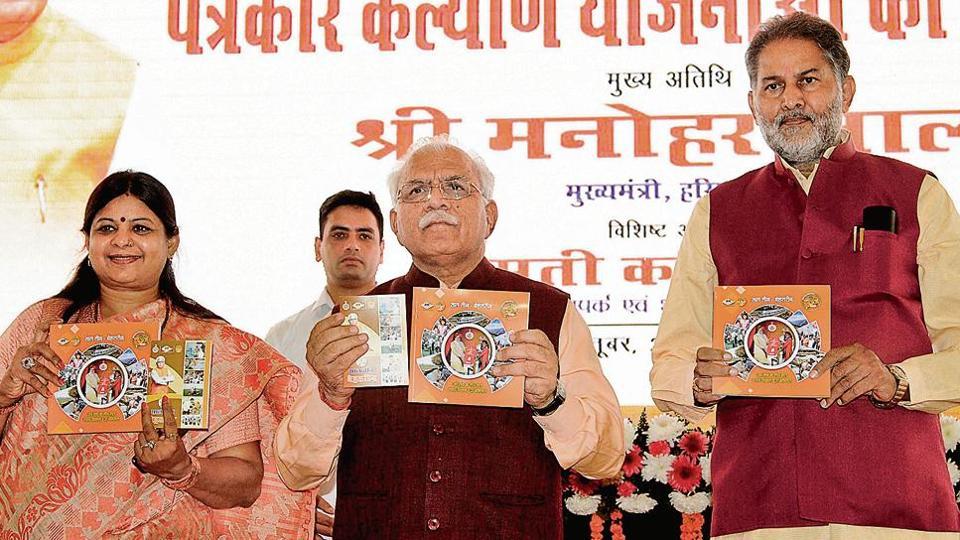
The first-time MLA and chief minister on Thursday completed three years in office. His tenure has had its share of highs and lows. Khattar, a little known Rashtriya Swayamsevak Sangh (RSS) pracharak, took charge after the BJP won a simple majority for the first time in the state.
His proximity to the Sangh and Prime Minister Narendra Modi were the underlying reasons for his rise. For a sworn bachelor, his coronation as the 20th chief minister of the state meant a departure from years of dynastic rule in Haryana.
Khattar, who started with the handicap of being a greenhorn in terms of administrative skills and acumen, has learnt his lesson the hard way considering the violent incidents the state went through during his tenure. Though the chief minister enjoys a clean image, there are doubts over his administrative skills and ability to comprehend nuances of governance.
Fairness in recruitments
The Khattar government is widely believed to have given jobs in a fair and transparent manner, something which is endorsed even by the rivals of the chief minister. Khattar, in his own words, claims that wards of the common man made it to government jobs, some on even Class -1 posts. While this has helped his own and his party’s image, a large number of BJP MLAs and workers who hoped to make a killing in recruitments have been left disappointed.
Lack of administrative acumen
The chief minister is still trying to come to terms with the tenets of governance. Despite having an army of aides and advisers, the pace of decision-making and implementation remains sluggish. His excessive reliance on the Sangh and inclination to seek a go-ahead from his parent organisation often puts off bureaucrats. “In fact, the tardy decision making and the tendency to postpone things time and again has brought inertia and indifference in the administration,’’ said an official, who did not want to be named.
Improvement in sex ratio
The BJP government prides itself in improving the sex ratio in the state. As of August 2017, the sex ratio was 909. Officials steering the ‘Beti Bachao Beti Padhao’ programme attributed this improvement to the strict implementation of PNDT Act, resulting in raids, sealing of clinics and arrests of those indulging in sex determination tests. The declining sex ratio at birth for the last two decades in Haryana had been a source of embarrassment for the state. It had touched an all time low of 876 in 2015.
Happening Haryana takes a beating
The advantage the state had in terms of a preferred investment destination, primarily on account of its geographical location, seems to have withered due to repeated instances of violent flare-ups in the state. The violence, arson and blockades during the February 2016 Jat quota agitation dented the image of the state and cut the credibility of the government in tackling law and order problems. The recent violence and arson in Panchkula by Dera Sacha Sauda supporters and the handling of the situation by the government – allowing the build-up of supporters before the CBI court delivered verdict in a rape case against the sect head, the intervention of Punjab and Haryana High court and gunning down of Dera followers – has not helped the government’s cause. “Haryana, once a preferred investment destination, now ranks as a hazardous place,’’ said an entrepreneur.
Teacher transfers, grievance redressal
The online transfer of teachers has brought transparency in the system. The model has been replicated by Punjab. Other BJP-ruled states are also planning to implement it. Many in the government say that it has been a success story for the BJP government. Khattar terms it as one of the most “flourishing industries”. Also, the BJP government empowered the common man by launching the CM’s window for grievance redressal.
RSS influence
The shadow of the Sangh looms large on the functioning of the Khattar government. The emphasis it has laid on the Hindutva agenda, cattle conservation, beef ban, saffronisation of education and appointment of persons with RSS background in key positions has weighed down the accomplishments of the BJP government. “The government squanders too much time and energy in events and discourses advocated by the Sangh. It lays emphasis on issues such as cattle conservation, search for the lost Saraswati river etc. The emergence of cow vigilantes is an outcome of their obsession with the beef ban and cattle conservation,’’ said a Haryana watcher.