E-Paper



Congress, BJP push for Odisha minister’s sacking, say new evidence indicts him
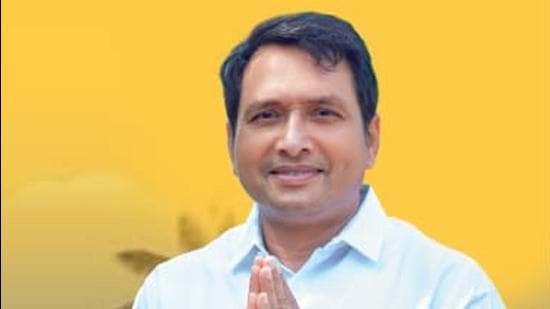
Congress and BJP leaders said Odisha minister Dibya Shankar Mishra allegedly mediated between the Kalahandi murder accused Gobind Sahu and school teacher Mamita Meher before she was killed, allegedly by Sahu.


BHUBANESWAR: Odisha’s opposition Bharatiya Janata Party (BJP) and the Congress on Monday escalated their attacks on the ruling Biju Janata Dal (BJD) government’s minister of state for home Dibya Shankar Mishra, claiming that the minister was not only close to the man accused of murdering a school teacher in Kalahandi but also attempted to mediate between the teacher and the prime accused, Gobind Sahu.
Gobind Sahu, president of the managing committee of Sunshine English medium school, a private school in Mahaling panchayat of Kalahandi district, is alleged to have strangled 26-year-old school teacher Mamita Meher, in his car on October 8 after she threatened to expose his affairs. According to the police, he cut her body into pieces, burnt it and buried it in an under-construction stadium near the school. He was arrested on October 19 and was sent to jail after he was questioned for five days.
Since then, the opposition has been demanding the minister’s sacking from the Naveen Patnaik ministry due to his proximity with Gobind Sahu, a demand that was rejected by BJD leaders who insisted that Dibya Shankar Mishra could not be penalised for the actions of someone he knew.
On Monday, the BJP and Congress stepped up their attacks.
Congress MLA from Kantabanji Santosh Singh Saluja alleged Dibya Shankar Mishra, Gobind Sahu and school teacher Mamita Meher were present at the Mishra’s residence in Chhattisgarh capital Raipur between September 20 and 23.
“Mishra tried to iron out differences between Sahu and Mamita at his Kool Homes apartment in Raipur. Sahu then deposited money in Mamita’s SBI account on October 7 a day before she was killed,” said Saluja.
Soon after, BJP leader Bijoy Mohapatra claimed that there were three meetings between Sahu and Meher in Raipur, not just once as alleged by Saluja.
“Not once, the meeting between accused Gobind Sahu and Mamita was held thrice in Raipur. Govind Sahu was in touch with Mishra and even held a telephonic conversation with him when he was detained in the police barrack of Titilagarh town from where he escaped subsequently. This is just the first few pages of the story. There will not be a full stop to the case anytime soon and more explosive facts are going to surface in coming days,” said. Mohapatra.
Mishra, Odisha’s energy minister who also holds charge as minister of state for home, did not respond to phone calls and text messages seeking his comments on the fresh allegations levelled by Saluja and Mohapatra.
Congress leader Narasingha Mishra also alleged that Mishra tried to mediate a dispute between Meher and Sahu after the former threatened to expose him, Odisha Congress president Niranjan Patnaik questioned the Raipur visit by the trio. “What did they discuss in Raipur? Why did minister Dibya Shankar spend nights in Sunshine school,” he asked.
The allegations came on the day the Bolangir police seized the JCB machine and the two-wheeler allegedly used by accused Gobinda Sahu to bury Mamita Meher’s body. Both vehicles were seized from Mahaling in the Kalahandi district. Police alleged that Sahu admitted that he used the JCB to bury her the burnt body parts in a 10-feet deep pit that was dug before he killed her. The two-wheeler was allegedly used to ferry tyres used to burn the body.
Meanwhile, BJD leader and editor of Odia daily Sambad, Soumya Ranjan Patnaik continued to embarrass the BJD leadership in another front-page editorial in which he appeared to keep the pressure on his party.
“Even as the minister said that the opposition and certain media houses are running a smear campaign against him as they have an axe to grind, what he seems to have forgotten is an independent inquiry in the murder case will not be possible unless he put down his papers,” wrote Patnaik, asserting that he would bat for the state’s interests rather than his party.
Patnaik recalled that in 2016 when more than 20 people died in the infamous SUM hospital fire, then health minister Atanu Sabyasachi Nayak resigned on moral grounds to maintain high standards of public propriety. “He resigned to preserve the image of the party and the government, though he had no role whatsoever in the mishap,” said Soumya Ranjan Patnaik, a ruling BJD legislator.
“Everyone knows what happened during the JB Patnaik’s rule two decades ago when the government dithered over taking action against the then advocate general Indrajit Ray following allegations over his links in the infamous Anjana Mishra molestation case,” wrote Patnaik, who is also the son-in-law of JB Patnaik who was forced to step down and replaced with Giridhar Gamang in February 1999.
Taking a swipe at Mishra for invoking Goddess Samaleswari, the presiding deity at Kalahandi most-revered temple, Patnaik said while a common man takes refuge in God whenever he feels helpless, it is perplexing what made the minister helpless.